Breaking barriers: Researchers master quantum control at room temperature
Unlocking the potential of quantum mechanics in everyday environments has long been a challenge, as traditional observation and manipulation techniques have relied on ultra-low temperatures to reveal quantum effects.
However, significant research led by scientists Tobias J. Kippenberg and Nils Johan Engelsen at École polytechnique fédérale de Lausanne (EPFL) in Switzerland is changing the game. By merging quantum principles with mechanical engineering, they’ve surpassed previous limitations, demonstrating great control over quantum phenomena at room temperature.
According to researchers, this innovative approach marks a paradigm shift in quantum technology, opening doors to practical applications once thought unattainable. The details of the team’s study were published in the journal Nature.
“Reaching the regime of room temperature quantum optomechanics has been an open challenge for decades. Our work realizes effectively the Heisenberg microscope – long thought to be only a theoretical toy model, said Kippenberg in a statement.
Advanced system
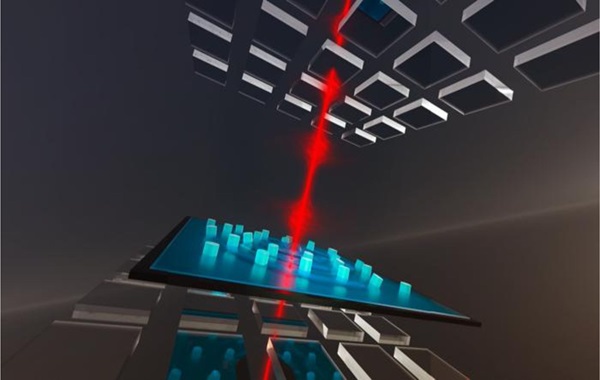
The researchers at EPFL devised an experimental setup that harnessed an ultra-low noise optomechanical system. This innovative arrangement facilitated the complex interplay between light and mechanical motion, enabling precise investigation and manipulation of how light influences moving objects.
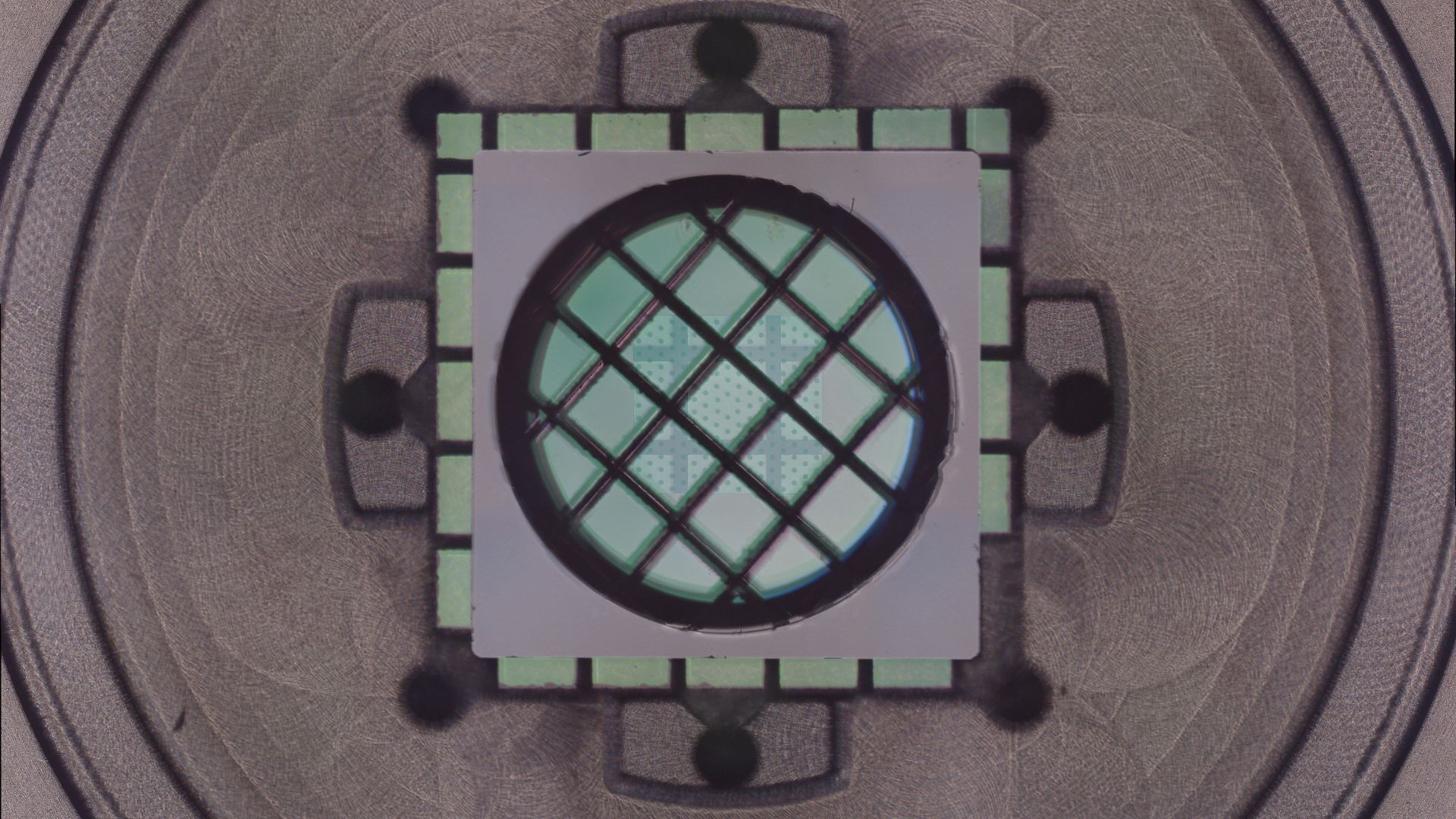
At the heart of their innovation lies the challenge of mitigating thermal noise inherent in room-temperature environments. Addressing this, the scientists incorporated cavity mirrors into their setup. These specialized mirrors, designed to reflect light back and forth within a confined space or cavity, effectively trap the light, intensifying its interaction with the system’s mechanical components. To combat thermal noise, the mirrors were closely patterned with crystal-like periodic structures known as “phononic crystals.”
According to researchers, a mechanical oscillator, a 4mm drum-like apparatus, played a pivotal role in the setup. Its size and specialized design were instrumental in shielding it from external disturbances, thus facilitating the detection of nuanced quantum effects even in room temperature conditions. “The drum we use in this experiment is the culmination of many years of effort to create mechanical oscillators that are well-isolated from the environment,” said Engelsen.
Increased control
Researchers claim that their techniques have broader implications in handling complex noise sources, which are crucial for precision sensing and measurement applications.
The setup enabled the researchers to achieve “optical squeezing,” a quantum phenomenon manipulating light properties to reduce fluctuations in one variable while increasing them in another, as per Heisenberg’s principle. According to the team, this demonstration at room temperature showcased their ability to control and observe quantum phenomena in a macroscopic system, eliminating the need for ultra-low temperatures.
Operating at room temperature is expected to democratize access to quantum optomechanical systems, pivotal for exploring quantum mechanics on a larger scale. The team claims that this breakthrough promises to extend the reach of quantum measurement technologies and deepen our understanding of macroscopic quantum phenomena.
“The system we developed might facilitate new hybrid quantum systems where the mechanical drum strongly interacts with different objects, such as trapped clouds of atoms. These systems are useful for quantum information and help us understand how to create large, complex quantum states, said Alberto Beccari, a PhD student leading the study, in a statement.
Source: Interesting Engineering
Scientists discover strongest known magnetic fields inside nuclear matter
Breaking barriers: Researchers master quantum control at room temperature