Mars’ True Colors Revealed—What Does It Mean for Life on the Planet?
For decades, scientists believed that Mars’ iconic red color was the result of a chemical process similar to the formation of rust on Earth. However, new research suggests a different explanation—one that ties the planet’s color to a time when Mars was covered in water. This discovery challenges long-standing assumptions and reshapes our understanding of the Red Planet’s geological history.
Mars: The Red Planet with a Complex Past
Mars, the fourth planet from the Sun, has fascinated astronomers and space enthusiasts for centuries. With its thin atmosphere composed mostly of carbon dioxide, Mars presents a stark landscape of vast plains, towering volcanoes such as Olympus Mons—the largest in the solar system—and deep canyons like Valles Marineris. Evidence of ancient riverbeds and dried-up lakes indicates that liquid water once flowed on its surface, hinting at a past that may have supported microbial life. The planet’s harsh conditions include extreme temperature fluctuations and intense global dust storms, yet its distinctive red hue remains one of its most defining features.
A Color Noticed Through the Ages
Mars’ characteristic red color has been documented for thousands of years. The ancient Egyptians referred to it as ‘Her Desher,’ meaning ‘the Red One,’ while the Romans named it after their god of war due to its fiery appearance. In China, it was called the ‘fire star,’ and Babylonian records from as early as 2000 BC noted its reddish glow in the night sky. When Galileo observed Mars through a telescope in 1610, he confirmed its planetary nature, though the red hue appeared muted due to the limitations of early optics. As telescope technology improved, Mars’ striking red color became even more apparent, solidifying its moniker as the Red Planet.

New Research Reveals a Different Explanation
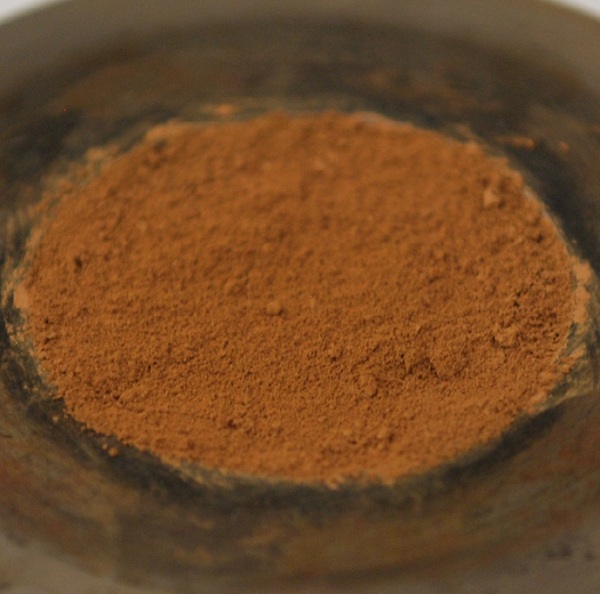
Recent studies now challenge the long-held belief that Mars’ red surface is due to iron oxide forming through a process similar to rusting on Earth. Scientists have discovered that a different iron-based compound, known as ferrihydrite, is likely responsible for the planet’s color. Unlike traditional iron oxide, ferrihydrite contains water, suggesting that Mars’ red hue is a remnant of a time when it had a much wetter environment.
Laboratory Simulations Unlock the Secret of Mars’ Color
To test this theory, researchers recreated Martian conditions in a laboratory. They analyzed data from multiple Mars missions, including orbital observations and rover findings, and combined them with detailed laboratory experiments. Their results confirmed that ferrihydrite is not only present in Martian dust but is also widespread across the planet’s surface.
Ferrihydrite is an oxyhydroxide mineral that contains oxygen, hydrogen, and iron. Crucially, its formation requires cooler, wet conditions—reinforcing the idea that Mars was once a more hospitable world. The discovery of ferrihydrite across the Martian landscape strengthens the theory that the planet had a significantly wetter past, potentially creating environments that could have supported life.
What This Means for Our Understanding of Mars
The presence of ferrihydrite on Mars shifts the narrative about the planet’s history. Rather than being merely a dry, barren world with iron-rich dust, Mars may have once been a planet with a stable hydrological cycle. The discovery fuels further questions about its past climate, the presence of liquid water, and the possibility of ancient microbial life.

Awaiting Further Confirmation from Mars Samples
While this breakthrough has provided compelling evidence, scientists are eager to analyze direct samples from Mars. The Perseverance rover has been collecting core samples from the Jezero Crater, a region believed to have once housed a lake. These samples, stored in titanium tubes, are awaiting future transport back to Earth for in-depth examination. Once analyzed, they will help confirm whether ferrihydrite is indeed the primary cause of Mars’ red color and further unravel the mysteries of the planet’s past.
This new explanation for Mars’ red hue not only deepens our understanding of the planet’s history but also strengthens the case that it may have once been a more Earth-like world. The story of Mars is far from complete, and with each new discovery, we come closer to understanding the secrets hidden within its dusty, crimson surface.
Source: Mars’ True Colors Revealed—What Does It Mean for Life on the Planet?
A Black Hole 100 Times More Massive Than the Milky Way – What Now?
A Black Hole 100 Times More Massive Than the Milky Way – What Now?