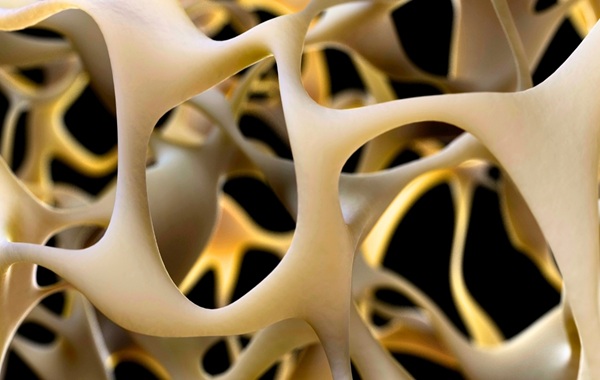
Has Science Finally Found the ‘Off Switch’ for Osteoporosis?
Recent breakthroughs suggest we aren’t just close to halting bone loss—we might soon be able to reverse it entirely.
For decades, the diagnosis of osteoporosis has felt like a life sentence of decline. It is a silent thief, slowly stripping away bone density until a simple fall results in a catastrophic fracture. Current medicine has essentially been playing defense, trying to slow the crumbling of the body’s foundation. But a groundbreaking new study led by researchers from the University of Leipzig and Shandong University suggests it’s time to play offense.
They haven’t just found a new drug; they have identified a biological mechanism that acts as a “master switch” for bone strength.
The Discovery: Meeting the Architect
To understand the breakthrough, we have to look at GPR133. This is a specific cell receptor found on osteoblasts—the hardworking cells responsible for building new bone. Think of osteoblasts as the construction crew of your skeleton.
In the past, scientists noticed that genetic variations in GPR133 were linked to bone density, but the mechanism remained a mystery. The new study, published in Signal Transduction and Targeted Therapy, confirms that GPR133 is essentially the foreman of the construction crew. When this gene is missing or inactive, the crew stops working, and bones become brittle.
The “Biological Button”
Identifying the receptor was step one. Step two was figuring out how to control it. The researchers screened thousands of compounds via computer assistance and found a match: a small molecule called AP503.
Dr. Ines Liebscher, a biochemist at the University of Leipzig, describes AP503 not merely as a supplement, but as a “stimulator.” In animal trials, the results were striking:
In healthy mice: AP503 made strong bones even stronger.
In osteoporotic mice: The molecule reversed the symptoms.
The Synergy Effect: Perhaps most excitingly, when the treatment was combined with exercise, the bone-strengthening effects were amplified significantly.
“AP503 serves as a biological button,” the researchers explained. It forces the osteoblasts to work harder and faster, effectively rebuilding the skeletal structure from the inside out.
Why This Is a Paradigm Shift
To appreciate the magnitude of this finding, one must look at the current landscape of osteoporosis treatment.
Most treatments today (like bisphosphonates) work by stopping the body from breaking down old bone. While useful, they often come with a laundry list of side effects, including gastrointestinal issues and, paradoxically, a risk of atypical fractures over long-term use. Furthermore, they don’t do much to rebuild what has already been lost.
The GPR133/AP503 approach is different because it is anabolic—it actively promotes the creation of new, healthy bone tissue. It offers the potential to take a skeleton that has already degraded and restore it to durability.
A Golden Age for Bone Research?
This breakthrough doesn’t exist in a vacuum. It appears we are entering a new era of skeletal science. The article highlights that this discovery sits alongside other radical innovations from 2024 and 2025:
The Blood-Based Implant: Researchers at the University of Nottingham have developed a “biocooperative” material. By mixing synthetic peptides with a patient’s own blood, they can create a regenerative “putty” that heals broken bones. Since it uses the patient’s own blood, it is practically free to source and highly safe.
The Maternal Brain Hormone (MBH): Scientists at UCSF recently discovered a hormone in lactating mice that creates shockingly dense bones to support the demands of breastfeeding. Harnessing this hormone could provide yet another pathway to reversing bone loss in humans.
The Road Ahead
While the GPR133 study was conducted on mice, the biological machinery is highly conserved, meaning it functions very similarly in humans.
“If this receptor is impaired… mice show signs of loss of bone density at an early age – similar to osteoporosis in humans,” says Dr. Liebscher. This implies that fixing the receptor could fix the disease in us, too.
As populations age globally, the race to turn AP503 (or a drug derived from it) into a human-safe pill is on. If successful, we could be looking at a future where a diagnosis of osteoporosis is no longer a permanent condition, but a temporary setback that can be fully reversed.
Source: Science Alert
From Flab to Fix: How Your Body’s “Unwanted” Fat Could Save Your Broken Spine
Has Science Finally Found the ‘Off Switch’ for Osteoporosis?