Ancient DNA Reveals Early African Origins of Cattle in the Americas
Cattle may seem like a uniquely American animal, steeped in legends of cowboys, cattle drives, and sprawling ranches. However, cattle did not exist in the Americas before the Spanish brought livestock from Europe via the Canary Islands.
In a new study, researchers analyzed ancient DNA from Spanish settlements in the Caribbean and Mexico. The results show that the livestock were imported from Africa in the early years of colonization, more than 100 years before they were officially documented.
Records kept by Portuguese and Spanish colonizers describe the breed in Andalusia, Spain, but do not mention the transportation of cattle from Africa. Some historians have interpreted this omission to mean that the first settlers initially relied on a small number of European cattle shipped to the Caribbean islands.
An “early study concluded that only a few hundred cattle were brought in in the early 16th century and then bred on the island of Hispaniola. From there, we can infer that the first populations spread throughout the Americas,” said lead author Nicholas Del Sol, a postdoctoral fellow at the Florida Museum of Natural History.
Columbus brought the first cattle to the Caribbean during his second expedition in 1493. Columbus brought the first cattle to the Caribbean in 1493. The Spanish distributed cattle widely in the Caribbean, and by 1525, foreign livestock were being raised in parts of Latin America. Meanwhile, Portugal moved related breeds from mainland Europe and the Cape Verde Islands to what is now Brazil.
However, researchers have reason to suspect that events from the historical record were incomplete: in 1518, Emperor Charles V passed an imperial decree legalizing the transport of enslaved people directly from their homeland to the Americas. In the decades that followed, enslaved Africans would play an important but often unrecognized role in the development of the pastoral industry.
The first Mexican cattle ranchers were almost all of African descent,” Del Sol says. We also know that people like the Fulani from West Africa formed pastoral societies that lived in harmony with cattle.” All of this evidence leads us to believe that the Spanish likely brought cattle from the same areas as the people they enslaved.
Previous genetic studies seem to support this idea. DNA from modern American cattle shows characteristics of their European ancestors, but also reveals a history of crossbreeding with African and Asian breeds. Without archaeological data, however, it is impossible to determine exactly when these events occurred.
Records of the first breeding of African cattle in the Americas date back to the 1800s. The Senegalese humpback Zebu cattle and the Gambian Ndama cattle were moved across the Atlantic to areas with similar environments.
At about the same time and into the 1900s, cattle that had been domesticated in Southeast Asia for thousands of years were also imported from India. Crossbreeding of these cattle, such as the Senepole in the Virgin Islands and the American Brahman common in the tropics, gave rise to common breeds that still exist today. Are these records the first examples of cattle being imported from outside Europe, or are they merely a continuation of a long-standing practice that had not previously been documented?
The only way to know for sure, says DelSol, is to examine ancient DNA sequences of cows and bulls preserved from the colonial period. Other studies have attempted DNA analysis on cattle bones found in Jamaica in the 16th century, but were inconclusive.
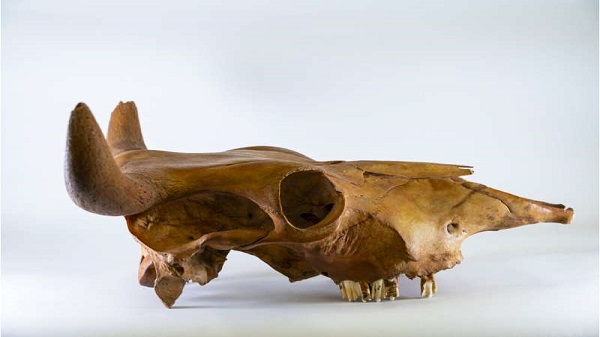
Del Sol collected 21 bones from several archaeological sites: seven were excavated in Puerto Real, a former ranching town built in 1503 in Ispañola and abandoned decades later because of rampant piracy. The remaining specimens correspond to 17th- and 18th-century sites in central Mexico, including a long arc of settlements and monasteries from Mexico City to the Yucatan Peninsula.
After extracting DNA from the bones, he compared their genetic sequences to those of modern species from around the world. As expected, most of the sequences shared a strong relationship with European cattle, especially in the Puerto Real specimens. This was especially true of the Puerto Real specimens. Six of the Mexican bones also had sequences common to African cattle, but crucially, they were also found in breeds present in southern Europe. Del Sol said, “The difficulty is that because of centuries of exchange across the Strait of Gibraltar, Spain has the same kind of livestock as Africa.”
The tooth found in Mexico City, however, was different from the others. The tooth’s mitochondria had a short sequence of nucleotides rarely known outside of Africa. The cattle were likely present in the late 1600s, more than a century after the introduction of African cattle.
Looking back in time, the bones also show a pattern of increased genetic diversity. The oldest bones from Puerto Real and Sochimilco (a settlement south of Mexico City) are all derived from European livestock, whereas those from later Mexican sites appear to be descended from livestock commonly found in the Iberian Peninsula and Africa.
Taken together, these results suggest that Spanish settlers had begun importing cattle directly from West Africa by the early 1600s.
Cattle grazing greatly shaped the landscape and social systems of the Americas. We have long known about the diverse genetic ancestry of American cattle, but now we have a more complete chronology of their introduction.
Source: Ancient DNA Reveals Early African Origins of Cattle in the Americas
The Origins of Mankind in Ancient Sumerian Documents
Ancient DNA Reveals Early African Origins of Cattle in the Americas