Why Did Ancient Egyptians Build This Mysterious Observatory 2,500 Years Ago?
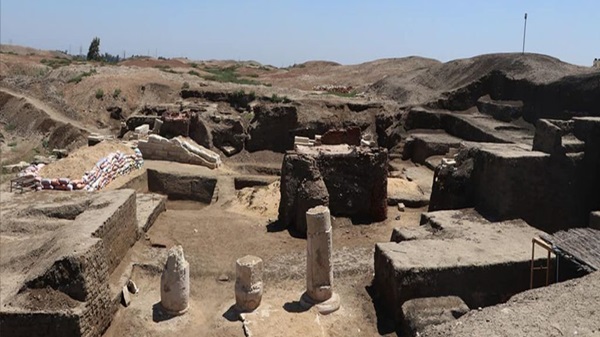
A ruined building in Kafr El Sheikh has been identified as the site of an ancient Egyptian astronomical observatory, where, more than 2,500 years ago, Egyptians once gazed at the stars.
Dating back to the 6th century BCE, this building was part of what we now call the Temple of the Pharaohs in the town of Buto. It is the largest known astronomical observatory from that era in Egypt, a testament to the early astronomers who meticulously tracked the movements of the Sun and stars—an essential service for the ancient Egyptians.
The Egyptians were among the most skilled astronomers in ancient history. Their legacy includes the creation of the 365-day calendar and the 24-hour day, systems that continue to influence our modern world. They mapped the night sky and developed their own constellations and zodiac, some symbols of which are still recognized today.
The newly discovered observatory is a remarkable example of their expertise, despite the passage of time that has eroded much of the evidence.
The building, constructed from mud bricks, spanned 850 square meters (9,150 square feet) and was built in an L-shape supported by pillars. Its entrance faced east, the direction of the sunrise.
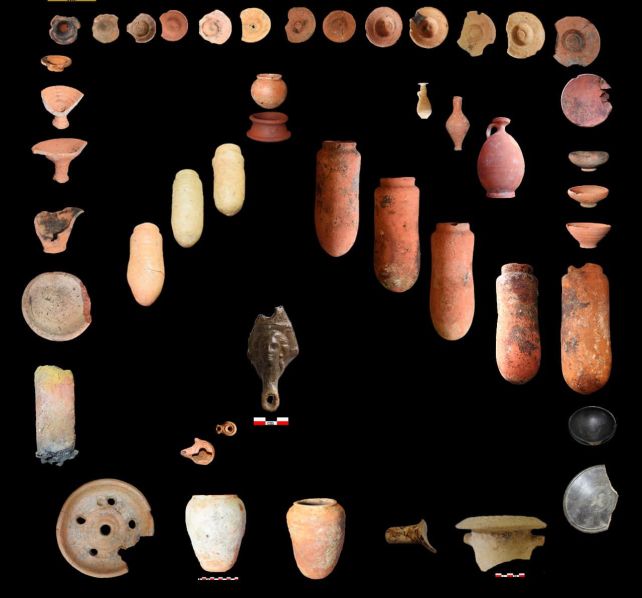
Inside, archaeologists from the Egyptian Ministry of Tourism and Antiquities uncovered artifacts and tools associated with the study of the skies. Of particular interest was a large sloping shadow clock, a type of sundial invented by the ancient Egyptians to track the time of day. This clock consisted of a 4.8-meter (15.7-foot) course of limestone slabs, upon which were mounted five flat limestone blocks, three vertical and two horizontal. Although worn by time, these blocks once bore lines that marked the changing inclination of a shadow cast as the Sun moved across the sky.
Another significant find was a large stone block in a circular room, accompanied by two circular stone blocks positioned to the north and west. This arrangement was also used to track the Sun’s movement.
The observatory also contained a series of five smaller rooms likely used to store tools, while four small mud-brick rooms and one stone room appeared to have functioned as the observatory’s tower. Additionally, a large hall with three walls coated in yellow mortar featured murals, including a depiction of a ritual boat with eight niches and two oars. The front of the boat displayed the head of Horus and the Udjat Eye, symbols associated with the universe, the god Horus, and the goddess Wadjet—key deities in Buto.
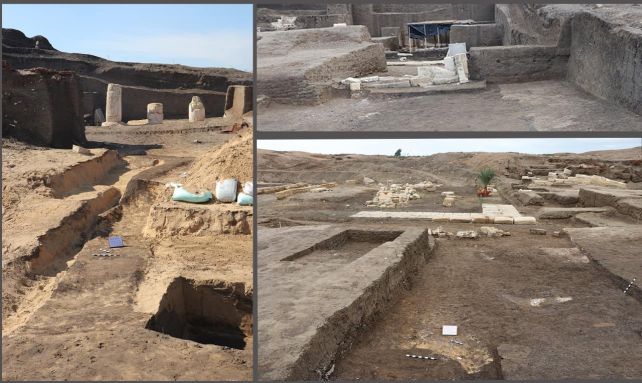
At the center of this hall was a stone platform with inscriptions, mostly depicting astronomical scenes of sunrise and sunset during the three seasons observed in ancient Egypt.
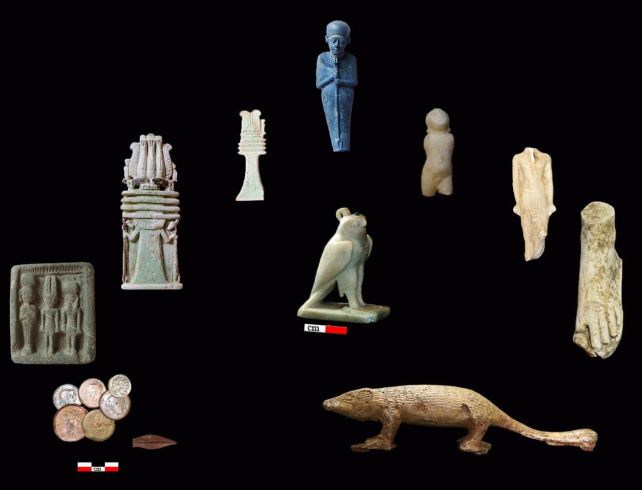
Artifacts discovered in the observatory include bronze statues of Osiris and Nemes, a terracotta statue of the god Bes, and a granite statue from the 26th Dynasty, during the reign of Pharaoh Wahibre Psamtik I. This statue depicts Osiris and bears an inscription dedicated to the priest Psamtik-Seneb, who held the title of Royal Seal Bearer.
Other artifacts found include measuring tools, a faience menat necklace, a faience statue of the god Ptah, faience religious symbols, pottery artifacts, mortar amphora covers, and offering tables.
Astronomy played a crucial role in ancient Egyptian society. Their complex calendar was used to mark the passage of time, set dates for religious and political rituals, and track the annual flooding of the Nile, which was essential for agriculture and navigation.
Today, we often take our calendar for granted—it’s simply part of our daily lives. Yet, we owe a debt of gratitude to the ancient Egyptian astronomers, whose ingenuity and precision laid the foundations for our modern timekeeping. Thanks to their solid engineering, observatories like this one have withstood the test of time, allowing us to study their work thousands of years later.
Source: Why Did Ancient Egyptians Build This Mysterious Observatory 2,500 Years Ago?
Mars’ Jezero Crater: Ancient Water and Potential Life – What Did the Rover Find?
Mars’ Jezero Crater: Ancient Water and Potential Life – What Did the Rover Find?