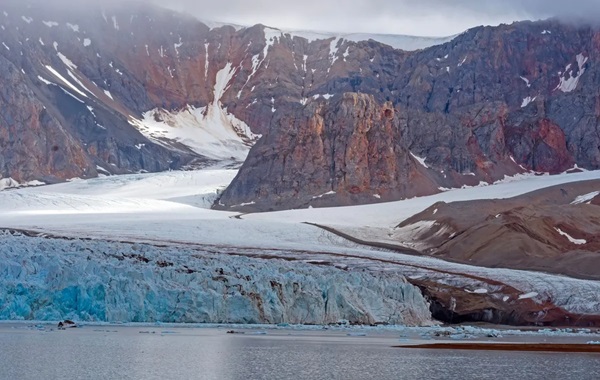
US scientists discover ‘ice pimples’ in Arctic’s warming seafloor
Researchers at the US Sandia National Laboratories (SNL) are using a fiber optic cable off the north coast of Alaska to study the conditions of the Arctic seafloor. The innovative approach is vital to improve our understanding of climate change.
The Arctic is the icy region in the north that requires facing extremely harsh conditions to survive. However, as the global climate is changing, the region is warming up rather rapidly up to four times faster than the rest of the planet.
Scientists aren’t concerned about the melting ice caps in the region and how this will affect the fauna in the region today. Underneath the ice are layers of permafrost that are also warming up and contain living matter that froze in the thaw of the previous Ice Age.
When the permafrost thaws, microbes that have remained inactive for thousands of years will spring back to life and begin emitting gases like carbon dioxide and methane, which will further warm up our planet, scientists are keen to know exactly how much living matter is hidden in this permafrost and how it will impact us in the future.
Collecting data using a fiber optic cable
Researchers Christian Stanciu and Jennifer Frederick at SNL were looking to determine the seismic structure of the Arctic seafloor and turned to an innovative novel method using a fiber optic cable.
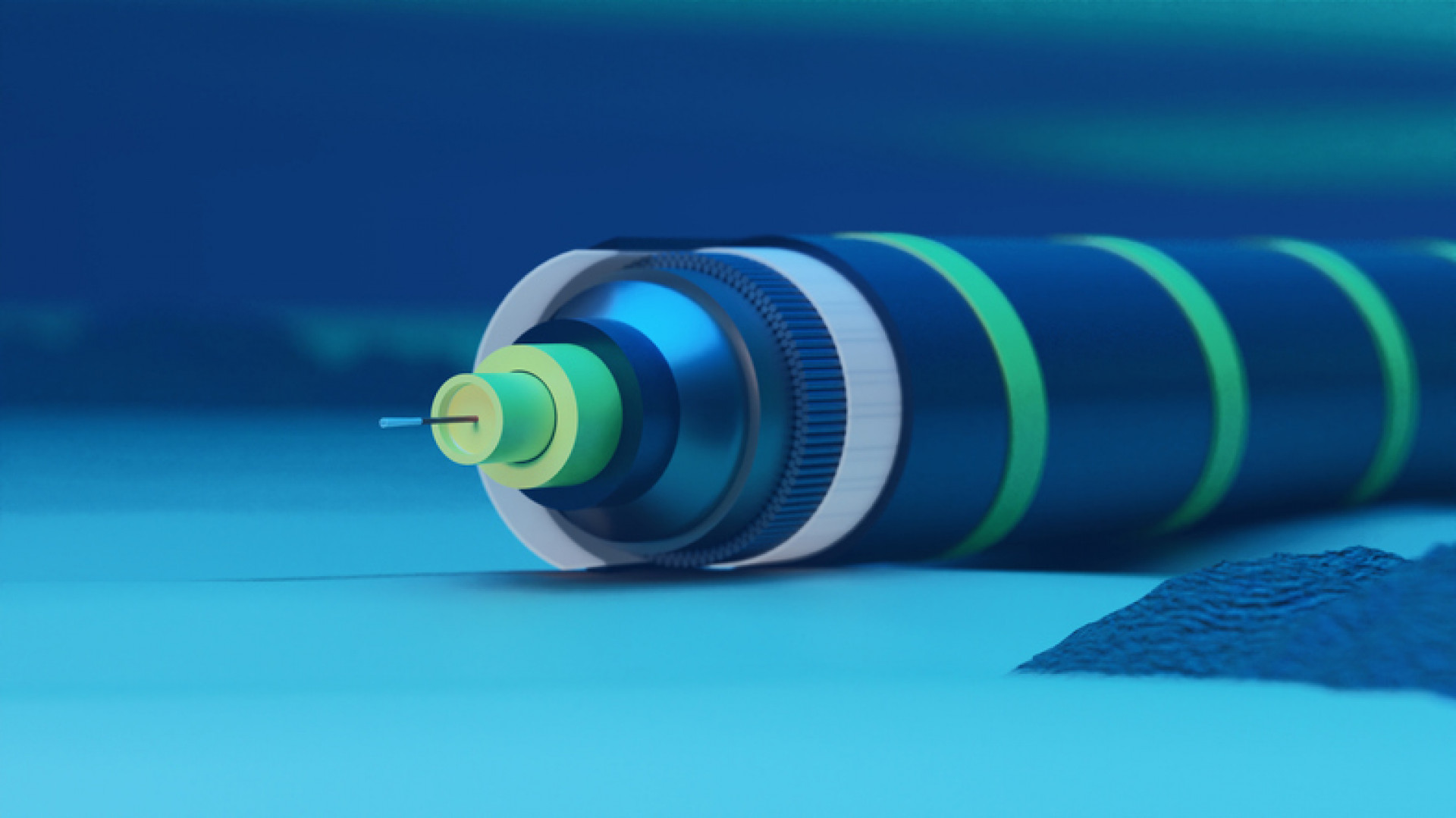
The research team shot pulses of laser light down a fiber optic cable buried off the coast of Alaska, running north from Oliktok Point where tiny imperfections in the cable caused the light to bounce back. The researchers used distributed temperature sensing where the light was captured at two wavelengths by a sensor system. The difference between the two helped the researchers determine the temperature of the cable at every yard.
Further looking at the two wavelengths, the team could also determine whether the cable had been strained by passing sound waves. Called distributed acoustic sensing, this approach helped the team determine the structure of the seafloor to a depth of about three miles (4.82 km).
What have the researchers found?
Using this approach, the team is confident that it has identified the nature of the seafloor permafrost to a depth of about a quarter of the mile (400 m). Additionally, they also found the presence of unusually large amounts of ice, akin to an ice pimple, during their analysis.
The major advantage of the approach is that it allows near real-time data collection from a remote location. Not only does this minimize the risk of losing data when the system is not being monitored, but it also reduces the need to travel to Oliktok every time.
“The fact that we can monitor the temperature continuously, we can now pick up changes from year-to-year and season-to-season,” said Frederick in a press release. “We’re specifically looking for unexplainable warm spots. We think we’ll be able to see areas of seafloor seeps because they’re carriers of deeper, carbon-rich fluids and are an indication of warming and change.”
The limitations of the system are the power of the lasers and the sensitivity of the sensors used, limiting the distance over which data can be collected. Additionally, the system only allows for measurement of either acoustic or temperature data at the time but not both together. With further work, the research team hopes to fix these as well.
The research findings will be presented today at the American Geophysical Union’s Fall Meeting in San Francisco.
Source: Interesting Engineering
Six-million-year-old groundwater pool discovered deep under Sicilian mountains
US scientists discover ‘ice pimples’ in Arctic’s warming seafloor