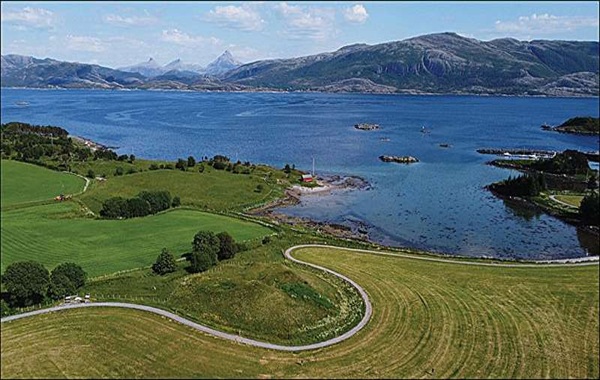
Monumental ship burial beneath ancient Norwegian mound predates the Viking Age
Monumental ship burials in Scandinavia may have started around a century earlier than previously thought, according to a paper published in the journal Antiquity. It reports the discovery of the remains of a 1,300-year-old ship buried on the Norwegian island of Leka, predating the Vikings.
The burial was found inside a massive earth mound known as Herlaugshaugen, which has long been thought to be the grave of a legendary king from local sagas. Large burial mounds are fairly common across northern Europe, although only some contain ship remains.
Inside the mound
Scientists usually don’t dig up these kinds of large mounds because it is expensive and risks damaging the site. So, instead, the Norwegian team dug small trenches in specific areas of the mound to look for clues.
They also used metal detectors. If a ship had been buried here, the iron rivets that once held the vessel together would be in their original positions even after the wood had rotted away. The team eventually retrieved 29 iron rivets. Radiocarbon dating of the wood attached to the rivets indicated a burial date around AD 700.

“The Herlaugshaugen mound represents a ship burial dating to the end of the seventh or the beginning of the eighth century,” wrote the team in their paper.
The significance of this is that conventional theories hold that monumental ship burials began earlier in England (for example, the famous ship burial at Sutton Hoo, which dates to the early seventh century) and that the practice moved to Norway around AD 800. This was around the time that the Viking Age started. However, this research suggests that this tradition appeared in Scandinavia earlier than previously believed.
In other words, large seagoing ships that could travel long distances, which we associate with the Vikings, were already in use some time before they were on the scene. It also says something about social hierarchy at the time.
Status symbols
Building such a huge mound is a monumental feat, so to speak, that required massive amounts of labor. And most likely only powerful kings or chiefs could have commanded the groups of people and resources needed for such a project.

The find also suggests that ship burials were already linked with elite status by the year 700.
“The monumental ship mound at Leka represents another piece of the puzzle for understanding the societal development of northern Europe in the seventh to tenth centuries AD,” said the researchers.
Source: phys.org
They Said Britain Was Uninhabitable… So Who Were the Humans Living There 500 Years Earlier
Monumental ship burial beneath ancient Norwegian mound predates the Viking Age