Two Habitable Planets in One System: Is It Possible?
A Cosmic Neighbor: The Discovery of TOI-715 b
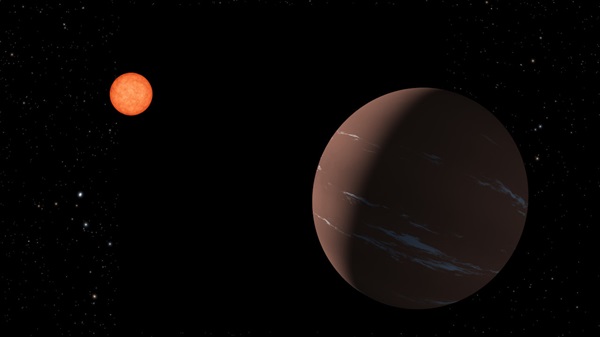
Astronomers have uncovered a new “super-Earth” orbiting a nearby star, offering a tantalizing glimpse into the possibility of life beyond our solar system. This intriguing planet, designated TOI-715 b, resides a mere 137 light-years away, orbiting a small reddish star. Notably, the system might also host a second Earth-sized planet within its habitable zone, adding to the excitement of this discovery.
Key Characteristics of TOI-715 b: A Super-Earth in the Habitable Zone
TOI-715 b is about 1.5 times the size of Earth and orbits its star within the “conservative habitable zone.” This region is defined as the distance from a star where liquid water could potentially exist on a planet’s surface. While several factors, such as atmospheric composition, would ultimately determine the planet’s ability to support water and life, being within this zone is an encouraging start.
Additionally, a smaller companion planet in the same system may also lie just within the conservative habitable zone. If confirmed, this would represent a rare discovery of two potentially habitable planets in a single system.
Advanced Tools: Transforming Exoplanet Discovery
Modern astronomy is entering a golden era of exoplanet research, with instruments like NASA’s James Webb Space Telescope (JWST) playing a pivotal role. Unlike earlier missions that focused on detecting exoplanets, the JWST can analyze their characteristics, including atmospheric composition. This capability is crucial for identifying biosignatures, or signs of life, on distant worlds.
TOI-715 b, discovered by NASA’s Transiting Exoplanet Survey Satellite (TESS), demonstrates the effectiveness of these cutting-edge tools. TESS specializes in observing transiting planets—those that pass in front of their stars from our vantage point. The short orbital period of TOI-715 b, a mere 19 Earth days, makes it an ideal candidate for further observation. Frequent transits enable astronomers to gather more data, facilitating detailed analysis.
Why Red Dwarfs Are Prime Targets for Exoplanet Hunters
TOI-715 b’s parent star is a red dwarf, a type of star smaller and cooler than our Sun. Red dwarfs are increasingly seen as promising hosts for habitable planets. Their cooler temperatures allow planets to orbit much closer than Earth does to the Sun while remaining within the habitable zone. Moreover, the smaller size of red dwarfs enhances the detectability of planets crossing their faces.
The proximity of TOI-715 b’s orbit to its star and the frequency of its transits make it a valuable target for instruments like TESS and the JWST. These characteristics also simplify the task of confirming its atmospheric properties and assessing its potential as a “water world.”
The Role of International Collaboration in Confirming TOI-715 b
This groundbreaking discovery was spearheaded by an international team led by Georgina Dransfield of the University of Birmingham, United Kingdom. The team’s findings, published in the journal Monthly Notices of the Royal Astronomical Society in January 2024, highlight the collaborative nature of modern astronomy. Facilities such as Gemini-South, Las Cumbres Observatory telescopes, ExTrA, SPECULOOS, and TRAPPIST-South contributed crucial data to confirm the planet’s existence.
Looking Ahead: The Promise of Future Investigations
The discovery of TOI-715 b and its potential companion planet opens new avenues for exploring habitable-zone worlds. If the smaller planet is confirmed, it would mark the smallest such planet detected by TESS in the habitable zone. Furthermore, the ability of instruments like the JWST to probe exoplanet atmospheres could soon reveal whether these distant worlds possess the conditions necessary for life.
Fun Fact: TOI-715 b’s Short Year
Life on TOI-715 b would be very different from life on Earth, not least because a year there lasts just 19 days. This tight orbit, combined with the star’s low luminosity, makes TOI-715 b’s environment both unique and highly conducive to detailed study.
Conclusion: A New Chapter in Exoplanet Exploration
TOI-715 b exemplifies the breakthroughs made possible by advanced technology and international cooperation. As the search for habitable planets continues, discoveries like this bring us closer to answering one of humanity’s most profound questions: Are we alone in the universe?
Source: Two Habitable Planets in One System: Is It Possible?
Did Mature Galaxies Like Zhúlóng Form Earlier Than We Thought?
Did Mature Galaxies Like Zhúlóng Form Earlier Than We Thought?