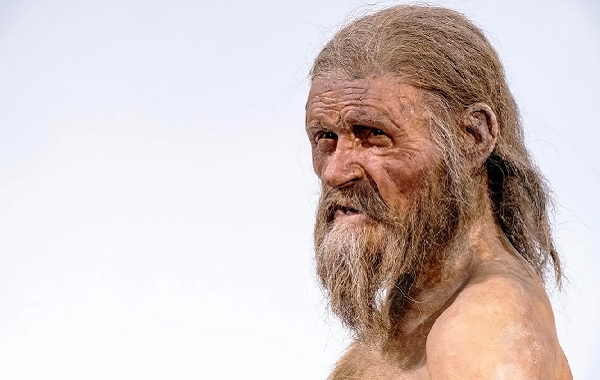
Two Ancient Humans, Including Ötzi the Iceman, Carried a 45,000-Year-Old Cancer Virus
Scientists have discovered traces of carcinogenic human papillomavirus (HPV16) DNA in ancient human remains.
By analyzing the genomes of the famous Ötzi the Iceman and the Ust-Ishim Man (from Western Siberia), researchers have shown that the pathogen was present in populations living 5,000 and 45,000 years ago.
Human papillomavirus (HPV) possesses a unique ability to co-evolve with its host. Unlike influenza viruses, which mutate rapidly, HPV changes extremely slowly, allowing scientists to use it as a “molecular record.”
Changes in its genome can be used to track the migrations of entire populations. The fact that the virus’s structure has remained recognizable for 45,000 years highlights how perfectly it has adapted to the human body as a stable ecological niche.
The discovery reveals that the history of HPV16 is inextricably linked to the evolution of our species. A team of biologists examined the genetic data of the Alpine “Iceman” and a Siberian hunter, uncovering tens of thousands of DNA segments consistent with the dangerous strain of the virus.
The study’s authors utilized bioinformatics methods to eliminate random overlaps in short fragments of ancient DNA. Comparisons with simulation models confirmed that this was not statistical noise but a genuine biological signal from an ancient virus.
“We are confident that we have the oldest evidence of HPV,” says co-author Juliana Yazigi. This discovery necessitates a reassessment of pathogen transmission routes during the Stone Age.
A Shift in the Evolutionary Paradigm
The scope of the study suggests that the virus may have spread in the opposite direction: not from Neanderthals to humans, but from humans to Neanderthals. This theory is supported by the fact that previously, only the low-risk HPV12 strain had been found in Neanderthal remains, while the aggressive HPV16 strain was firmly established in the modern human lineage.
Such findings are critical for understanding how the genetic diversity of viruses changes over time and in relation to the environment.
It was previously believed that modern humans might have acquired this virus variant through interbreeding with Neanderthals. However, new data indicates that the virus circulated among Homo sapiens for much longer and across wider regions. The broad geographical distribution of the findings, stretching from Europe to Siberia, confirms that the infection has been a constant companion of humans for tens of thousands of years.
Source: science.org
The Chamber Egyptologists Ignore: Does Hidden Geometry Rewrite the Purpose of the Great Pyramid?
Two Ancient Humans, Including Ötzi the Iceman, Carried a 45,000-Year-Old Cancer Virus