The Ice Age Enigma: A 17,000-Year-Old Skeletal Embrace Reveals a Hidden Genetic Tragedy
The Discovery
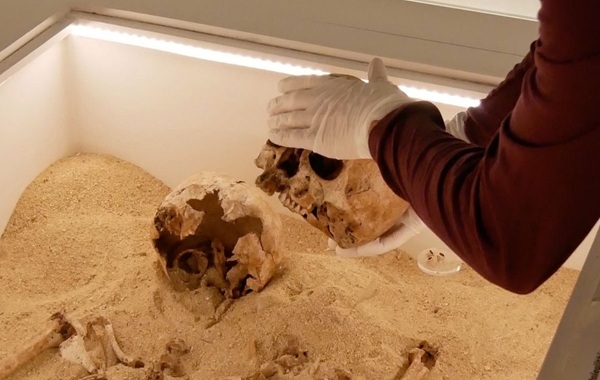
In the depths of the Grotta delle Romito in Italy, archaeologists unearthed a scene frozen in time for 17,000 years: two Upper Paleolithic individuals buried in a poignant, eternal embrace. While the “skeletal hug” itself is a rare find, modern genomic sequencing has recently peeled back the layers of this ancient bond to reveal a heartbreaking biological secret.
The Genetic Mystery
For years, the smaller of the two figures was thought to be a young woman. However, advanced DNA analysis has corrected the record—the individual was a male youth, roughly 12 years old, who lived with a rare and debilitating form of congenital dwarfism (specifically, acromesomelic dysplasia type Maroteaux).
This is not just a medical curiosity; it is the oldest known case of this specific genetic condition in human history. The boy would have faced significant physical challenges, including severely shortened limbs and limited mobility, making his survival in the harsh, nomadic environment of the Ice Age a feat of communal effort.
A Story of Compassion
The significance of this find goes beyond biology. In a world where “survival of the fittest” is often assumed to be the only law, this discovery provides profound evidence of prehistoric empathy. The boy was not abandoned; he was cared for, supported, and ultimately buried with high honors and deep affection alongside an older female relative.
Why It Matters Today
This ancient embrace challenges our perceptions of Paleolithic society. It suggests that even in the most unforgiving climates, our ancestors valued diversity and provided specialized care for the vulnerable. The genetic map of this boy bridges the gap between the deep past and modern medicine, reminding us that the capacity for love and inclusion is as old as humanity itself.
Source: Science Alert
The Ice Age Enigma: A 17,000-Year-Old Skeletal Embrace Reveals a Hidden Genetic Tragedy