‘Sensational’ mammoth butchery sites dating back 25,000 years reveal Ice Age survival
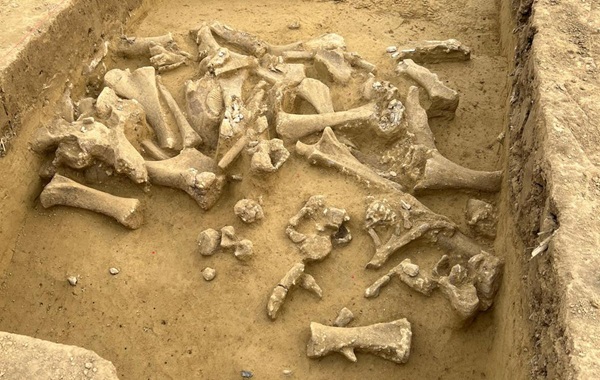
Scientists have made a “sensational” find at one of Austria’s most famous Palaeolithic sites, shedding light on daily life before the peak of the last Ice Age. They discovered two distinct processing areas where mammoths were likely butchered for food, and their bones were used to create tools.
Although Langmannersdorf an der Perschling is among the youngest Palaeolithic sites compared to hotspots like Willendorf and Krems, it boasts a significant number of mammoth bones that have only recently been examined.
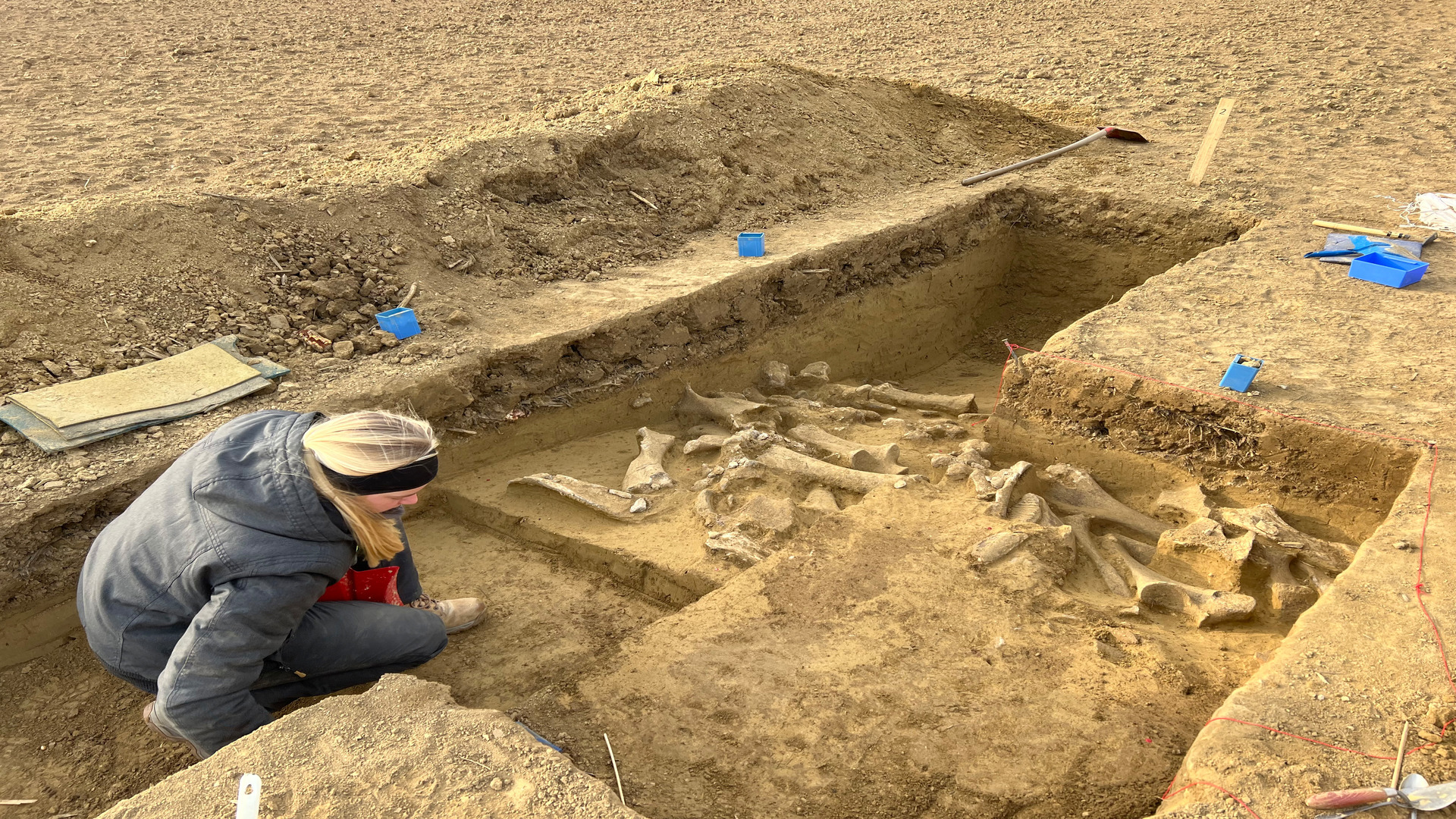
Following the discovery of Langmannersdorf at the turn of the 20th century, Josef Bayer conducted detailed research between 1919 and 1920. His team uncovered two mammoth hunter camps. Over a century later, in February 2025, the Austrian Archaeological Institute carried out a thorough investigation. The contents of these densely packed zones revealed different activities.
In the first camp, evidence showed that at least two mammoths had been dismembered. In the second camp, researchers excavated the remains of three animals, including complete and fragmented tusks, according to a release from the Austrian Archaeological Institute.
“This indicates that ivory was processed here, possibly for the manufacture of mammoth ivory projectile points, a common practice during this period,” said the institute.
Recognizing that mammoths provided raw materials for tools, clothing, and shelter, the Austrian Archaeological Institute identified the areas where these animals were processed.
“The fact that we are not just finding individual bones here, but intensively used areas in which several animals were processed, has more than exceeded our expectations,” explained Marc Händel from the Austrian Archaeological Institute of the Austrian Academy of Sciences.
Scientists have now analyzed these two sites, gaining valuable insights into the lives of early humans during the last Ice Age.
A glimpse into life before the end
A recent study explored two separate areas, approximately 50 feet apart, containing mammoth remains. One area showed evidence of butchering, indicating different processing techniques. The other appeared to be designated for toolmaking, where early hunters crafted arrowheads from mammoth tusks.
The Austrian Archaeological Institute is currently using modern interdisciplinary methods to analyze the material at its branch in Krems.
These methods include analyzing stone tools and butchery marks, examining ancient DNA and stable isotopes in teeth and bones, and conducting radiometric age determinations and paleogeographic modeling. The press release stated that “palaeoenvironmental reconstructions” are providing unprecedented insights into the living conditions of that era.
Upon completion of the analysis, the findings will be transferred to the National History Museum in Vienna. A selection of the remains will be exhibited at the Perschling Museum of Local History.
Scientists want to find Ice Age Bone accumulation sites
The institute explained that the Langmannersdorf excavations are part of a larger research project called MAMBA, or “Exploring Mammoth Bone Accumulations in Central Europe.”
This broader effort aims to study “the hunting and utilization of mammoths and to trace the development of mammoth populations” during the initial contact between humans and mammoths in this region of Europe 25,000 years ago.
Mammoth bone accumulation sites have been identified in Poland, the Czech Republic, and Austria. Scientists are interested in evaluating the climatic and ecological changes between 35,000 and 25,000 years ago.
Shortly before the peak of the last Ice Age, which led to the extinction of the mammoths, they still roamed the Perschling Valley near Langmannersdorf.
The site supports our understanding of mammoth population migration and demonstrates the extensive knowledge early ancestors possessed about these animals, as evidenced by their successful hunting, the press release concludes.
Source: Interesting Engineering
Mysterious Bronze Age Rituals in Başur Höyük: Human Sacrifice Exposed
‘Sensational’ mammoth butchery sites dating back 25,000 years reveal Ice Age survival