
Neutrinos changing ‘flavors’ could explain Big Bang mystery, new study shows
Researchers in the US and Japan have achieved the most precise measurements yet of the universe’s most elusive particles, neutrinos, after they combined results from two major experiments.
The joint study merged the results from the NOvA experiment in the US and the T2K experiment in Japan to uncover details about how tiny neutrinos, also called ghost particles, behave and change their identity as they travel across vast distances.
As per the research team, neutrinos are crucial to understanding the universe due to their ability to pass through matter almost undetected. They interact so rarely that billions stream through every person each second without leaving a trace.
Yet, much about them still remains unknown. Understanding how these particles work could help answer one of physics’ biggest questions about why the universe is made mostly of matter instead of equal parts matter and antimatter.
Unlocking neutrino secrets
Neutrinos have three distinct identities: electron, muon, and tau. They also possess the extraordinary ability to shift between them as they move.
This shape-shifting behavior, which is also known as neutrino oscillation, means that a neutrino born as one type can later be detected as another. Researchers describe these identities as ‘flavors.’ Tracing how those flavors change is central to uncovering neutrinos’ role in the evolution of the cosmos.
“The reason neutrinos are really, really fun is because they change their flavors,” Zoya Vallari, PhD, an assistant professor of physics at the Ohio State University, said.
“Imagine getting chocolate ice cream, walking down the street, and suddenly it turns into mint, and every time it moves, it changes again,” Vallari continued.
The analysis combined the results from two major long-baseline experiments that send beams of muon neutrinos across hundreds of miles to distant detectors.
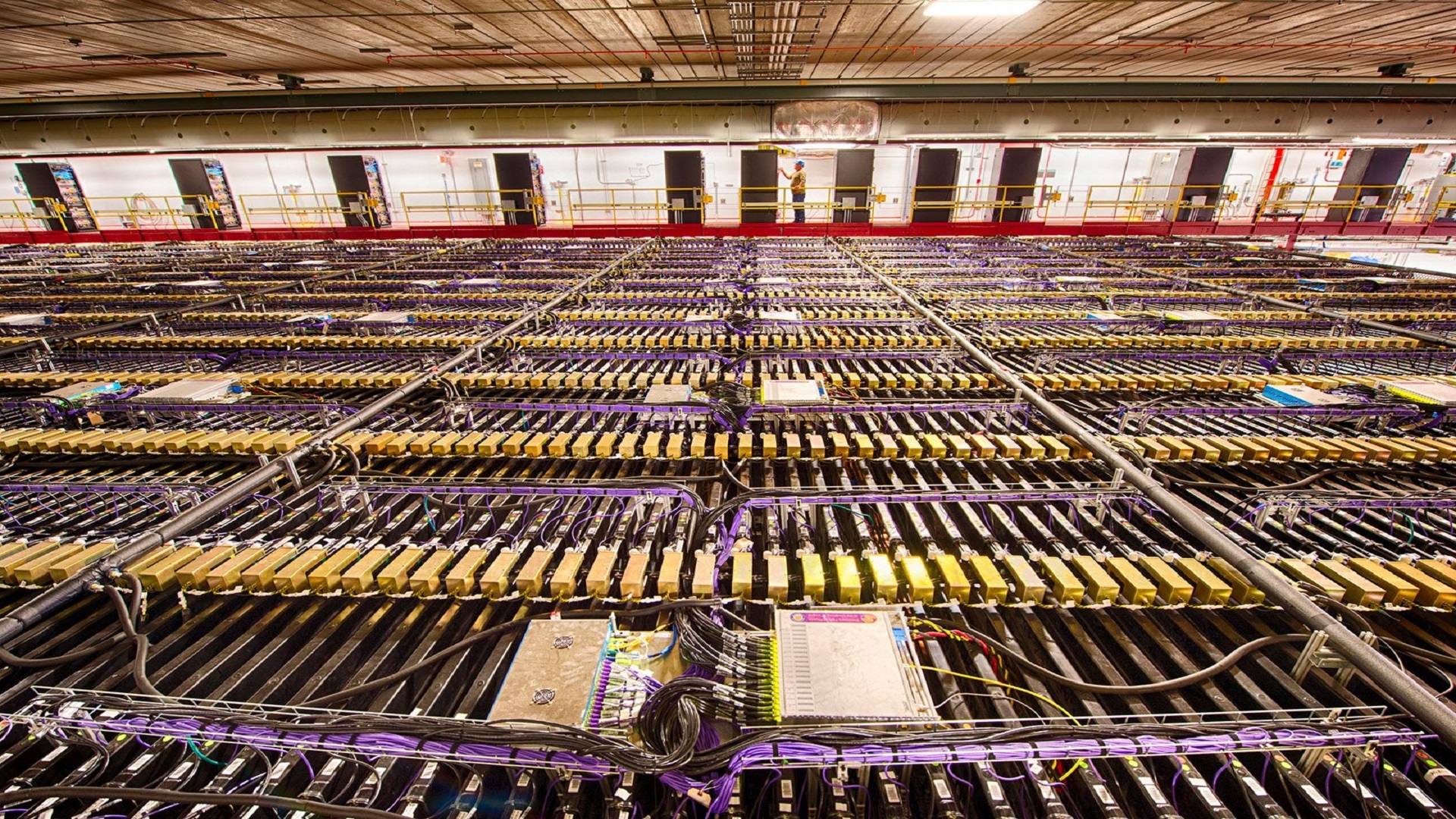
NOvA, based at the U.S. Department of Energy’s Fermilab, fires a beam of neutrinos from Illinois to a detector in Minnesota, while Japan’s T2K experiment sends its own stream from Tokai to the Super-Kamiokande detector buried deep in the mountains of Kamioka.
Tiny travelers, big insights
Even though both projects share the same goal, their designs differ in distance, energy, and detection methods. The combined data gave researchers a broader view of how neutrinos oscillate, and whether they do so differently from their antimatter counterparts, antineutrinos.
Detecting this difference, the Charge-Parity (CP) violation, could help explain why matter survived the Big Bang instead of being wiped out by antimatter.
“While our goals were the same, differences in our experiment design adds more information when we pool our data together, in that the sum is more than its parts,” Vallari continued.

While the combined results do not yet provide a definitive answer, they have increased the scientists’ knowledge about them. They also represent a crucial step toward solving one of physics’ greatest puzzles.
Future experiments, including the Deep Underground Neutrino Experiment (DUNE) in the US and Japan’s Hyper-Kamiokande, are expected to build on this foundation and offer even longer baselines and more powerful detectors to trace how neutrinos shift flavors across greater distances.
“Particle physics has given us many technologies, but for me, the primary motivation remains the human curiosity to understand our origin and place in the universe,” Vallari concluded in a press release.
Source: Interesting Engineering
What Secrets of Earth’s Birth Lie Hidden in Jupiter’s Shadow?
Neutrinos changing ‘flavors’ could explain Big Bang mystery, new study shows