Mars Keeps Spinning Faster, And Scientists Don’t Know Why
Records from inside Mars have provided the most accurate measurement of the Red Planet’s rotation to date.
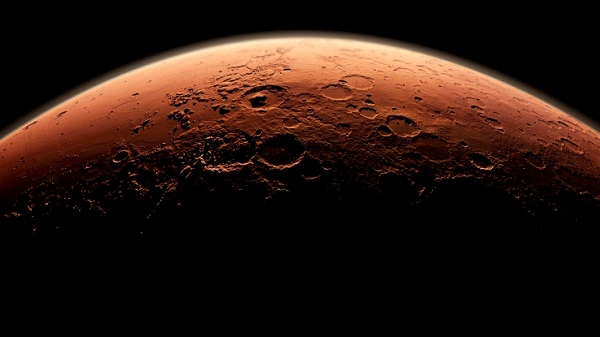
According to data from the now-retired lander Insight, Mars’ rotation is accelerating by about 4 milliseconds each year. This is a very small amount, shortening the length of a Martian day by just one millisecond per Martian year, the reason for which is not immediately clear.
However, this discovery may lead to a better understanding of Mars and its past evolution. Current leading hypotheses to explain this acceleration are long-term trends, such as the accumulation of material in the polar ice caps, and the dynamics of the Martian interior.
Says Bruce Bannert, planetary geophysicist at NASA’s Jet Propulsion Laboratory. I’ve been involved in the effort to put a geophysical station like InSight on Mars for a long time, and these results make the decades of work worth it.”
InSight ran out of power and was retired in December 2022, but the data obtained during its four years of operation gave scientists a lot to think about. The Mars rover’s observations of the Martian interior lasted only four short years, but they revolutionized our understanding of Mars. Its seismic records revealed not only the interior structure of Mars, but also the composition of its liquid core and ongoing crustal deformation.
These insightful measurements came not from seismic records, but from radio communications between Insight’s Rotation and Interior Structure Experiment (RISE) instrument and the NASA Deep Space Network on Earth The Earth and Mars are in motion, and the Earth and Mars are in motion.
As Earth and Mars moved around and rotated, signals bounced between the two, allowing scientists to look for subtle changes in radio frequency that could accurately measure Mars’ rotation.
Based on Mars’ 900 days of in-sight communication with Earth, the team found minute accelerations. This may be related to the redistribution of Mars’ mass. The moon is redistributing Earth’s mass by pulling the oceans.
Mars has no oceans. Scientists need to conduct a deeper analysis to determine the most likely cause of the acceleration.
The RISE data also allowed scientists to refine measurements of the Martian core by measuring the wobble, called nutation, caused by the movement of fluid.
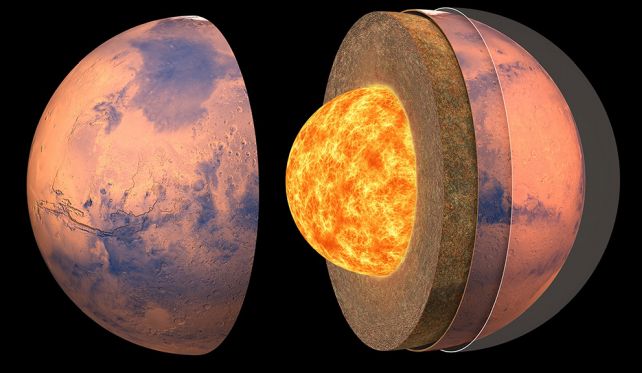
Seismic data measurements suggest that the radius of the Martian core is quite large, between 1,780 and 1,830 km (1,137 miles), more than half the planet’s radius of 3,390 km. Seismic analysis also suggested a core density of 6.2 to 6.3 grams per cubic centimeter.
The RISE data were in excellent agreement with these measurements, with a core radius of 1,835 km and a core density of 5.9 to 6.3 grams per cubic centimeter. However, the natation of the planet suggests that the densities are not evenly distributed. There are variations in density in the core, which also need to be examined in future analyses.
This is a historic experiment,” said astronomer Sebastien Le Maistre of the Royal Observatory of Belgium.
We spent a lot of time and energy preparing for the experiment, anticipating these discoveries, and RISE still reveals a lot about Mars.”
Source: Mars Keeps Spinning Faster, And Scientists Don’t Know Why