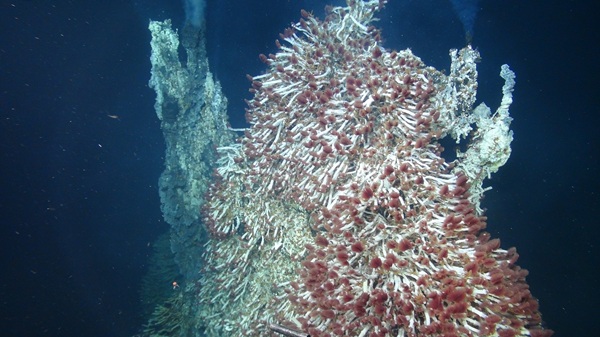
Could Deep‑Sea Volcanic Vents Reveal Life on Europa?
Astrobiologists are turning to Earth’s most extreme ecosystems to prepare for the search for life on Europa and beyond. By studying microbial communities thriving around hydrothermal fissures at the ocean floor, researchers hope to build a picture of what extraterrestrial microbes might look like—and how they might power themselves—inside icy worlds like Jupiter’s moon Europa.
Hydrothermal Vents and Early Earth Life Origins
Hydrothermal vents on Earth’s ocean floor are windows into our planet’s past—and potentially into Europa’s future. Fossilized bacteria found around these deep‑sea fissures suggest that vent‑driven chemistry played a pivotal role in life’s emergence roughly 4 billion years ago. Could similar processes be fueling life beneath Europa’s ice shell? This key question drives both current astrobiology research and the design of forthcoming missions.
Astrobiology Europa Missions: JUICE and Europa Clipper
ESA’s JUpiter ICy moons Explorer (JUICE) and NASA’s Europa Clipper are en route to the Jupiter system to probe “Ocean Worlds” for signs of life. Plume activity detected by Voyager and the Hubble Space Telescope hints at subsurface oceans venting water into space—a phenomenon known as cryovolcanism. By sampling Europa’s plumes, these missions aim to answer: what microbial biosignatures might lie beneath the ice?
Simulating Europan Extremophiles in the Lab
With a $621,000 NASA grant, microbiologist James Holden at UMass Amherst will spend three years studying microbes from deep‑sea vents. In his lab, he recreates the lightless, oxygen‑free conditions of these extreme environments to observe how extremophiles harness energy from hot gases and mineral‑rich fluids. Why focus on hydrogen‑breaking hydrogenases? Because if Europan microbes exist, they may rely on similar enzymes to extract energy from Europa’s unique chemistry.
Active Voice Case Study: Collecting Deep‑Sea Samples
To obtain their microbial specimens, Holden’s team deploys both human‑occupied and robotic submersibles a mile beneath the surface. They collect vent fluids and bring them back to UMass Amherst for analysis. This hands‑on approach reveals which metabolic pathways sustain life in total darkness—and which might also operate in Europa’s icy ocean.
Europa’s Interior Chemistry Versus Earth’s Vents
While Earth and Europa share basic ingredients—water, hydrogen, minerals—the proportions and conditions differ dramatically. Europa’s lower gravity (13.5 % of Earth’s) and a different mineral composition could give rise to microbes with novel biochemistries. How might iron, sulfur, and carbon bond with hydrogen under Europan conditions? Understanding these alternative pathways is essential for interpreting data from future probes.
Transitioning from Earth to Europa: Chemical Energy Sources
On Earth, hydrothermal microbes break down hydrogen using a variety of hydrogenases, each with unique functions. But how does hydrogen availability under Europa’s ice alter this dynamic? By mapping how different enzymes perform in variable hydrogen concentrations, researchers can predict what metabolic signatures Europa Clipper and JUICE instruments should target.
Engaging Questions to Guide Future Exploration
What types of hydrogenases would be most effective in Europan seawater?
Could Europa’s cryovolcanic plumes carry detectable biosignatures to the surface?
How might lower pressure and altered mineralogy shape microbial cell structures?
Professional Insights and Next Steps in Astrobiology
This research exemplifies the synergy between Earth‑based studies and planetary exploration. By grounding mission planning in rigorous laboratory experiments, scientists establish a clear roadmap for detecting life beyond our planet. The discoveries made around deep‑sea volcanic vents not only deepen our understanding of early Earth but also sharpen our tools for finding life in the icy realms of the outer Solar System.
Source: Could Deep‑Sea Volcanic Vents Reveal Life on Europa?