Ancient human genetic material found preserved in 2-million-year-old teeth
Archeologists discovered the earliest preserved human genetic material in two million-year-old tooth fossils.
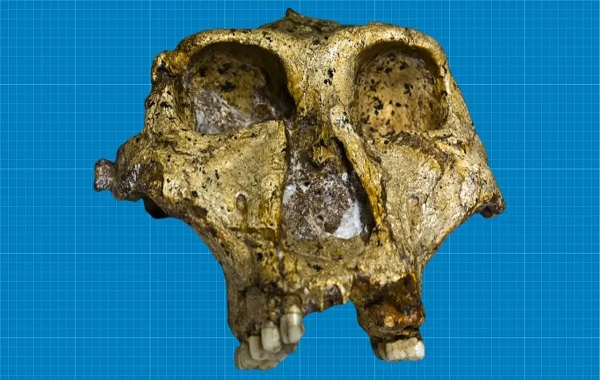
The specimen is most likely from the African hominid Paranthropus robustus (P. robustus). These prehistoric humans possessed unusually huge teeth with thick enamel.
As per Nature, it is noted to be the earliest genetic information ever gathered about any ancient hominid.
Protein sequencing of the enamel
Enrico Cappellini, a protein chemist at the University of Copenhagen, led a team that studied four P. robustus teeth samples collected from Swartkrans cave, roughly 40 kilometers northwest of Johannesburg.
They sequenced the proteins in the collected fossils to learn more about the early human species.
The amino acids found in each sample’s enamel (the outer layer of teeth) were thoroughly examined using a method known as mass spectrometry. Through this method, they were able to pinpoint the sex to which the fossils belonged.
In two samples, they discovered the existence of amelogenin-Y, a protein generated by a gene on the Y chromosome. The presence of this protein in two of the enamel samples confirmed that the teeth belonged to males.
While the other two teeth lacked amelogenin-Y, they did contain the X-chromosome variant of the protein, indicating that the specimens were most likely from a female.
All four tooth samples were analyzed, and 400 amino acids were sequenced.
Evolutionary relationship
The sequencing process resulted in forming a “simple evolutionary tree.”
This demonstrated that Homo sapiens, Neanderthals, and Denisovan hominins living in Siberia in the last 200,000 years are more closely connected than the Paranthropus.
According to the study, which has been uploaded to the pre-print server, creating an evolutionary tree based on genetic material from fossils “can be considered a potentially transformative breakthrough for palaeoanthropology.”
Authors say that studying ancient proteins might help researchers determine where species like Australopithecus afarensis fit in the hominin family tree. Over the last few decades, researchers have found many fossil remains of this species, including the nearly complete specimen famously known as Lucy.
Source: Interesting Engineering
Naupa Iglesia: An Egyptian Portal in the Andes?
Ancient human genetic material found preserved in 2-million-year-old teeth