
15000-Year-Old Seal Tooth Pendant Reveals Ice Age Culture
A piece of prehistoric jewelry discovered in a West Country cave is helping to shed new light on Stone Age Europe’s most spectacular culture. Researchers have identified a 15,000-year-old pendant made from the tooth of a grey seal, found in Devon, England. This exceptionally rare artifact offers a remarkable glimpse into the symbolic and social lives of the Magdalenian people, who dominated much of Western Europe during the final millennia of the Ice Age.
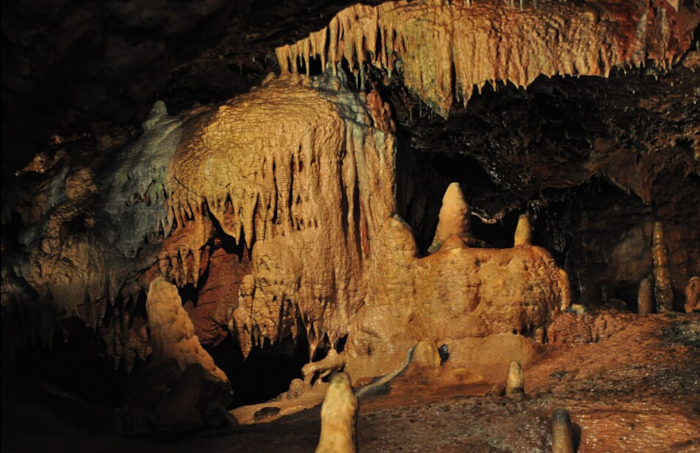
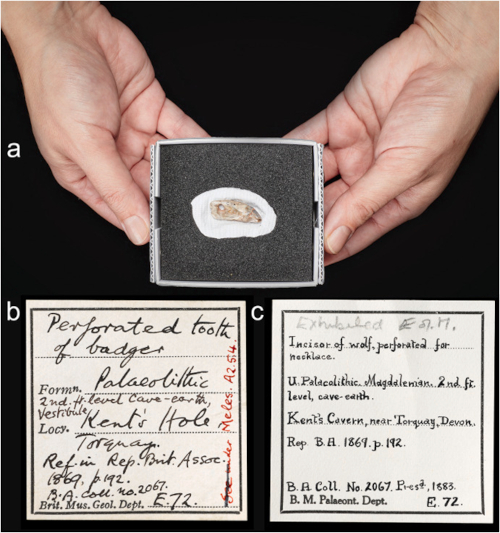
The identity of the mysterious artifact, found in Kents Cavern almost 160 years ago, has finally been revealed by scientists from University College London and the Natural History Museum. Initially thought to come from a badger, wolf, or beaver, a new detailed scientific analysis has found that the tooth actually came from a seal. It is the first such artefact identified in Britain, and only the fourth known anywhere in Europe from this time period.
Crafting a Prehistoric Masterpiece
The pendant’s journey began on the beaches of ancient Europe towards the end of the Last Ice Age. Comparisons with modern mammal specimens suggest the tooth came from a male grey seal that was around 12 years old when it died. Whether the seal was hunted or its remains were scavenged from the shoreline remains unknown, but an ancient human deliberately extracted the tooth from the animal’s skull.
As a seal’s teeth normally have large roots to hold them in place, the creator would have needed to break open the jaw with a heavy object to remove it. The tooth was then carefully worked into an artefact. Much of the root was scraped or ground away to make the tooth smoother and thinner. A hole was then drilled into the remaining root using a pointed piece of flint, which was turned repeatedly while the tooth was held still.
Microscopic analysis of the wear pattern in the hole has revealed that the tooth had been worn as a pendant, suspended on some sort of cord. The wear, caused by the cord, was so substantial that the pendant appears to have been worn for many years or even decades. It is conceivable that it may have been a valued heirloom, worn successively by several generations of the same family.
Ancient Links Between Land and Sea
The value and significance of this pendant to the Kents Cavern Magdalenian community is underlined by the fact that the seal tooth would have had to be imported from the seashore, which in Magdalenian times was between 50 and 100 miles away from the cave. However, there would have been a direct river connection between the Kents Cavern area and the sea, along a now long-vanished major prehistoric waterway dubbed the Channel River by archaeologists.
Even when living hundreds of miles from the sea, Magdalenian people had a strong cultural connection to it. They used large numbers of marine shells, fossilized molluscs, sea urchin spines, and sharks’ teeth to make jewelry and other adornments. Like ordinary Atlantic seashells, these fossils must have been highly prized because they were often imported from hundreds of miles away, highlighting extensive long-distance trade networks.
“This pendant dates to a time when there was a flourishing of engraving and other artistic behavior in Europe,” says Dr Silvia Bello, a human evolution expert at the Natural History Museum. “Upper Palaeolithic humans seem to be creating objects not just for practical purposes, but aesthetic ones as well. It could be an indication that the person, or group they were part of, was familiar with the sea and maybe used to live near the coast.” (Ashworth, 2026)
A Fashion-Conscious Ice Age Civilization
The discovery adds to the substantial evidence showing that Stone Age Magdalenians were extremely fashion-conscious, with a particularly strong preference for maritime-originating jewellery. The Magdalenians were amongst the very first culturally and socially complex societies on Earth. Archaeologists believe they owed their sophistication to a major increase in human population, made possible by a large expansion in food resources brought about by climatic changes. (Keys, 2026)
Although best known for their spectacular cave art at sites like Lascaux in France and Altamira in Spain, research is gradually revealing a more complete picture of this extraordinary Ice Age civilization. Recent investigations have revealed that the Magdalenians used domesticated dogs for hunting, developed extensive long-distance trade networks, and participated in large-scale inter-communal gatherings.
The ground-breaking research into the seal-tooth pendant, published in the journal Quaternary Science Reviews, offers a remarkable glimpse into the symbolic and social lives of people over 14,000 years ago. As Dr Bello notes, “Its discovery adds a new dimension to our understanding of shared cultural traditions and symbolic practices across Ice Age Europe.”
Source: ancient-origins.net
New evidence challenges assumptions of mass feasting at ancient Mongolian burial mounds
15000-Year-Old Seal Tooth Pendant Reveals Ice Age Culture/15000-Year-Old Seal Tooth Pendant Reveals Ice Age Culture