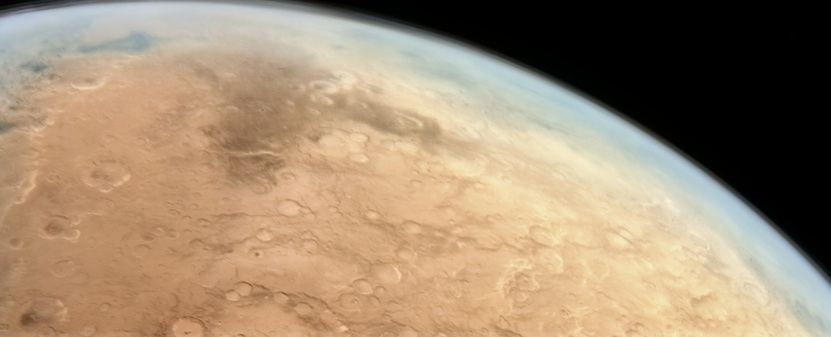
Will Carbonate Discoveries Rewrite Mars’s Climate History?
Why is Mars now a parched wasteland while Earth teems with life? Recent NASA rover findings suggest that although liquid water once carved valleys and fed lakes on Mars, those episodes were brief and isolated. Instead of a sustained “warm and wet” climate, Mars experienced fleeting runoff—mere blips in its geological timeline—that left the planet largely an unforgiving desert.
Carbonate Minerals as a Carbon Dioxide Sponge
Earlier this year, NASA’s Curiosity rover uncovered carbonate‑rich rocks on the Martian surface. On Earth, carbonates like limestone trap atmospheric CO₂, moderating greenhouse warming over millions of years. Curiosity’s discovery reveals that Mars, too, locked up CO₂ in stone—siphoning off the very ingredient needed to keep its atmosphere thick enough for liquid water.
Volcanic Outgassing Imbalance: Why Mars Chilled Out
Active volcanism on Earth continually replenishes atmospheric CO₂, sustaining a stable greenhouse effect. However, Mars’s “feeble” volcanic activity failed to restore the lost gas, throwing its climate cycle out of balance. As a result, periods of valley‑forming floods gave way to roughly 100 million‑year dry spells—far too long for life as we know it to gain a foothold.
Fleeting Habitable Oases: Brief Episodes of Liquid Water
Modeling published in Nature shows that these carbonate reactions and limited outgassing produced only sporadic “oases” of habitability. According to lead author Edwin Kite (University of Chicago), Mars likely hosted isolated springs and short‑lived lakes rather than planet‑wide seas. How long could microbial life survive in such transient environments?
Searching for Subsurface Reservoirs: Hidden Pockets of Water?
Despite surface desiccation, Kite notes that liquid water might still lurk deep underground. Could geothermal heat or residual aquifers protect niches where life might persist today? NASA’s Perseverance rover, which touched down on an ancient delta in 2021, has already detected carbonate deposits at former lake margins—hinting at past habitable chemistry.
Sample Return Missions: The Race to Bring Mars to Earth
The ultimate test of these theories will come when rock samples reach terrestrial labs. Both NASA and China aim to return Martian specimens in the next decade. Will carbonate‑bearing stones prove sterile, or will they harbor fossilized microbes? The stakes are high: confirming ancient life on Mars would reshape our understanding of how easily biology sparks on rocky worlds.
Implications for Exoplanet Habitability: Are We Alone?
With nearly 6,000 exoplanets catalogued, Mars and Earth remain unique in offering in‑situ geological records. If Mars never hosted life despite transient water, does that mean life’s origin is a rare cosmic fluke? Conversely, discovering even microscopic fossils would suggest life emerges readily wherever conditions briefly align. Which scenario will Mars ultimately reveal?
Source:Will Carbonate Discoveries Rewrite Mars’s Climate History?
A 500-Billion-Year Spin: The Tiny Cosmic Twist That Could Rewrite the Universe
A 500-Billion-Year Spin: The Tiny Cosmic Twist That Could Rewrite the Universe