What Does Methane Really Tell Us About Life Beyond Earth?
Exploring the universe for signs of life is one of the most intriguing quests in modern science. Methane (CH4) is emerging as a crucial biosignature that could unlock the mysteries of life beyond Earth. A recent study published in The Astronomical Journal, led by researchers at NASA’s Goddard Space Flight Center, investigates the potential of detecting methane on Earth-like exoplanets. They employed an innovative method called BARBIE (Bayesian Analysis for Remote Biosignature Identification on exoEarths) to assess the detectability of this molecule in optical and near-infrared (NIR) wavelengths. Let’s explore why methane matters and how BARBIE could revolutionize our search for extraterrestrial life.
Why Methane Matters in the Search for Extraterrestrial Life
Methane is considered a “contextual biosignature.” When found alongside oxygen (O2) in sufficient quantities, it signals that the planet’s atmosphere is in disequilibrium—suggesting active processes, potentially including life. Methane on its own can originate from both biological and non-biological processes, such as volcanic activity. However, the simultaneous presence of both CH4 and O2 often points to biological activity since these gases rapidly react with one another and require constant replenishment.
Methane has already played a significant role in astrobiological studies within our solar system. Seasonal methane variations on Mars continue to puzzle scientists, while Saturn’s moon Titan boasts a methane-rich atmosphere that raises questions about exotic forms of chemistry.
The BARBIE Method: A Game-Changer for Exoplanet Exploration
The BARBIE method uses Bayesian inference, a statistical approach that evaluates the probability of data outcomes based on prior information. By integrating large amounts of planetary and observational data, BARBIE helps astronomers make more informed decisions about the detection capabilities required for future missions.
This study builds on previous iterations of BARBIE, known as BARBIE 1 and BARBIE 2, which primarily focused on optical wavelengths and planetary parameters such as surface pressure, gravity, and water, oxygen, and ozone abundances. However, these earlier studies had limitations. They found that only oxygen-rich atmospheres were observable in optical wavelengths. To address this, the BARBIE 3 study expanded the parameters to include NIR wavelengths and methane, resulting in more comprehensive and promising findings.
Key Findings: Methane and Water Detection Challenges
One of the most significant results of the BARBIE 3 study was the complex interplay between methane and water in the NIR spectrum.
“While we knew that the spectral features of H2O and CH4 overlap heavily in the NIR, we didn’t realize just how much this would affect detectability,” explains Natasha Latouf, the study’s lead author and a Ph.D. candidate at George Mason University. “At sufficiently high methane levels, the signal-to-noise ratio required to strongly detect water shoots up, and vice versa.”
This finding underscores the need for caution when interpreting data from exoplanet atmospheres. If both methane and water are present, astronomers might inadvertently miss one. Future research led by Celeste Hagee is already underway to investigate how adding carbon dioxide (CO2) into the mix affects biosignature detectability.
The Role of the Habitable Worlds Observatory (HWO)
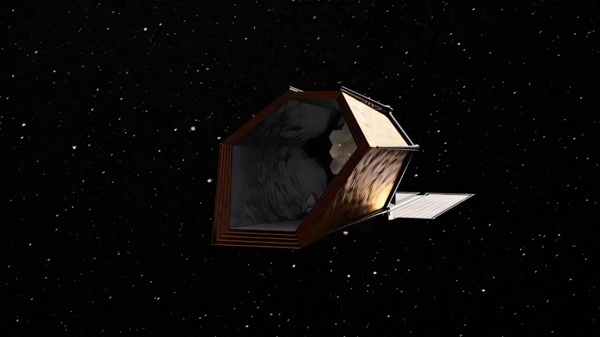
The BARBIE method has significant implications for NASA’s planned Habitable Worlds Observatory (HWO) mission, slated for launch in the 2040s. Unlike previous missions such as Kepler and TESS, which focused on identifying as many exoplanets as possible, HWO will prioritize the detailed analysis of 25 potentially habitable exoplanets.
HWO will use direct imaging and advanced spectroscopy instruments to analyze exoplanetary atmospheres, searching for biosignatures like oxygen and methane. BARBIE’s ability to quickly evaluate observational trade-offs will help optimize the design and capabilities of HWO, including decisions about coronagraph technology, which blocks starlight to enhance exoplanet detection.
Expanding BARBIE’s Capabilities for Future Missions
Latouf emphasizes the value of BARBIE in guiding the design of future telescopes. “If we’re trying to understand whether we need a 20% or a 40% coronagraph to strongly detect biosignatures, BARBIE can help us evaluate the science benefit versus the increased cost,” she explains.
Future enhancements to BARBIE will include the ability to detect molecules across a broader wavelength range, including ultraviolet (UV). The team also plans to test the suitability of coronagraph detectors for identifying atmospheric molecules.
Methane’s Proven Potential: Lessons from Our Solar System
The importance of methane as a biosignature extends beyond distant exoplanets. Within our solar system, Titan’s methane-rich atmosphere continues to intrigue researchers, while Mars presents seasonal methane variations that remain unexplained. These examples demonstrate that methane detection could provide essential clues about both familiar and unfamiliar forms of life.
Will We Ever Find Life on Earth-like Exoplanets?
Latouf remains optimistic about the prospects of finding life beyond Earth. “In my opinion, I think that we will,” she says. “Will that happen in my lifetime? That I’m not sure of—but I do believe we’re going to find life eventually!”
When asked which Earth-like exoplanet most interests her, Latouf gives a surprising answer: “Earth. We have this wonderful gift in this planet, with all the exact right conditions. We need to be making sure we’re preserving it and understanding our own planet before we dive into the search for others.”
The Future of Biosignature Detection: A Collaborative Effort
The journey to develop BARBIE underscores the importance of collaboration and persistence in scientific research. Latouf concludes by sharing a message for early-career scientists: “BARBIE was born of open collaboration and communication. The process took about 3.5 years, with many setbacks. Science is never as easy as it looks. If you’re working on something and feel like you can’t do it like others, just remember—they’re learning and growing too.”
As scientists continue to refine BARBIE and develop new methods for detecting life beyond Earth, one thing remains clear: the search for life in the cosmos is a challenging but exhilarating journey that holds the potential for groundbreaking discoveries.
Source: What Does Methane Really Tell Us About Life Beyond Earth?
Is Europa the Key to Finding Life Beyond Earth?
What Does Methane Really Tell Us About Life Beyond Earth?