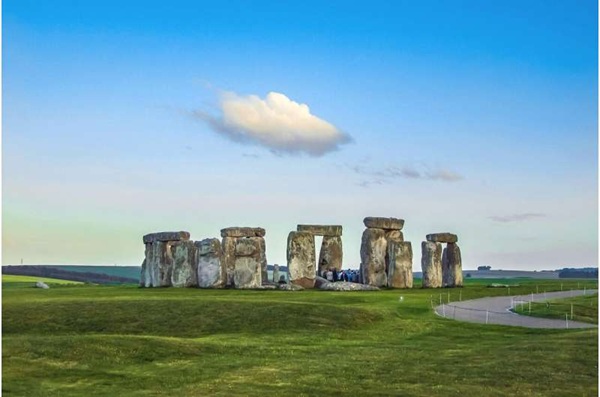
What can a 5,000-year-old cow tooth tell us about the secrets of Stonehenge?
A Neolithic cow tooth discovered near Stonehenge may provide the strongest evidence yet of the monument’s Welsh origins. A new study led by UCL researchers has revealed that this single tooth—found in 1924 at Stonehenge’s south entrance—dates to around 2995–2900 BCE, right at the monument’s earliest phase of construction.
Isotope analysis shows that the cow likely came from Wales, linking cattle directly to the movement of Stonehenge’s famous bluestones from the Preseli Hills to Salisbury Plain. Could these very animals have helped haul the massive stones across Britain’s rugged landscape?
Animal Remains and Ancient Engineering: Did Cattle Haul Stonehenge’s Rocks?
Previous research confirmed that the bluestones were quarried in south-west Wales, but this is the first time that cattle remains from Stonehenge itself have been tied to the same region. Professor Michael Parker Pearson (UCL Archaeology) explains:
“This is yet more fascinating evidence for Stonehenge’s link with south-west Wales, where its bluestones come from. It raises the tantalizing possibility that cattle helped to haul the stones.”
If animals were indeed part of the process, their role challenges us to rethink how Neolithic builders managed such a monumental feat. Could teamwork between humans and livestock have been the key to moving stones weighing several tons?
Isotope Analysis: Reconstructing a Cow’s Journey 5,000 Years Ago
The team sliced the cow’s third molar tooth into nine thin sections, each preserving chemical signals from the animal’s second year of life. By analyzing carbon, oxygen, strontium, and lead isotopes, scientists reconstructed not just the animal’s movements but also its seasonal diet.
Oxygen isotopes revealed about six months of growth, spanning winter to summer.
Carbon isotopes indicated diet changes: woodland fodder in winter and open pasture in summer.
Strontium isotopes suggested the animal grazed in geologically distinct areas, pointing to seasonal movement or imported winter fodder.
Lead isotopes showed unusual spikes, suggesting exposure to much older rocks—matching the geology of the Preseli Hills.
This intricate chemical map suggests the cow was raised in Wales before making the arduous journey east to Stonehenge.
Was the Stonehenge Cow Pregnant? A Surprising Biological Clue
One of the most intriguing findings came from the unusual lead signal in the tooth. Researchers believe it was not simply environmental but linked to the biological stresses of pregnancy or nursing.
Using a peptide-based sex determination technique at the University of Manchester, the team confirmed a high probability that the cow was female. If she was indeed pregnant or nursing during this migration, it adds an intimate and almost poignant layer to the story: a living creature enduring hardship while part of a massive cultural endeavor.
A Biography in Bone: What Can One Cow Teach Us About Stonehenge?
Professor Jane Evans (BGS) emphasized the unprecedented detail uncovered:
“A slice of one cow tooth has told us an extraordinary tale… the first evidence of cattle movement from Wales as well as dietary changes and life events 5,000 years ago.”
Meanwhile, Professor Richard Madgwick (Cardiff University) highlighted the human side of this discovery:
“So often grand narratives dominate research on major archaeological sites, but this detailed biographical approach on a single animal provides a brand-new facet to the story of Stonehenge.”
Final Question: Was Stonehenge a Monument of Stones—or of Journeys?
The story of one cow—pregnant, traveling hundreds of miles, tied to the movement of megaliths—reminds us that Stonehenge was not just a monument of stone but also of lives, journeys, and sacrifices.
As more scientific tools are applied to ancient remains, we may uncover further stories hidden in bones and teeth. Could these personal tales reshape our understanding of how and why Stonehenge was built? And what other hidden voices of the past are still waiting to be heard?
Source: What can a 5,000-year-old cow tooth tell us about the secrets of Stonehenge?
Medieval Knight ‘Lancelot’ and His Stunning Stone Tomb Found in Poland
Medieval Knight ‘Lancelot’ and His Stunning Stone Tomb Found in Poland