US lab solves 100-year-old physics puzzle by cracking curse of dimensionality
Scientists at Los Alamos National Laboratory and the University of New Mexico unveiled an AI framework on Monday, helping tackle one of physics’ hardest calculations.
Known as Tensors for High-dimensional Object Representation (THOR), it computes the configurational integral—the core equation that describes how particles interact inside materials—using tensor-network methods.
THOR AI speeds up the calculation for this equation at an unprecedented rate, saving supercomputers weeks of time in the process. As a result, scientists can more precisely forecast how metals and crystals behave under extreme conditions.
How does THOR AI help?
The configurational integral is extremely hard to solve for physicists, but it’s key to predicting how materials behave in terms of their strength, stability, and ability to change under extreme conditions.
THOR AI addresses this by using tensor network mathematics to reduce weeks of supercomputer time into seconds, transforming a calculation once thought impossible into an efficient, accurate process.
“The configurational integral — which captures particle interactions — is notoriously difficult and time-consuming to evaluate, particularly in materials science applications involving extreme pressures or phase transitions,” said Los Alamos senior AI scientist Boian Alexandrov, who led the project.
“Accurately determining the thermodynamic behavior deepens our scientific understanding of statistical mechanics and informs key areas such as metallurgy,” he continued.
Why this matters
By turning a computation that once required weeks of supercomputer simulations into a calculation solvable in hours, the team has provided scientists with a powerful new lens to understand metallurgy, phase transitions, and materials under high pressure – critical areas for everything from aerospace engineering to clean energy.
Imagine calculating every possible way billions of Lego bricks could fit together – that’s the scale of complexity physicists face when evaluating the configurational integral.
The problem catapults to such an extent that even supercomputers cannot calculate to solve it. This challenge is essential for metallurgy, high-pressure physics, and phase transition studies.
THOR AI tackles the curse of dimensionality by breaking down the giant data cube into smaller, linked components. It’s like reorganizing Lego into neat chains.
When paired with a custom interpolation algorithm, this tensor-train technique makes an intractable problem solvable at a faster rate. Crucially, it maintains accuracy while being up to 400 times faster than molecular dynamics simulations.
Real-world tests
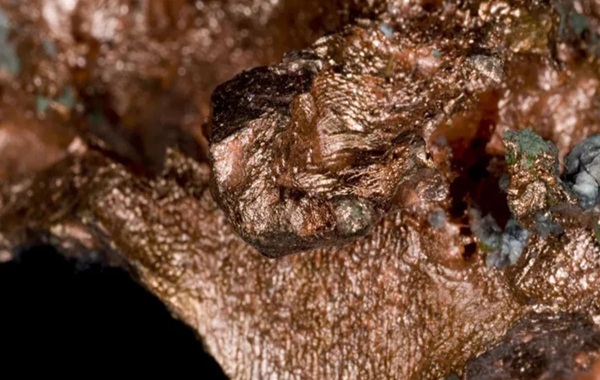
The scientists tested THOR AI on several challenging copper, argon, and tin cases. Copper accurately reproduced internal energy and pressure at high densities. Argon matched the machine-learning-based molecular dynamics results under gigapascal pressures.
On the other hand, tin captured the solid-solid hase transition with remarkable precision, producing a full phase diagram in 5.8 core hours compared to 2,560 it usually took through the conventional method.
Looking ahead
The implications of this study could reach far beyond theory. Faster and more accurate modeling could accelerate the discovery of new alloys, advance clean energy technologies, and strengthen aerospace and electronic materials.
If THOR AI can tame one of physics’ most feared challenges, it may not just speed up material discovery but also reshape how scientists tackle high-dimensional problems across various disciplines.
Source: Interesting Engineering
Electrons that act like photons reveal a quantum secret
US lab solves 100-year-old physics puzzle by cracking curse of dimensionality