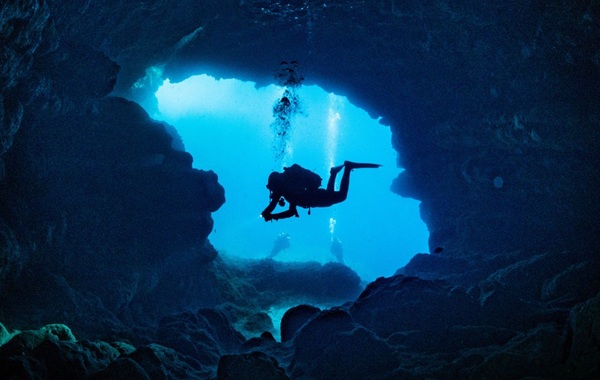
The World’s Longest Underwater Cave Just Got Even Bigger — And the New Discovery Is Mind-Blowing
Deep beneath the jungles of Tulum, Mexico, explorers have made a discovery that is turning cave science upside down. The legendary Sistema Ox Bel Ha—already the longest underwater cave on Earth—has just expanded again.
Thanks to newly mapped passages, the cave system now stretches over 524 kilometers (325 miles).
That’s longer than the distance between New York and Baltimore, all hidden beneath the ground.
Divers Break Into “A Completely New World”
During a new round of exploration, cave divers pushed into areas previously thought to be dead ends. Instead, they uncovered an extra 10 kilometers of unexplored tunnels.
Some of these passages were so untouched that divers described the feeling as:
“Like stepping into a world no human had ever seen before.”
Massive Chambers, Hidden Shafts, and Ice-Palace Formations
Ox Bel Ha is a labyrinth of submerged halls, dramatic drops, and surreal mineral structures that look almost frozen in time. More than 160 cenotes connect into the system, acting as portals into this sprawling underwater universe.
On Track to Become the Longest Cave Ever
If discoveries continue at this pace, Ox Bel Ha could soon surpass even the longest dry cave systems. It may ultimately claim the title of the longest cave on the entire planet, water-filled or not.
A world-record cave that keeps breaking its own record—
and scientists say we may have explored only a fraction of it.
Source: Science Alert
Earliest Chemical Traces of Life on Earth Discovered in 3.3-Billion-Year-Old Rock
Fossilized remnants of ancient carbon from the heart of South Africa’s Mpumalanga province have just yielded the earliest chemical evidence yet of life on Earth.According to a new analysis using machine learning, fragmentary traces of carbon from the Josefsdal Chert, dating back 3.33 billion years, are the earliest and most confident detection of biotic chemistry found on Earth to date.
The World’s Longest Underwater Cave Just Got Even Bigger — And the New Discovery Is Mind-Blowing