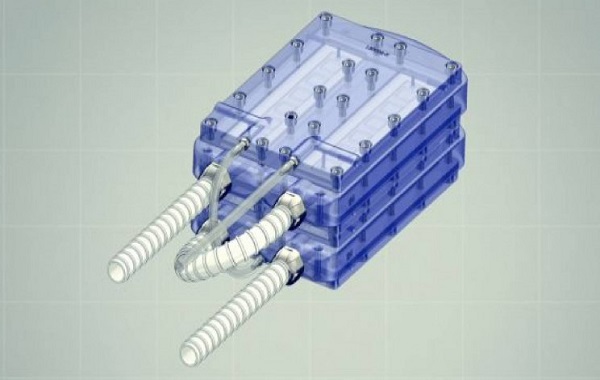
The World’s First Artificial Kidney Could Finally Free People From Dialysis
According to kidney.org, kidney disease causes more deaths than breast cancer or prostate cancer, affecting an estimated 37 million people in the U.S. or 15% of the adult population; more than 1 in 7 adults.
Although kidney transplants are possible, there is always more demand than can be met, and the risk that the patient’s body might reject the organ is always a possibility. Dialysis remains the most viable option but the process is complicated and burdensome for the patients.
Now, a public-private partnership between the U.S. Department of Health and Human Services (HHS) and the American Society of Nephrology (ASN) founded to “accelerate innovation in the prevention, diagnosis, and treatment of kidney diseases” may have come up with a solution, according to a press release by the University of California San Francisco.
“The vision for the artificial kidney is to provide patients with complete mobility and better physiological outcomes than dialysis,” said Roy, who is a faculty member in the Department of Bioengineering and Therapeutic Sciences, a joint department of the UCSF Schools of Pharmacy and Medicine. “It promises a much higher quality of life for millions worldwide with kidney failure.”
What’s So Special about an Artificial Kidney?
What’s so special about this artificial kidney? The device was engineered to sustainably support a culture of human kidney cells without provoking an immune response.
This means that kidney failure patients can forgo the often painful and uncomfortable dialysis procedures and the lifetime on immunosuppressant drugs that are taken when a kidney transplant is performed and which can have severe side effects.
The KidneyX Artificial Kidney Prize called on scientists and engineers to submit “continuous kidney replacement therapies that provide transformational treatment options beyond current dialysis methods.”
Source: Interesting Engineering
Researchers create artificial organelles to control cellular behavior
Researchers create artificial organelles to control cellular behavior
The World’s First Artificial Kidney Could Finally Free People From Dialysis