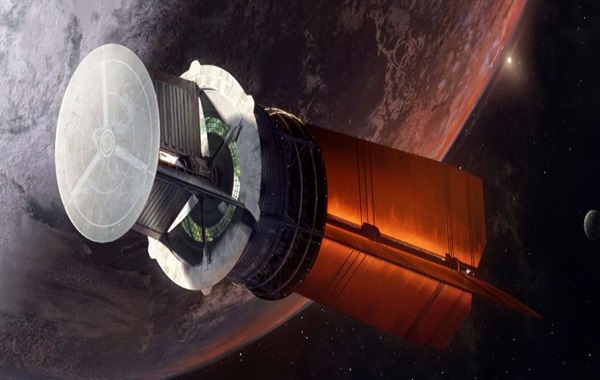
The Radical Plan to Build a Spaceship to Carry Humans For Generations
For centuries, humanity has dreamed of exploring the stars and settling distant planets. While the Space Age brought interstellar travel from fiction to scientific consideration, reaching another star system remains a monumental challenge. Current technology presents two main options: developing propulsion systems that achieve near-light speeds or constructing generation ships, self-sustaining spacecraft where multiple generations live and die before reaching their destination.
On November 1, 2024, Project Hyperion launched a global design competition for interstellar generation ships using current and near-future technologies. Sponsored by the Initiative for Interstellar Studies (i4is), this competition invites participants to propose innovative concepts that prioritize sustainability and human well-being over centuries-long missions.

Generation Ship: History and Challenges
The idea of generation ships originated with Robert H. Goddard in 1918, who envisioned an “interstellar ark” leaving the Solar System after the Sun’s death. His concept relied on atomic energy and included cryogenic sleep to sustain passengers over long journeys. Later, Russian scientist Konstantin Tsiolkovsky described a self-sufficient “Noah’s Ark,” while NASA’s Robert Enzmann proposed a fusion-powered starship in 1964 capable of housing 200 people with room for expansion.
Modern studies, such as HERITAGE (2017–2019) led by Dr. Frederic Marin, calculate that such ships would need at least 98 people to maintain genetic diversity, supplemented by cryogenic embryos, to ensure long-term viability. The ships must also integrate bioregenerative life-support systems to produce food, water, and air while mimicking Earth’s ecosystems. This combination would allow for sustainable living during a 250-year journey to a nearby star system.
The mission duration reflects propulsion constraints. While advanced designs like Breakthrough Starshot or fusion-based propulsion could theoretically reach Proxima Centauri in decades, they remain expensive and technically challenging. Slower, sustainable generation ships are a more feasible option using current technology.
The Hyperion Competition
Project Hyperion is the first competition to focus on designing generation ships rather than uncrewed probes or rapid propulsion systems. Participants are tasked with creating a ship capable of housing 1,000–1,500 people across 250 years. Proposals must balance technological innovation with societal, psychological, and cultural sustainability.
Designs must address:
Sustainability: Bioregenerative systems to grow food, recycle air, and purify water.
Habitat Design: Artificial gravity, radiation shielding, and flexible spaces that can adapt to changing societal needs.
Social Dynamics: Maintenance of health, culture, and technological knowledge over centuries, with provisions for evolving ethics, beliefs, and governance structures.
Teams must include experts in architecture, engineering, and social sciences to ensure holistic solutions. Proposals will consider not only physical design but also societal resilience, reflecting humanity’s ability to adapt and thrive in resource-constrained environments.
Interdisciplinary Vision
Unlike conventional spacecraft designs, which often prioritize propulsion, this competition focuses on integrating life sciences, architecture, and sociology into a single system. “A generation ship must bring Earth with it,” explained Andreas Hein, aerospace engineering professor and competition organizer. This means creating a closed, sustainable ecosystem that fosters both survival and well-being.
Anthropologist Cameron Smith emphasized the unprecedented cultural implications: “A population traveling in isolation for centuries would require careful planning for biological and cultural survival.” The competition considers the impact of isolation from Earth, the inevitable loss of direct communication over time, and how human societies might evolve under such conditions.
The project also explores broader technological implications. Hein noted that today’s advanced technologies rely on intricate global supply chains, which a generation ship cannot replicate. This limitation suggests a return to simpler, more reliable solutions unless revolutionary technologies like molecular manufacturing emerge.
Earth Applications
The lessons from generation ship design extend beyond space exploration. Like starfarers, future lunar or Martian settlers must live in self-sustaining habitats. Developing regenerative systems for air, water, and food will be vital for these missions.
The concept of closed ecosystems has already been explored on Earth. Experiments like Biosphere 2 in Arizona studied how humans could survive in sealed environments. Such research not only informs space exploration but also offers solutions for Earth’s sustainability challenges, such as climate change, overpopulation, and resource scarcity.
Architect Yazgi Demirbas Pech highlighted this connection: “Thinking beyond Earth can offer valuable insights into improving life on ‘Spaceship Earth.’” By solving for space, humanity can develop technologies that promote harmony and resilience on Earth.
Competition Details
Registration for the competition is open until December 15, 2024, with a $20 entry fee. Winners will be announced in mid-2025, with prizes of $5,000, $3,000, and $2,000 for the top three teams. Proposals will explore the intersection of engineering, societal design, and sustainability, providing a roadmap for future interstellar exploration and humanity’s survival in extreme environments.
In the words of Hein: “Can a society thrive in a severely resource-constrained environment for 250 years? Answering this is essential for designing a generation ship—and for envisioning sustainable futures on Earth.”
Source: Science Alert
Seasonal Methane Spikes on Mars: Natural Phenomenon or Signs of Life?
The Radical Plan to Build a Spaceship to Carry Humans For Generations/The Radical Plan to Build a Spaceship to Carry Humans For Generations