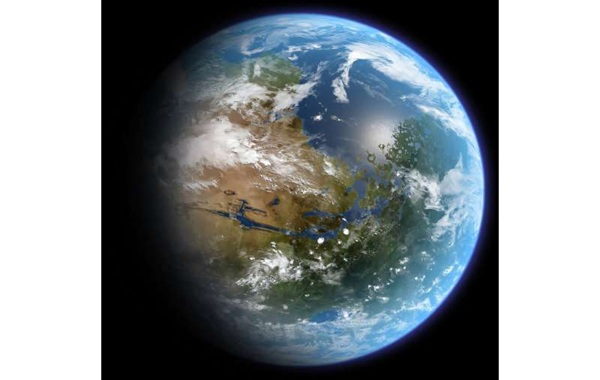
The Mars Delusion: Why Terraforming the Red Planet is an Industrial Suicide Mission
For decades, science fiction and space-age visionaries have sold us a magnificent dream: we would nuke the Martian poles, thicken the atmosphere, and within a few generations, humans would be walking through pine forests under a pinkish-blue sky. However, a brutal reality check from NASA JPL’s physicist Slava Turyshev has shattered this romanticized vision.
According to Turyshev’s latest analysis, terraforming Mars is not a simple “climate fix.” It is an industrial nightmare that exceeds the total resource capacity of our current civilization.
1. The Blood-Boiling Reality: The Armstrong Limit
The primary threat on Mars isn’t just the freezing temperatures or the lack of oxygen—it is the lack of atmospheric pressure. On the Martian surface, the pressure is so low that if you stepped out without a pressurized suit, your blood would literally boil at your own body temperature. This is known as the Armstrong Limit.
To raise the pressure even to a level where humans wouldn’t spontaneously boil requires a massive infusion of gas. Turyshev points out that Mars simply doesn’t have enough CO2 trapped in its ice caps to do the job. We would need to “import” an entire atmosphere’s worth of gas from elsewhere in the solar system, a logistical feat that borders on the impossible.
2. An Orbital Mirror the Size of Continents
To warm the planet, we would need to capture and focus more sunlight onto the surface. The proposed solution? Deploying a fleet of orbital mirrors. But the scale is staggering: we would need approximately 70 million square kilometers of reflective material.
To put that in perspective, that is the combined surface area of North America, South America, and Africa. Building a structure in space that covers the area of three Earth continents is not just a challenge; it’s a project that would require an industrial output millions of times greater than everything humanity has built since the dawn of time.
3. The Energy Paradox: 20 Times the Power of Earth
Even if we found the gas and built the mirrors, the energy required to process the atmosphere and keep the planet habitable is calculated at roughly 380 Terawatts. Currently, the entire human civilization on Earth—every car, factory, home, and data center—consumes about 19 Terawatts. To make Mars liveable, we would need to generate 20 times the total energy consumption of Earth on a barren, frozen planet. We aren’t talking about a few solar panels; we are talking about hundreds of thousands of nuclear reactors running simultaneously across the Martian dunes.
4. The “Solar Sandblaster”
Finally, even if we achieved the impossible and built a lush atmosphere, Mars has no global magnetic field. Without this shield, the solar wind acts like a cosmic sandblaster. It would slowly but surely strip away our hard-earned atmosphere and leak it into deep space, just as it did billions of years ago. To prevent this, we would need to build a literal planetary-scale magnetic shield in orbit—another project that defies current physics.
The Verdict: A Test for a Type II Civilization
The conclusion is clear: Terraforming Mars is not a “Plan B” for humanity in its current state. Based on the Kardashev Scale, this is a task for a Type II Civilization—a species capable of harnessing the total energy output of their star. For us, Mars remains a fascinating scientific laboratory, but as a “second home,” it is currently an industrial impossibility.
Source: phys.org
The Moon Was Hit Again: NASA Scientists Discover a Newly Formed Crater
The Mars Delusion: Why Terraforming the Red Planet is an Industrial Suicide Mission