The Ghost of Beachy Head: DNA Shatters the Myth of Britain’s ‘First Black Citizen’
For over a decade, she was the face of a radical new history. Found on the chalky cliffs of East Sussex, the woman known as the “Beachy Head Lady” became a symbol of Roman Britain’s diversity. Based on the shape of her skull, experts once confidently declared her the first known Black Briton—a woman of African descent living under the Roman Empire. Her story was taught in schools, featured in museums, and celebrated in documentaries.
But the bones were hiding a different truth.
Using cutting-edge genetic sequencing, scientists from London’s Natural History Museum have finally unlocked her 2,000-year-old secrets, and the results have sent shockwaves through the archaeological community. It turns out, everything we thought we knew about her was wrong.
A Mystery Written in the Bones
The Beachy Head Woman lived between 129 and 311 CE, a time when the Roman Empire’s reach was at its peak. When her remains were first analyzed in 2012, traditional forensic methods suggested “sub-Saharan African” features. This led to a massive media narrative about her being a migrant from the far reaches of the Empire.
However, the latest DNA analysis—far more precise than the visual inspections of the past—reveals a completely different heritage. The genetic data shows she was actually a local.
The Science of “Looks Can Deceive”
“She carries genetic ancestry that is most similar to other individuals from the local population of Roman-era Britain,” explains William Marsh, an archaeogeneticist at the Natural History Museum.
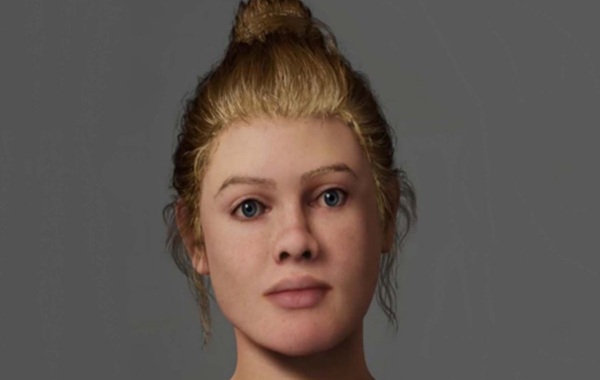
The DNA reveals a striking portrait of a woman who looked nothing like the previous reconstructions:
Heritage: Local British ancestry, with no recent African traces.
Appearance: Genetically, she likely had blue eyes, light hair, and a skin tone ranging from pale to medium.
Why This Matters
This discovery isn’t just about one woman; it’s a wake-up call for science. For centuries, anthropologists relied on skull measurements to determine “race”—a practice that this case proves can be deeply flawed. The Beachy Head Woman reminds us that human variation is complex and that our physical features don’t always tell the full story of our origins.
The “First Black Briton” may have been a myth in this specific case, but the real story is even more fascinating: it’s a story of how technology is allowing us to “resurrect” the past with breathtaking accuracy, correcting the errors of the present along the way.
The ghost of Beachy Head has finally spoken, and she has reminded us that history is never truly settled until the DNA has its say.
Source: Science Alert
“The Invisible Massacre: The Secret Plague That Broke Rome’s Iron Legions”
The Ghost of Beachy Head: DNA Shatters the Myth of Britain’s ‘First Black Citizen’