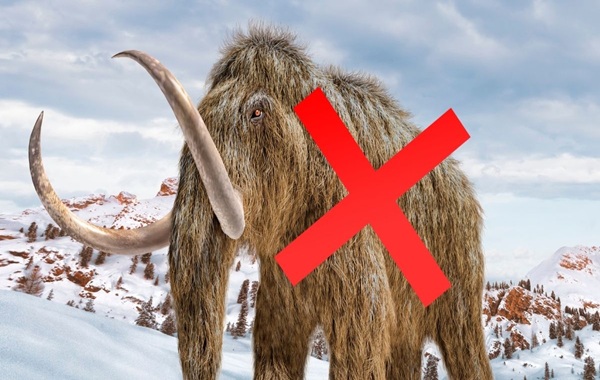
The 70-Year Identity Theft: How a Museum’s “Mammoth” Was Actually Something Else Entirely
For seven decades, a set of giant bones rested quietly in a museum display, labeled as a Woolly Mammoth. But a group of scientists just uncovered the truth: the museum has been hosting an imposter. These bones don’t belong to a mammoth at all—they belong to an entirely different beast of the Ice Age.
Muzey archives are often seen as places where history is settled. We walk through them expecting facts and certainty. However, a recent discovery proves that even the most prestigious institutions can be “catfished” by history. This isn’t just a story about a mislabeled box; it’s a story about how modern science is correcting 70 years of mistaken identity.
A Cold Case from the 1950s
The story begins in the mid-20th century when these massive, fossilized remains were first discovered and cataloged. At the time, “Mammoth” was the go-to label for any large, trunked creature found in that region. Without the benefit of high-resolution imaging or DNA analysis, the original researchers made an educated guess. They were wrong.
For 70 years, students, tourists, and researchers walked past these bones, believing they were looking at the remains of a Woolly Mammoth. It wasn’t until a new team of researchers, armed with a deeper understanding of skeletal morphology, took a second look.
Mammoth vs. Mastodon: The Great Decoupling
The “imposter” in question turned out to be a Mastodon. While they might look similar to the untrained eye, the difference is massive in the world of biology:
The Teeth Tell the Tale: Mammoths have flat, plate-like teeth for grinding grass (like giant lawnmowers). Mastodons, however, have blunt, cone-shaped cusps on their molars designed for crushing twigs and leaves in forests.
The Evolutionary Gap: These two creatures are as different as a lion is from a tiger. They occupied different habitats and had different survival strategies during the Ice Age.
Source: Science Alert
The Scarlet Thread: How Birds and Redheaded Humans Share an Ancient Genetic Secret
The 70-Year Identity Theft: How a Museum’s “Mammoth” Was Actually Something Else Entirely