Starve to thrive: Study finds intermittent fasting supercharges male sex drive
Sexual health concerns have become increasingly common among men, with sedentary lifestyles, stress, and poor diets contributing to declining libido.
While medical treatments exist for a quick fix, natural methods for enhancing sexual drive, in the long run, remain a subject of interest.
A recent study suggests that intermittent fasting could be one such method.
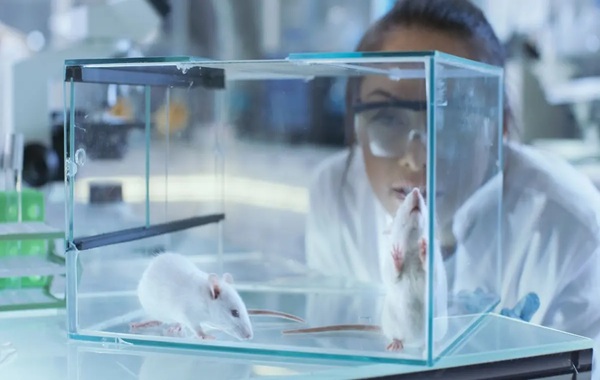
Researchers from DZNE, in collaboration with Qingdao University and the University of Health and Rehabilitation Sciences, found that male mice subjected to long-term 24-hour fasting cycles showed a significant increase in sex drive.
The underlying cause? A reduction in serotonin levels is linked to lower amino acid tryptophan intake.
Intermittent fasting impacts sexual drive
Originally, the researchers aimed to study how fasting impacts the offspring of male mice.
However, they were surprised to discover that aged, fasting mice produced unusually high offspring.
Given their lower testosterone levels and age-related decline in reproductive function, this result was unexpected.
“It was a bit of detective work to uncover the real cause,” said Dr. Dan Ehninger, research group leader at DZNE.
The explanation wasn’t improved fertility—it was behavior.
Fasting males engaged in sexual activity far more frequently than their counterparts on a normal diet, leading to more offspring despite physiological limitations.
Long-term fasting triggers libido boost
The fasting regimen followed a strict pattern: 24 hours of unrestricted eating followed by 24 hours of water only.
This continued for 22 months before the male mice were introduced to young females.
Even younger mice, after fasting for just six months, displayed heightened sexual activity.
“For intermittent fasting to increase sex drive, it takes some time,” explained Prof. Yu Zhou.
“Based on our experiments, the minimum duration appears to be somewhere between six weeks and six months.” Short-term fasting, however, showed no significant effects on libido.
The role of serotonin and tryptophan
Further investigation revealed a key factor—serotonin, a neurotransmitter that typically suppresses sexual desire.
Among the fasting mice, serotonin levels were unusually low.
Serotonin is primarily produced in the gut but also functions in the brain, where it relies on the essential amino acid tryptophan.
Since tryptophan can only be obtained through diet, fasting naturally reduces availability, lowering serotonin levels. “The lack of serotonin was clearly a result of fasting,” said Ehninger.
Could it work for humans?
The findings suggest that fasting could influence human libido as well. “Chemical messengers also play an important role in regulating sexual behavior in humans. This applies in particular to serotonin,” said Ehninger.
One key example is SSRIs, a common class of antidepressants that increase serotonin levels but often cause reduced libido.
The inverse—lower serotonin levels leading to increased sex drive—aligns with the study’s findings.
“In view of this, I consider it very plausible that sexual desire in humans can be influenced by fasting—possibly not only in men, but also in women, since serotonin affects their libido as well,” Ehninger added.
While more research is needed, these findings could open new doors for addressing conditions like hypoactive sexual desire disorder (HSDD), particularly among older adults.
“Fasting could potentially serve as a useful addition to existing treatment options,” Ehninger suggested.
Beyond weight loss and longevity, fasting may hold untapped potential in improving sexual health—a possibility worth exploring further.
Source: Interesting Engineering
Gene-edited pig liver functions 10 days in human, marking a medical breakthrough
Starve to thrive: Study finds intermittent fasting supercharges male sex drive