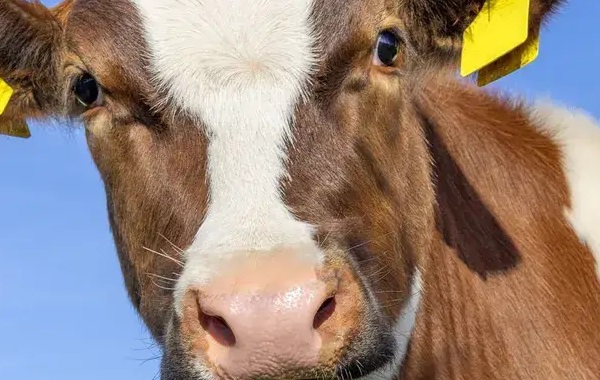
Scientists engineer climate-smart cows with 10 to 20 times more milk
Concerns regarding cows’ effects on the environment and climate change have long been a key issue in farming for several reasons.
For starters, methane is produced by cattle during digestion. This greenhouse gas plays a role in global warming as it has a far higher warming potential than carbon dioxide (CO2). The main way that it is released is through the animals belching.
Second, deforestation is frequently a result of cattle farming. Clearing forests for cattle grazing releases stored carbon from the trees and decreases photosynthesis, the Earth’s natural process of absorbing CO2.
Third, the way cow manure is managed leaves a high carbon foot print. Methane and other hazardous gases may be released into the atmosphere as a result of improper handling and disposal of the animals’ excrement.
Finally, the production of feed crops for livestock often requires significant water and energy resources and can lead to deforestation and habitat destruction.
Fewer cows, more milk
One way to reduce all these issues is to reduce the number of cows. This can be done by increasing their milk output so that fewer cattle are needed for the same amount of output.
Now, a team of animal scientists from the University of Illinois Urbana-Champaign has genetically engineered cows that can produce up to 20 times more milk and have a higher threshold of tolerance for diseases and pests.
The researchers plan to implant 100 of these new embryos into indigenous cattle in two Tanzanian locations this March and hope that the resulting animals will exhibit all the positive traits they are engineered to have.
“The whole idea is to keep the disease and pest resistance linked together with the milk production so that as you breed, those traits don’t separate,” said project leader Matt Wheeler, professor in the Department of Animal Sciences in the College of Agricultural, Consumer and Environmental Sciences (ACES) at Illinois
“That’s going to be the challenge in developing countries; until you get to the pure synthetic generation, there will always be the temptation to breed to the bull down the road, losing the effect.”
Climate-resilient animal agriculture
Even though the initiative is just getting started, it is a crucial first step in the introduction of more climate-resilient animal agriculture. The same technology can be used to shield cattle from shifting climates both domestically in the United States and abroad. Tropical traits can be introduced in the already high-yielding US cattle to increase their resistance to illness, heat, and drought.
“These cattle would work very well in Mexico, Texas, New Mexico, and California. Maybe it’s time to start thinking about that now,” Wheeler said. “People don’t usually think that far ahead, but my prediction is that people are going to look back and realize having tropical genetics earlier would have been a good thing.”
Source: Interesting Engineering
Scientists finally solve 390 million-year-old ‘murder mystery’ from an ancient supercontinent
Scientists engineer climate-smart cows with 10 to 20 times more milk