Scientists develop ‘cosmic concrete’ to construct habitats on Mars
Over 50 years after the first human set foot on the Moon, humanity is preparing to take the next big steps in space exploration. The Moon, and eventually Mars, will be the first destinations for human settlement.
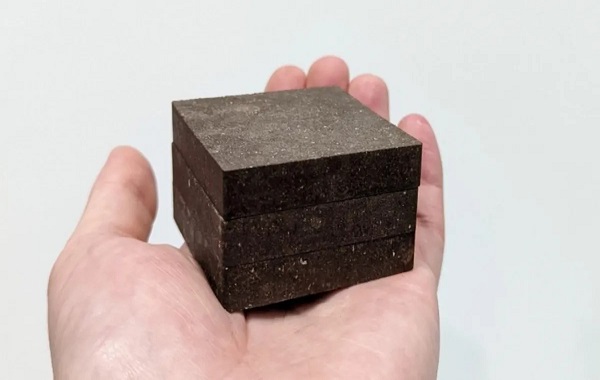
Scientists have been testing various materials for the construction of such habitats on Mars. An innovation in this field comes from scientists at the University of Manchester. They have developed a new ‘cosmic concrete’ composed of extraterrestrial dust, a press release stated.
As no quick return to Earth would be possible during these deep-space missions, it is important to rely on materials that can be found on the spot. Exporting infrastructure materials from Earth would be prohibitively expensive for space agencies.
New space concrete is stronger than regular one
The new material is known as ‘StarCrete.’ In addition to extraterrestrial dust, it is composed of potato starch and salt.
When mixed with simulated Mars dust, the team demonstrated that the potato starch acts as a binding agent for this concrete. The resulting material was twice as strong as regular concrete and can be used for construction on outer worlds.
The study notes that StarCrete has a strength of 72 Megapascals (MPa), while ordinary concrete has a strength of 32 MPa. When tested with moondust, StarCrete outperformed all others at 91 MPa.
As per calculations, a 55-pound (25 kilogram) sack of potatoes contains enough starch to produce nearly half a tonne of StarCrete — 213 bricks. They also found that common salt (magnesium chloride, which is found on Mars) and astronaut tears could further help to improve the strength of this material.
Previously, the team tested human blood and urine as a binding agent; however, this is impractical for large-scale work, and astronaut health could be jeopardized in a harsh space environment.
“Since we will be producing starch as food for astronauts, it made sense to look at that as a binding agent rather than human blood. Also, current building technologies still need many years of development and require considerable energy and additional heavy processing equipment which all add cost and complexity to a mission. StarCrete doesn’t need any of this and so it simplifies the mission and makes it cheaper and more feasible,” Dr. Aled Roberts of The University of Manchester and lead researcher for this project, said in a statement.
Furthermore, StarCrete could be a more environmentally friendly alternative to traditional concrete used on Earth. Cement and concrete production account for about eight percent of global CO2 emissions. Following the completion of this study, the team will continue to experiment with enhancing the strength of StarCrete for future use.
Source: Interesting Engineering
The International Space Station Films A Fleet of Hundreds of UFOs Heading Towards Earth
The International Space Station Films A Fleet of Hundreds of UFOs Heading Towards Earth
Scientists develop ‘cosmic concrete’ to construct habitats on Mars