
Reversing Paralysis: “Dancing Molecules” Can Fix Spinal Cord Injuries
Following a novel treatment developed with the help of the Advanced Photon Source, paralyzed mice can now “walk” once again.
The Science Behind the Treatment
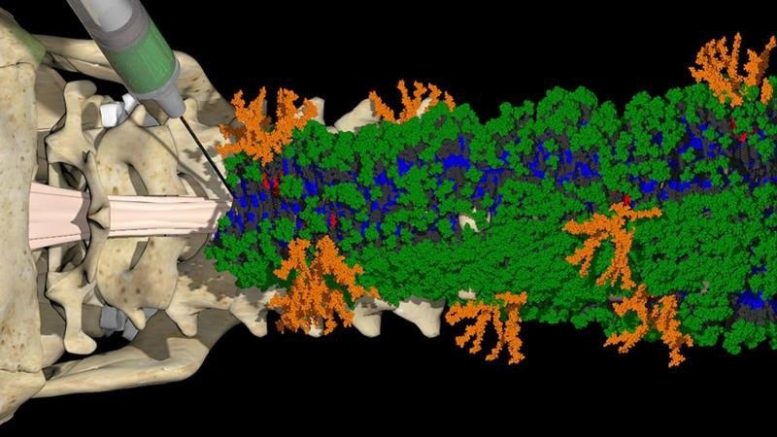
A new injectable treatment for spinal cord injury makes use of specially created molecules that prompt spinal cells to respond by healing. The scientists used X-ray characterization at the Advanced Photon Source (APS). This allowed the scientists to ascertain the structure of these molecules as they combined to create small fibers in a liquid solution.
These fibers’ motion may be controlled by scientists, making it possible for the fibers to interact with the spinal cells more effectively.
The Treatment’s Impact
Every year, hundreds of thousands of individuals have spinal injuries that often result in paralysis. For many years, researchers have been looking for a cure for these injuries. With only one dosage, this new injectable treatment reversed paralysis in mice after four weeks.
If it works the same way in people, individuals with serious spinal injuries could have a chance to walk once again. The techniques and approaches to characterization with X-rays could also help develop other therapeutic approaches requiring insights into the molecular structure.
Summary
A critical portion of this research into a novel treatment for spinal injuries was conducted at the APS, a Department of Energy (DOE) Office of Science user facility at Argonne National Laboratory. There, scientists from Northwestern University and the Air Force Research Laboratories used ultrabright X-ray beams to study the structure of the engineered molecules and how they behaved together in a solution.
Injected as a liquid, the molecules came together to form tiny fiber structures (called nanofibers) that surrounded the spinal cord.
In the APS studies, the researchers discovered that the motion of molecules within the nanofibers could be controlled by changing their chemical structure. It turned out that molecules that moved most —“danced” more — were more likely to signal spinal cells via proteins called receptors, resulting in a more effective treatment.
Knowing the structure of the molecular matrix allowed researchers to tune the motion of the molecules. By making the molecules “dance,” they were more likely to find and engage cellular receptors, triggering the cells to repair damaged neurons.
Source: Reversing Paralysis: “Dancing Molecules” Can Fix Spinal Cord Injuries