Rare 500-year-old freeze-dried potatoes unearthed at Inca coastal site
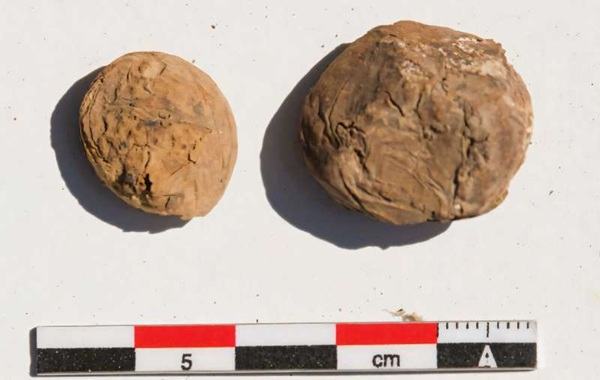
Archaeologists digging at an Inca site on the arid coast of southern Peru have unearthed two rare, roughly 500-year-old freeze-dried potatoes. The potatoes are among the only ones found in more than a century and would have been transported across the empire from the freezing peaks of the Andes.
Known as chuño, they were uncovered during excavations at Tambo Viejo, an Inca center in the Acarí Valley. According to a study published in the Journal of Field Archaeology, chuño can be made only at high altitudes in the cold mountains, meaning evidence of this food on the coast is not only rare but also physical proof that the Inca were moving it across their vast empire.
“It was obvious that this was not just any find, but a special one,” said Dr. Lidio Valdez, an archaeologist at the University of Calgary.
He recalled telling his field team at the moment of discovery: “Here we have an article.”
A potato that won’t rot
Potatoes are native to the Andes, where they have been grown for thousands of years. However, fresh potatoes spoil easily, rotting within a week in warm climates, while some varieties are bitter and toxic if not processed beforehand.
To deal with this dilemma, the ancient Andeans developed chuño, a freeze-dried potato made by exposing potatoes to extreme mountain winter-night frosts, then thawing them in the intense daytime sun.
After repeating this cycle, the potatoes are trampled and dried, producing black chuño. White chuño, found at Tambo Viejo, is made from naturally toxic, bitter potatoes and requires soaking for several weeks after freezing, then drying. The result is light, convenient chuño that can be stored for years.
The chuños were discovered during Valdez’s 2024 excavations inside a ceramic jar set into the floor, believed to have been used for storage. The jar contained two brownish-white chuños, with parts of their peels still clinging to their shriveled surfaces. The potatoes had been stored together with a broken piece of Inca pottery and a damaged spindle whorl.
According to Valdez, these everyday objects helped confirm the food’s age, proving “that the freeze-dried potatoes are of Inka times,” meaning the potatoes likely date to the 15th and 16th centuries.
At the time, potatoes were the “bread of the people,” with Spanish chroniclers explaining that llama caravans hauled foods, including chuño, to the various storage houses that dotted the landscape and were intended to feed the Inca workforce, including at Tambo Viejo. Because chuño was lightweight, durable and could be produced in large quantities, it was likely one of the most important foods in the empire.
Even after the fall of the Inca, chuño remained a staple food.
Spanish chronicler Cieza de León claimed that by selling chuño in the mines, many Spaniards became rich and went back to Spain prosperous …
Despite its abundance in antiquity, chuño rarely survives in archaeological contexts, with the only other comparable discovery made more than a century ago at Pachacamac, Peru. The arid coastal environment and storage inside a jar likely sheltered these chuños, allowing them to survive into the 21st century. However, their rare occurrence at Inca sites has meant they have been largely overlooked alongside other important Indigenous staples, such as dried meats.
Exactly which mountains grew these potatoes remains a mystery for now, though Valdez would like to trace their origins through chemical analysis.
“It would be ‘cool’ to know the origin of these potatoes,” he said.
For now, Tambo Viejo remains a unique site, Valdez said. “I am not sure if there is any other Inka site that can be compared.” He hopes to return one day, as “every single dig produced wonderful results.”
Source: phys.org
Rare 500-year-old freeze-dried potatoes unearthed at Inca coastal site