Physicists Observe Incredible ‘Quantum Tornados’ Formed From Ultra-Cold Atoms
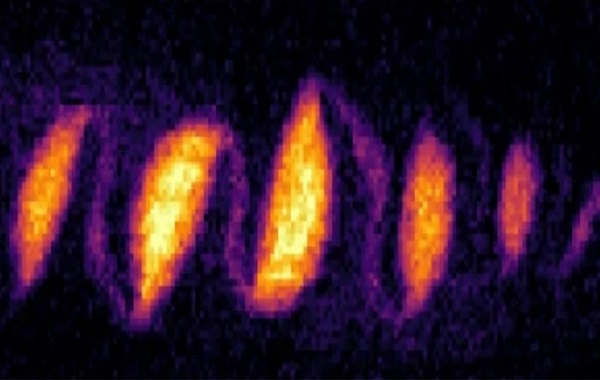
Scientists have observed a stunning demonstration of classic physics giving way to quantum behavior, manipulating a fluid of ultra-cold sodium atoms into a distinct tornado-like formation.
Then, of course, there’s the mind-boggling fact that quantum particles don’t exactly have a certain fixed location like you or I, which influences how they interact.
By cooling particles down to as close to absolute zero as possible and eliminating other interference, physicists can observe what happens when these strange interactions take hold, as a team from MIT has just done.
“It’s a breakthrough to be able to see these quantum effects directly,” says MIT physicist Martin Zwierlein.
The team trapped and spun a cloud of around 1 million sodium atoms using lasers and electromagnets. In previous research physicists demonstrated this would spin the cloud into a long needle-like structure, a Bose-Einstein condensate, where the gas starts to behave like a single entity with shared properties.
“In a classical fluid, like cigarette smoke, it would just keep getting thinner,” says Zwierlein. “But in the quantum world, a fluid reaches a limit to how thin it can get.”
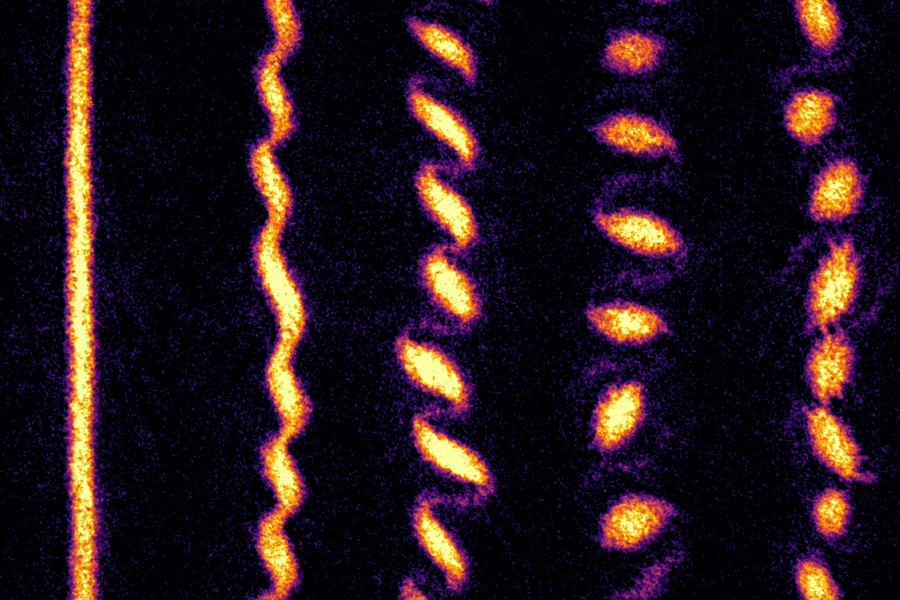
The image below highlights the densities of ultra-cold atoms across microseconds.
(Mukherjee et al, Nature, 2022)
The atom cloud evolved from the needle-like condensate (left), passed through snake-shaped instability (center), and formed miniscule tornadoes (right).
There are even tiny dark spots between the neighboring crystals (see the ‘x’ marks below) where vortexes of counterflow occur – just as we see in complex weather systems (think of the roiling adjoining storms on Jupiter).
“Here, we have quantum weather: The fluid, just from its quantum instabilities, fragments into this crystalline structure of smaller clouds and vortices,” explains Zwierlein.
“This evolution connects to the idea of how a butterfly in China can create a storm [in the US], due to instabilities that set off turbulence. Even in classical physics, this gives rise to intriguing pattern formation, like clouds wrapping around the Earth in beautiful spiral motions. And now we can study this in the quantum world.”
While traditional crystal solids are usually composed of atoms arranged in a stationary, repeating grid structure, these structures continue to fluctuate but remain within a definable pattern – like a liquid pretending to be a solid by holding and flowing through a fixed shape.
The team essentially made the atoms to behave like they’re electrons in a magnetic field. Using atoms in this way makes the resulting quantum phenomena easier to both manipulate and observe – opening the way for even more discoveries about this mind-bending world.
“We can visualize what individual atoms are doing, and see if they obey the same quantum mechanical physics,” says Zwierlein.
Source: Science Alert
Human-Safe Wormholes Could Exist in the Real World, Study Finds
Human-Safe Wormholes Could Exist in the Real World, Study Finds
Physicists Observe Incredible ‘Quantum Tornados’ Formed From Ultra-Cold Atoms