Parasites turn ants into zombies that adapt to temperature
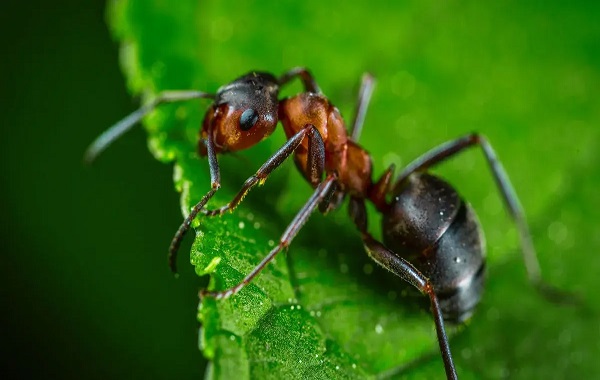
A new study has revealed the remarkable ability of a parasite that can turn ants into zombies and manipulate their behavior. The lancet liver fluke, a tiny flatworm that infects the brains of ants, can make them climb up and latch onto blades of grass, where they are more likely to be eaten by cattle or deer. This is how the parasite completes its life cycle and infects its next host.
But the parasite is not just a mindless puppeteer. It can also sense the temperature and adjust the ant’s behavior accordingly. When it gets too hot, the parasite makes the ant crawl back down to avoid dehydration and death. This way, it ensures its own survival and increases the chances of transmission.
The study, conducted by researchers from the University of Copenhagen’s Department of Plant and Environmental Sciences, was published in the journal Behavioral Ecology. The researchers tagged hundreds of infected ants in a forest near Roskilde, Denmark, and observed their movements in relation to various environmental factors.
Zombie switch
Associate Professor Brian Lund Fredensborg and former graduate student Simone Nordstrand Gasque, who is currently a Ph.D. student at Wageningen University in the Netherlands, led a study that discovered a distinct correlation between temperature and ant behavior. Fredensborg humorously referred to this discovery as identifying the ants’ “zombie switch.”
The researchers explain that only one parasite invades the ant’s brain, while hundreds of others hide in its abdomen. The brain parasite sacrifices itself for the others, who are protected by a capsule that shields them from the stomach acid of the next host.
Fredensborg explains that in certain environments, hundreds of liver flukes may be present, encapsulated to protect themselves from the stomach acid of future hosts. These liver flukes rely on ants to carry them to their next host. Interestingly, the liver fluke that manipulates the ant eventually dies, effectively sacrificing itself to benefit the others.
The liver fluke can cause liver damage in animals that are infected with many parasites, as they move around the host’s liver and bile ducts.
The researchers note that parasites that alter animal behavior are more common and influential than many people think. They say that understanding these creatures is important for biodiversity and ecology.
Fredensborg asserts that parasites have traditionally received limited attention, despite scientific evidence suggesting that parasitism is the most prevalent form of life. This lack of focus is partially because parasites are challenging to research. However, Fredensborg emphasizes the crucial role that parasites play in biodiversity. By influencing the behavior of their hosts, they can significantly affect food chains and ecosystems, making them important to understand.
The lancet liver fluke is widespread in Denmark and other temperate regions worldwide. The researcher and his colleagues will continue to investigate the parasite, and exactly how it takes over an ant’s brain.
Fredensborg concludes that researchers have determined temperature plays a key role in when a parasite takes control of an ant’s brain. However, the specific combination of chemical substances used by the parasite to turn ants into “zombies” still remains unknown.
The lifecycle
In this intricate lifecycle, the liver fluke first targets an ant, manipulating its brain to make it clamp onto a blade of grass. This positions the ant to be consumed by its next host, typically a grazing animal like a cow, sheep, or deer. While the ant waits, a multitude of liver flukes nestle in its abdomen, ready for transmission. When a grazer finally ingests the infected ant, the liver fluke controlling the ant’s brain is destroyed by the host’s stomach acid. However, the remaining flukes in the ant’s abdomen are safeguarded by a capsule that dissolves only in the intestine, allowing them to travel through bile ducts into the liver. There, they mature into adult flukes and start laying eggs, which are eventually expelled through the host animal’s feces.
These fluke eggs lie dormant on the ground until a snail happens by and consumes them. Inside the snail, the eggs morph into larval flukes and reproduce asexually, potentially multiplying into several thousand. To complete their lifecycle and find their next ant host, the larval flukes induce the snail to cough them out, encapsulated in a ball of mucus. Attracted to this mucus, ants consume it and become the new carriers of the liver fluke larvae, thus continuing the lifecycle.
Source: Interesting Engineering
Mystery of ‘living fossil’ tree frozen in time for 66 million years finally solved
Mystery of ‘living fossil’ tree frozen in time for 66 million years finally solved
Parasites turn ants into zombies that adapt to temperature