
NYU performs world’s first fully robotic double lung transplant in medical milestone
New York University (NYU) Langone Health achieved a medical milestone by performing the world’s first fully robotic double lung transplant.
A 57-year-old woman with chronic obstructive pulmonary disease (COPD) underwent a double lung transplant using the da Vinci Xi robotic system.
Small incisions between the ribs allowed the robotic system to remove each lung, prepare the surgical site, and implant the new lungs. Both lungs were successfully transplanted entirely with robotic techniques.
According to the team, the procedure showcases a breakthrough in robotic surgery and advances minimally invasive care.
Advancing lung surgery
On October 22, 2024, a double lung transplant was performed on Cheryl Mehrkar, four days after she was added to the transplant list following months of evaluation.
Diagnosed with COPD at 43, she inherited a genetic predisposition to lung disease, and her condition worsened after contracting COVID-19 in 2022. An adventurous individual, she was a scuba divemaster, avid motorcyclist, and karate black belt, operating a dojo with her husband for over 20 years.
Health challenges led her to retire from teaching karate, but she continued serving her community as a volunteer emergency medical technician with the Union Vale Fire Department in Dutchess County, New York, where she remains active.
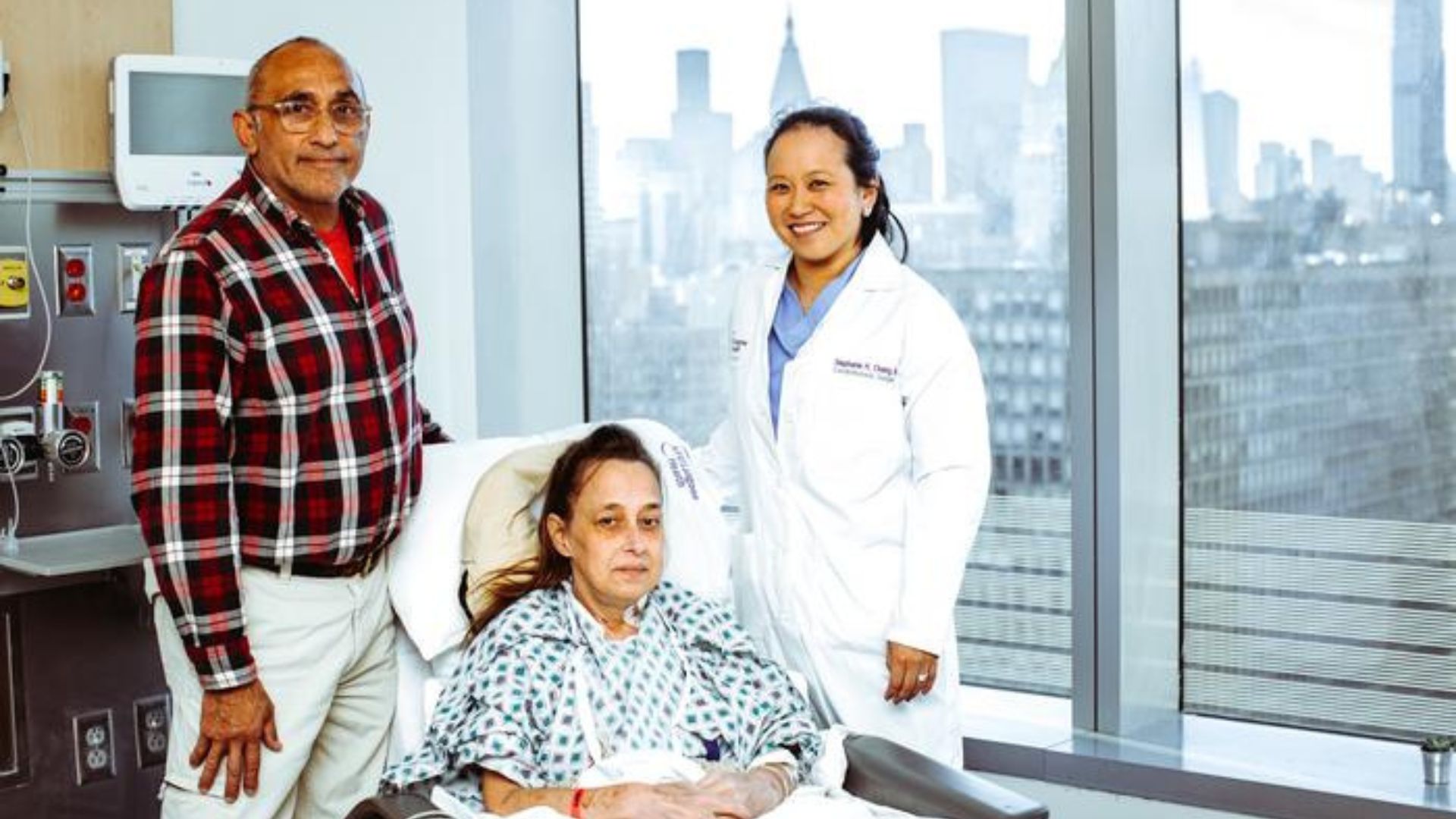
“By using these robotic systems, we aim to reduce the impact this major surgery has on patients, limit their postoperative pain, and give them the best possible outcome,” said Stephanie H. Chang, surgical director of the Lung Transplant Program for the NYU Langone Transplant Institute, in a statement.
A month earlier, Chang and her team at NYU had performed the nation’s first fully robotic single lung transplant.
Autonomous surgery
This month, a robot trained solely by analyzing videos of experienced surgeons successfully replicated complex surgical procedures with skills comparable to human doctors.
The advancement highlighted the potential of imitation learning, a method that brings robotic surgery closer to autonomy, where robots could independently perform intricate procedures without human intervention.
Researchers from Stanford University and Johns Hopkins University trained a da Vinci Surgical System robot in three basic activities: suturing, tissue lifting, and needle handling. The robot performed these activities with human-like skill by using imitation learning, which eliminated the necessity for meticulously programming each movement for each medical procedure.
Kinematic data, which mathematically represents robotic motion, was combined with methods from sophisticated language models to create the training model, which included machine learning concepts. With this method, the robot was able to learn from surgical videos that were recorded by da Vinci systems’ wrist-mounted cameras. With over 7,000 da Vinci robots and more than 50,000 surgeons trained worldwide, there is a sizable dataset to improve this technology even more.
While the da Vinci system is known for input inaccuracies, researchers overcame this by focusing on relative movements instead of absolute actions. This adjustment improved precision and adaptability, allowing the robot to generalize to new environments and tasks, such as recovering a dropped needle during surgery.
The new model streamlines robot training, enabling surgical robots to learn procedures in days rather than years. According to experts, the innovation has the potential to advance surgical autonomy, minimize errors, and enhance procedural accuracy, marking a significant leap forward in robotic medicine.
Source: Interesting Engineering
“Decoding Super-Survivors: Why Some Overcome Aggressive Cancers”
NYU performs world’s first fully robotic double lung transplant in medical milestone