New AI tool successfully detects and classifies supernova
A new feat has been achieved in the realm of astronomy.
The first supernova was observed, recognized, and classified using a wholly automated approach without human participation.
Led by Northwestern University, an international team of scientists has created a cutting-edge artificial intelligence (AI) tool known as the Bright Transient Survey Bot (BTSbot).
This automated system also includes robotic telescopes that explore the night sky for new supernovae. Not only does this speed up the examination and categorization of possible new supernovae, but it also removes the chance of human mistakes.
“For the first time ever, a series of robots and AI algorithms have observed, then identified, then communicated with another telescope to finally confirm the discovery of a supernova,” said Adam Miller, who led the work.
The official release notes that humans have dedicated approximately 2,200 hours to visually evaluating and classifying supernova candidates using the Zwicky Transient Facility (ZTF) over the last six years.
“This represents an important step forward as further refinement of models will allow the robots to isolate specific subtypes of stellar explosions. Ultimately, removing humans from the loop provides more time for the research team to analyze their observations and develop new hypotheses to explain the origin of the cosmic explosions that we observe,” added Miller.
AI system trained using 1.4 million images
BTSbot was trained using a machine-learning algorithm that used over 1.4 million images from nearly 16,000 sources. This dataset included confirmed supernovae, momentarily brightening stars, periodically variable stars, and galaxies exhibiting flare activity.
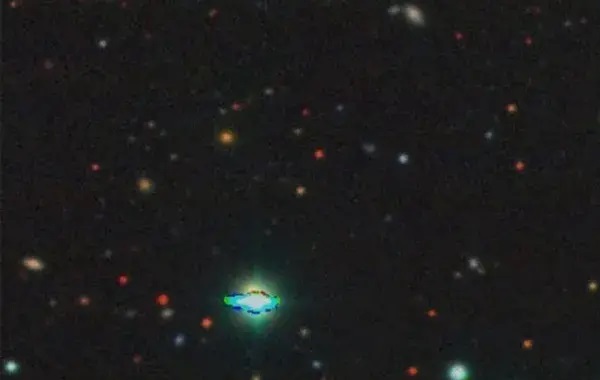
The newly developed AI technique discovered SN2023tyk, a new supernova candidate.
This candidate was first spotted on October 3 by ZTF, a sky-imaging robotic system devoted to searching for supernovae. On October 5, BTSbot identified SN2023tyk as a supernova candidate while analyzing ZTF’s real-time data.
Shortly after that, BTSbot autonomously initiated a request for the potential supernova’s spectrum from Palomar Observatory. Another robotic telescope, the SED Machine, conducted comprehensive observations to acquire the candidate’s spectrum.
The SED Machine’s spectrum was then sent to Caltech’s SNIascore to determine the type of supernova. According to the findings, the candidate was a Type Ia supernova, an explosion of a white dwarf star.
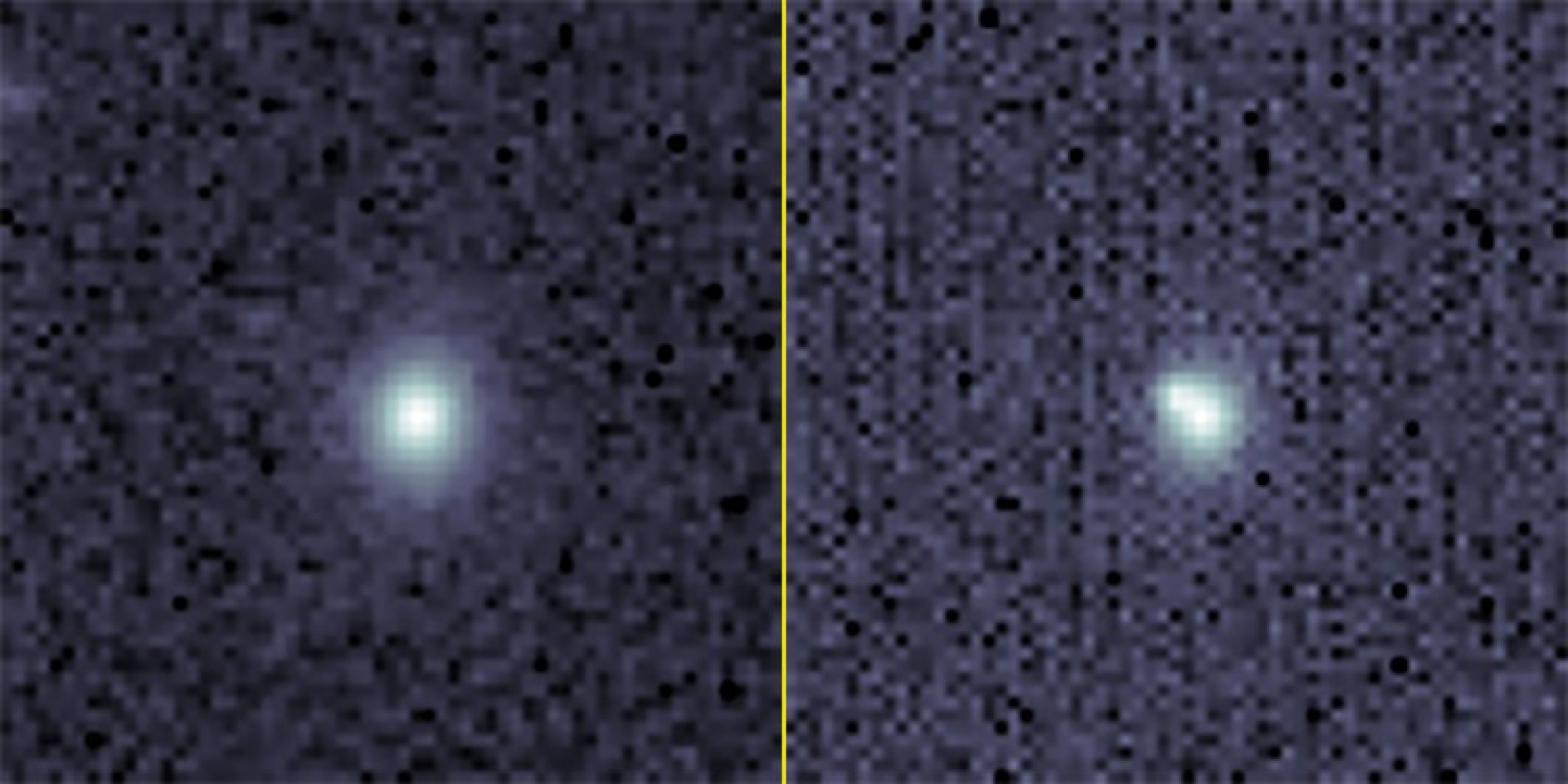
The automatic system formally announced the finding to the astronomical community on October 7.
Regarding the significance of this new AI tool, Nabeel Rehemtulla, who co-led the technology development, said: “This significantly streamlines large studies of supernovae, helping us better understand the life cycles of stars and the origin of elements supernovae create, like carbon, iron, and gold.”
Typically, scientists work closely with robotic systems to detect and analyze supernovae, an inherently labor-intensive and time-consuming process.
This process comprises multiple steps. Robotic telescopes select possible candidates first, and then humans step in. They invest their time in confirming these candidates and conducting spectroscopic measurements.
“Adding BTSbot to our workflow will eliminate the need for us to spend time inspecting these candidates,” said Christoffer Fremling, an astronomer at the California Institute of Technology (Caltech).
Source: Interesting Engineering
New AI model uncovers how and why the human brain ages
New AI tool successfully detects and classifies supernova