Nature’s Most Ancient Secret: The 290-Million-Year-Old “Exit” That Rewrites Evolutionary History
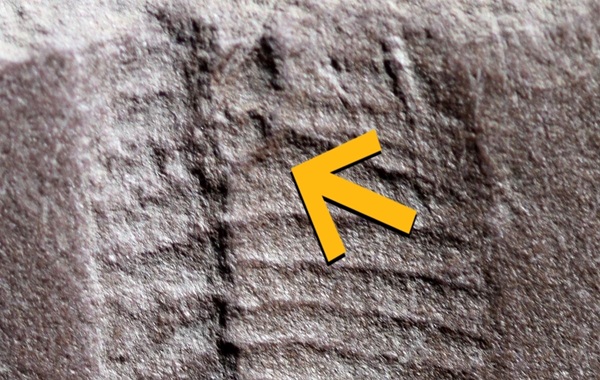
When we think of prehistoric wonders, we usually imagine the sharp teeth of a T-Rex or the massive wings of a Pterodactyl. However, scientists have recently pivoted their attention to the other end of the spectrum—literally. In a groundbreaking discovery, researchers have identified the oldest fossilized “butthole” (cloaca) ever found, belonging to a primitive reptile that walked the Earth nearly 290 million years ago.
Beyond the Bizarre: Why Does This Matter?
While the headline might sound like a joke, this find is a goldmine for evolutionary biology. The specimen, an early reptile known as Captorhinus aguti, offers a rare, “behind-the-scenes” look at how prehistoric creatures handled biological necessities like excretion and reproduction.
Up until now, the soft tissues of the pelvic region rarely survived the ravages of time. Most fossils are just bones and teeth. Finding a preserved cloaca—a multipurpose opening used for both waste and mating—is like finding a “missing link” in soft-tissue evolution.
A Window Into the Paleozoic Era
This 290-million-year-old marvel predates the first dinosaurs by tens of millions of years. By studying the structure of this fossilized vent, paleontologists can finally answer complex questions:
Mating Rituals: How did the earliest land-dwelling vertebrates reproduce before specialized organs evolved?
Biological Efficiency: How did these ancient creatures manage their internal systems to survive in the harsh environments of the Paleozoic?
Evolutionary Path: It provides a direct comparison to modern birds and crocodiles, who still utilize a similar cloacal system today.
The Science of Preservation
How does something so delicate stay intact for hundreds of millions of years? The researchers explain that unique mineral conditions allowed the skin and the shape of the opening to mineralize before decaying. It’s a “one-in-a-million” geological accident that has given us the most intimate look at prehistoric life ever recorded.
The Bottom Line
This discovery proves that in the world of paleontology, no detail is too small—or too “cheeky”—to be ignored. It’s a reminder that every part of an organism’s anatomy has a story to tell about where we, and the animals we share the planet with, came from.
Source: Science Alert
Ancient DNA Reveals Europe’s Last Hunter-Gatherers Survived Thousands of Years Longer Than Expected
Nature’s Most Ancient Secret: The 290-Million-Year-Old “Exit” That Rewrites Evolutionary History