
Geoglyphs as Desert Guides: A Hidden Network in South America?
The Enigmatic Atacama Giant: A Geoglyph Shrouded in Mystery
The Nazca Lines in Peru may be the most famous geoglyphs, but the Atacama Desert in Chile hosts an even larger and more varied collection of these ancient artworks. Among them, the Atacama Giant stands out as the most intriguing, sparking debates about its true purpose and meaning. What lies behind this colossal figure carved into the desert’s arid landscape?
The Geoglyphs of the Atacama Desert: A Cultural Treasure
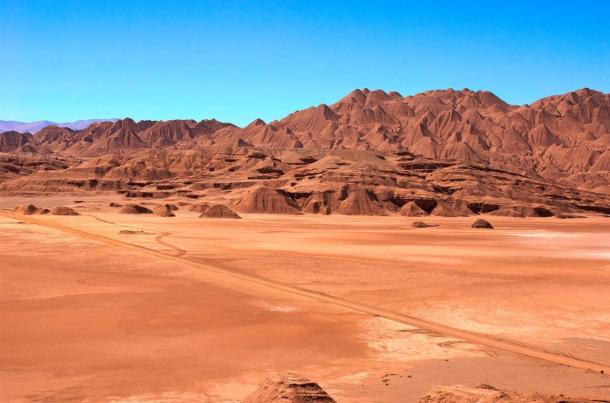
The Atacama Desert, a vast plateau west of the Andes, is one of the driest places on Earth. Stretching across parts of Chile, Peru, Bolivia, and Argentina, this harsh environment serves as the backdrop for over 5,000 geoglyphs—massive figures created on the desert floor between AD 600 and AD 1500. These geoglyphs depict a range of images, including geometric shapes, animals, and human-like figures.
Scholars believe that the Tiwanaku and Inca civilizations, along with other cultures of the region, were responsible for crafting these desert drawings. The techniques used to create them—extractive, additive, and mixed—emphasize the ingenuity of the creators. The dry conditions of the Atacama Desert have remarkably preserved these artworks for centuries, leaving behind a valuable archaeological legacy.
The Atacama Giant: The World’s Largest Geoglyph
Among the many geoglyphs of the Atacama Desert, the Atacama Giant is the most famous and controversial. Measuring an impressive 119 meters (390 feet) in height, it is the largest known anthropomorphic geoglyph in the world. Located on the Cerro Unitas hill, the figure is easily recognizable by its square head and elongated, stylized legs. Unique markings and lines emerge from its head, which have fueled speculation about the giant’s significance.
Theories Behind the Atacama Giant’s Purpose: Astronomical Calendar or Deity?
The purpose of the Atacama Giant has been a source of fascination for scholars and enthusiasts alike. One of the leading theories suggests that the giant functioned as an astronomical calendar, helping to track the movement of the moon. This, in turn, could have been used to calculate time for farming and ceremonial events, marking the changing of seasons.
Another theory posits that the Atacama Giant represents a deity worshipped by local populations. Some argue that the figure held religious significance, potentially serving as a central figure in rituals or spiritual practices. Still, other interpretations veer into more speculative territory, including claims of extra-terrestrial visitations, ancient languages, or a pilgrimage route marked by the giant.
The Role of Geoglyphs in Ancient Transportation Networks
Beyond spiritual or ceremonial interpretations, there’s a more practical explanation for the geoglyphs of the Atacama Desert. These massive drawings may have served as markers in South America’s ancient transportation network. Llama caravans played an essential role in trade and communication, and geoglyphs could have provided crucial information for travelers navigating the harsh desert. Some scholars suggest that these geoglyphs indicated the locations of resources such as water, salt flats, or fodder for animals, which were vital for survival in the region.
Geoglyphs depicting llama caravans, along with historical records from Spanish chroniclers, lend weight to this theory. However, no direct archaeological evidence, such as caravan equipment, has been discovered in the desert, leaving the question of their true purpose unresolved.

A Mystery Waiting to Be Solved
While the precise function of the Atacama Giant and the desert’s other geoglyphs remains unknown, their impact on both ancient and modern peoples is undeniable. These massive figures have stood the test of time, continuing to intrigue those who encounter them. With ongoing research and preservation efforts, future generations may one day unlock the secrets hidden within the Atacama Desert’s ancient art.
Source: Geoglyphs as Desert Guides: A Hidden Network in South America?
What Secrets Do Sacred Buildings Built by the Phrygians in Turkey in 800 BC Hold?
What Secrets Do Sacred Buildings Built by the Phrygians in Turkey in 800 BC Hold?