Cuneiform Tablets and ‘Envelopes’ Tell of Mesopotamian Sophistication
A team of Italian and Iraqi archaeologists has unearthed hundreds of cuneiform tablets in central Iraq. They also uncovered some clay coverings and seals with the tablets. The collection of cuneiform texts is one of the most important finds of its kind in many years and is opening up a window into the complex and sophisticated culture of Ancient Mesopotamia.
The treasure trove of tablets and other fascinating and revealing items was found by a team from the Italian Universities of Pisa and Siena who worked with specialists from the Iraqi University of Al-Qadisiyyah. They had been digging at the Tell as-Sadoum site which is in south-central Iraq. According to Unipi News , “The 50-hectare site, east of Najaf, on a branch of the Euphrates River has been identified as Marad”.
This was an important city, that was established in the 3 rd millennium BC and was once part of the Akkadian Empire . It was located on a hill and it was inhabited until the Neo-Babylonian period in the 1 st millennium BC. Excavations have revealed a large temple, some residential districts and a large manufacturing center.
3000-year-old clay cuneiform tablets
The team found the clay tablets in the manufacturing district, along with a large number of ceramic and pottery fragments. Archaeology News Network reports that “the archaeologists found a hundred or so fragments with cuneiform script”. They are believed to date to the 2nd millennium BC. This means that they belong to the period of the Paleo-Babylonian Empire (the time of Hammurabi) reports LBV. Eight of the tablets have been found intact or only have relatively minor damage and all are inscribed with cuneiform, one of the earliest systems of writing.
The texts are related to a diverse range of activities that were happening in the ancient city. A number of the clay texts appear to be letters and other official documents. Some are on the subject of business and a sales contract and a purchase agreement have been found. There are others of a bureaucratic nature and some are even concerned with legal disputes.
Archaeology News Network quotes Prof. Anacleto D’Agostino of the University of Pisa, who took part in the dig, as saying, “the tablets bear witness to the wealth and the lively economic and administrative life of the ancient city in Mesopotamia”. A few of the tablets also list the names of some kings and other cities. These could potentially provide insights into the political history of the Mesopotamian city.
Clay ‘envelopes’
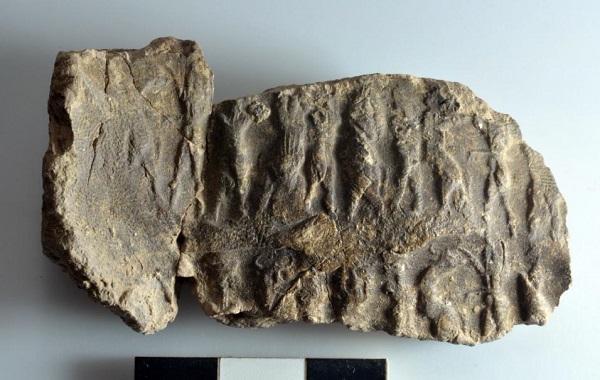
The archaeologists also found with the texts many fragments of clay containers or covers. These have been likened to envelopes in which the cuneiform tablets were kept. Three of these ‘envelopes’ have been found nearly intact. Many of these, which are made of thin strips of clay, have the subject of the tablets they contained written on them. They also often bear the imprint of seals, known as ‘cretulae’ with names and images, which were designed to authenticate the contents of the texts, inside the clay covering.
Source: 24newsjustall
Enigmalith: A 100,000-Year-Old electrical connector found embedded In Stone
Enigmalith: A 100,000-Year-Old electrical connector found embedded In Stone
Cuneiform Tablets and ‘Envelopes’ Tell of Mesopotamian Sophistication