Chiron’s Gases and Ices: A Portal to the Solar System’s Past
Although our solar system has existed for billions of years, our understanding of its dynamic and intriguing members is still evolving. One such enigmatic body is (2060) Chiron, a unique object classified as a “Centaur.”
What Are Centaurs? A Hybrid Between Asteroids and Comets
Centaurs, named after the mythological creatures that are part human and part horse, are celestial objects that orbit the sun between Jupiter and Neptune. These bodies exhibit characteristics of both asteroids and comets, making them invaluable to scientists investigating the origins and evolution of our solar system.
Chiron is a prime example of this dual nature. Recent observations using the James Webb Space Telescope (JWST) have revealed groundbreaking details about its composition and behavior, highlighting its uniqueness among the Centaur population.
First-of-Its-Kind Discovery: Unveiling Chiron’s Surface Chemistry
In a study led by researchers from the UCF Florida Space Institute (FSI) and published in Astronomy & Astrophysics, Chiron’s surface chemistry was analyzed for the first time. This analysis uncovered the presence of:
Carbon dioxide (CO₂) and carbon monoxide (CO) ices
Methane gas
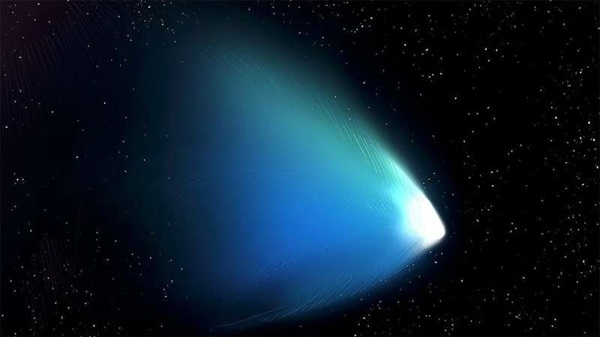
A cloud-like coma of dust and gas
According to Dr. Noemí Pinilla-Alonso, associate scientist at FSI and now affiliated with the University of Oviedo in Spain, these findings expand upon previous research that identified similar ices on trans-Neptunian objects (TNOs). This points to a potential shared history between Chiron and other ancient solar system bodies.
Why Active Centaurs Like Chiron Are Essential to Solar System Science
“All small bodies in the solar system provide clues about its ancient past,” says Pinilla-Alonso. “However, active centaurs like Chiron go a step further. Their transformations due to solar heating allow us to study surface and subsurface processes in real time.”
Unlike TNOs, which are too cold and distant to display activity, and typical asteroids, which lack ice, centaurs like Chiron offer a rare opportunity. The combination of surface ices and an observable gas coma provides critical insights into the:
Physical properties: Thickness and porosity of ice layers
Chemical composition: Types of ices and irradiated byproducts
Evolutionary processes: How solar heating impacts surface and subsurface layers
Chiron: An “Oddball” Among Centaurs
Discovered in 1977, Chiron has long fascinated scientists due to its unusual behaviors and characteristics. Dr. Charles Schambeau, an assistant scientist at UCF, explains, “Chiron is an oddball among Centaurs. It exhibits comet-like activity, possesses rings of material, and potentially has a debris field of dust or rocky material orbiting it.”
The Role of Methane and Solar Heating
Using data from the JWST, Schambeau analyzed Chiron’s methane gas coma. He found that the gas emanated from areas on Chiron’s surface exposed to the highest levels of solar heating. This observation underscores the interplay between solar energy and the release of volatile materials, which helps scientists better understand Chiron’s unique thermophysical processes.
A Window into the Solar System’s Formation
Chiron’s composition and activity provide valuable clues about its origins and journey through the solar system. Pinilla-Alonso notes that Chiron likely originated in the TNO region and was later ejected due to gravitational interactions with giant planets. This dynamic history exposes Chiron to diverse environments, contributing to its rich chemistry and behavior.
Deciphering Chiron’s Complex Ices and Gases
The JWST spectra revealed a plethora of ices on Chiron, including:
Primordial ices inherited from the pre-solar nebula, such as methane, carbon dioxide, and water ice
Irradiated byproducts, including acetylene, propane, and ethane, formed through surface chemical reactions
These findings challenge the notion of a “standard” Centaur. “Every active Centaur observed so far shows unique characteristics,” says Pinilla-Alonso. “Either they are all outliers, or we are missing a unifying explanation.”
Future Research and Exciting Opportunities
The analysis of Chiron’s gases and ices opens new avenues for research. As Chiron moves closer to the sun, further observations could:
Provide better measurements of ice quantities and compositions
Elucidate seasonal variations and their impact on Chiron’s ice reservoirs
Improve our understanding of surface and subsurface dynamics
“The JWST has revolutionized our ability to study distant objects like Chiron,” Schambeau says. “These results enhance our understanding of its interior and the processes driving its activity.”
Conclusion: A New Frontier in Solar System Science
Chiron’s study underscores the importance of active Centaurs in unraveling the mysteries of the early solar system. As more data becomes available, scientists are poised to uncover deeper insights into the processes shaping these hybrid bodies and their connections to the solar system’s formation. With each discovery, Chiron proves to be a captivating window into the past—and a beacon for future exploration.
Source: Chiron’s Gases and Ices: A Portal to the Solar System’s Past
Did a Mysterious Interstellar Visitor Rewrite the Solar System’s History?
Did a Mysterious Interstellar Visitor Rewrite the Solar System’s History?