Can China Beat NASA in the Race to Bring Mars Samples Back to Earth?
China has steadily risen as a dominant force in space exploration, achieving remarkable milestones since the early 2000s. With its eyes set on the Red Planet, the nation has announced an ambitious plan to retrieve Mars samples by 2031 through its Tianwen-3 mission. This groundbreaking endeavor marks another major step in China’s bid to establish itself as a leading power in space exploration, rivaling NASA and other global space agencies.
China’s Journey to Space Supremacy: Key Milestones and Future Aspirations
Since the first Chinese astronaut (Yang Liwei) ventured into space in 2003, China’s space program has rapidly expanded. Notable achievements include the deployment of the Chang’e-1 lunar orbiter in 2007, the construction of the Tiangong space station between 2021-2022, and the development of the Tianwen Mars exploration program. Looking ahead, China’s aspirations include the expansion of its space station, the creation of the International Lunar Research Station (ILRS) by 2035, and a permanent base on Mars.
The Tianwen program, meaning “questions to heaven,” is central to these ambitions, with Tianwen-3 representing the next leap forward.
Tianwen-3: A Bold Mission to Bring Mars to Earth
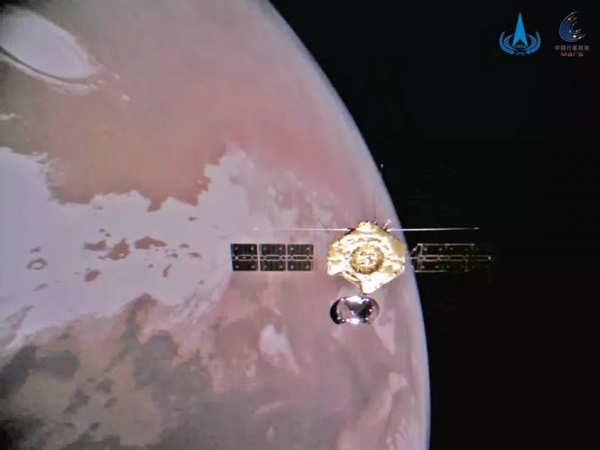
China’s Tianwen-3 mission, slated for a 2028 launch, aims to return Martian samples to Earth by 2031. This mission is the third in the Tianwen series, following the success of Tianwen-1, which delivered the Zhurong rover to Mars in 2021. Tianwen-1 achieved major milestones, including mapping the entire Martian surface and discovering hydrated minerals, evidence that Mars once had liquid water.
To achieve the ambitious goals of Tianwen-3, China plans to use two Long March-5 rockets for the mission:
One rocket will carry the orbiter and return vehicle.
The second rocket will transport the lander and ascent vehicle.
This two-launch strategy addresses the challenge of Mars’ greater distance from Earth and the current limitations of China’s rockets.
Targeting Ancient Martian Terrain for Biosignature Detection
The Tianwen-3 science team has identified 86 potential landing sites, primarily in Chryse Planitia and Utopia Planitia. These regions are rich in features like delta fans, lake beds, and possible ancient coastlines—key areas for finding biosignatures, or signs of past life. These locations are believed to have hosted water bodies billions of years ago, making them ideal for investigating Mars’ habitability.
According to Zengqian Hou, the lead geologist for the mission, the plan involves a combination of remote sensing, in-situ detection, and multi-point surface sampling to gather diverse materials. Advanced payloads developed in collaboration with international partners will enhance the mission’s capabilities.
Technological Innovations and International Collaboration
To detect potential biosignatures, Tianwen-3 will incorporate cutting-edge instruments specifically designed for Mars’ environment. The mission strategy includes:
Fixed-point in-depth drilling to explore subsurface samples.
In-flight vehicle sampling to collect materials during the ascent phase.
Advanced payloads with international input for detailed analysis.
China also emphasizes global scientific collaboration, planning to share Mars samples and detection data with researchers worldwide. This cooperative approach aligns with the mission’s overarching goal: advancing humanity’s understanding of Mars.
Competing with NASA and ESA for the Mars Sample Return Race
China’s Tianwen-3 mission comes as NASA and the European Space Agency (ESA) grapple with delays in their Mars Sample Return (MSR) mission, currently stalled in the design phase due to budget constraints. If successful, Tianwen-3 will make China the first nation to retrieve Martian samples, marking a historic achievement in space exploration.
Additionally, China has revealed plans for Tianwen-4, which will explore Jupiter’s moons after its scheduled launch in 2029. This mission will complement NASA’s Europa Clipper and ESA’s JUICE missions, further underscoring China’s growing presence in deep space exploration.
Why Tianwen-3 Matters: A Leap for Science and Humanity
The Tianwen-3 mission not only solidifies China’s position as a space superpower but also holds immense scientific value. Martian samples could answer fundamental questions about the planet’s past environment, its potential for life, and the broader history of our solar system.
By combining cutting-edge technology, a meticulously planned mission strategy, and international collaboration, China is setting the stage for a monumental achievement. As the global space community eagerly anticipates the outcome, the success of Tianwen-3 would mark a triumph not just for China but for humanity’s quest to unravel the mysteries of Mars.
Source: Can China Beat NASA in the Race to Bring Mars Samples Back to Earth?
Seasonal Methane Spikes on Mars: Natural Phenomenon or Signs of Life?
Seasonal Methane Spikes on Mars: Natural Phenomenon or Signs of Life?