Ask Ethan: Is LK-99 the Holy Grail of Superconductivity?
Recent claims have been made that LK-99 is the first ever room temperature, ambient pressure superconductor. Has the game changed or is this just hype?
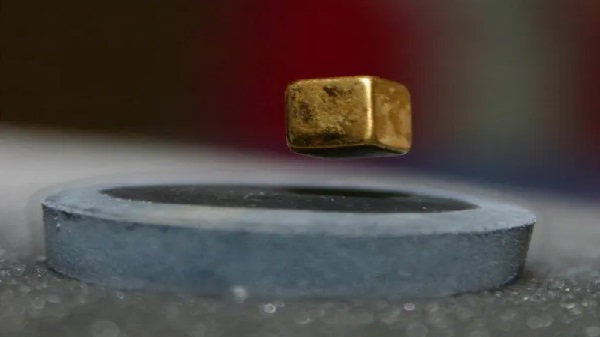
Superconductivity is an amazing phenomenon in which, under the right physical conditions, there is zero resistance to current flowing through a material. With zero resistance, no energy is lost through heat. This means that lossless energy transfer and other technological breakthroughs are possible if only superconductivity could be easily realized under ambient conditions. The holy grail of superconductivity science is to find superconductors under ambient temperature and standard pressure conditions; will LK-99 be the first?
Our modern lives are dominated by electronics and electrical energy technologies. Our global need for large amounts of continuous power underscores the need to increase efficiency in all aspects of energy, from generation to transmission to consumption. At all stages of this process, energy loss is an issue. This is because the very act of pushing electrons through a current-carrying wire, due to the electrical phenomenon of resistance, is a proposal to lose energy. There is only one physical situation in which current can flow without resistance: when a material is a superconductor. Today, superconductors are used in a wide variety of applications, from MRI machines to particle accelerators to magnetic fusion devices.
At present, however, the only known materials that exhibit superconductivity are those that do so under extreme conditions, namely at very low temperatures. The “holy grail” of superconductivity research is to find a material that exhibits superconductivity under normal conditions of normal temperature and pressure. If it can be found and widely commercialized, all the problems of energy loss and stray heat can be solved. in late July 2023, a claim was made that a new material known as LK-99 is the long-sought room temperature superconductor. But is it true? Many people have written to me about this, including Rob Chapman Smith and Clint Sears:
‘Because we are on a roller coaster ride of hope and failure.
Whenever a claim is made that, if true, would change the world, it is imperative to understand not only what we currently know, but what it takes to determine exactly what is true and what is not. Let’s dive into the world of science and find out.
What is a superconductor?
Any material exhibits some resistance when you try to pass an electric current through it (that is, when you try to move electrons in it). This is because every material, of course, has a property known as resistivity. The resistivity of a material multiplied by its length and divided by its cross-sectional area equals what we conventionally call resistance. (For those of you who have learned Ohm’s Law, V = IR, where V is voltage, I is current, and R is resistance.) If you make a short, thick wire, resistance will go down; if you make a long, thin wire, resistance will go up. In most cases, however, resistivity is not an absolute property of such a material, but rather depends on the temperature of that material. The higher the temperature, the faster the molecules, atoms, and even elementary particles within the atoms move around, and the higher the temperature, the greater the resistivity. However, the converse is also true: the lower the temperature, the lower the resistivity, because the particles inside move more slowly, have less energy per particle, and generally interact less.
To achieve zero resistivity, one must reach absolute zero, a physically unattainable state, and thus zero resistance, independent of the other properties of the material. Some materials, however, have a critical threshold that can be reached by cooling, and once that threshold is reached, resistivity and resistance are reduced to zero in one fell swoop. Such materials are superconductors, and the state in which resistivity and resistance become zero is a superconducting state.
What makes superconductors special from a physical point of view? Rather than wade down the rabbit hole of what we can do or create once we have a superconductor – since most of those possibilities have yet to be discovered – I would rather help you understand what it is that allows a material to be a superconductor from a physics perspective. Under normal circumstances, even in a conductor, a material cannot be in a superconducting state simply because charges move through it.
Let us consider why this should be so. If even one charge is moving, a magnetic field is generated around it. This is one of the fundamental rules of electromagnetism. Electric current creates a magnetic field, and if the magnetic field inside a conductor changes even slightly, that changing field will affect the motion of any moving charge in the conductor.
In other words, there is a requirement for “perfect conductivity” that is not generally understood. If there were only classical (i.e., Maxwellian) electromagnetism, perfect conductivity would be physically impossible. This is because electric currents, by definition, are simply generated by moving electric charges. However, certain materials have an intrinsic quantum effect called the Meissner effect. This causes the magnetic field inside a conductor to be zero with respect to the current flowing through it. Once the magnetic field is driven out, the conductor can begin to behave as a superconductor with zero electrical resistance.
When was superconductivity first known?
Believe it or not, superconductivity was discovered experimentally long before we had a quantum theory that could explain it. Its discovery dates back to 1911, when liquid helium was first widely used as a refrigerant. Scientist Heike Onnes was using liquid helium to cool mercury to a solid phase and study its electrical resistance properties. As expected, in all conductors, the resistance gradually decreased with decreasing temperature. Suddenly, at a temperature of 4.2 K, the resistance of solid mercury disappeared completely.
Further close examination revealed that below that temperature threshold, there was no magnetic field inside the solid mercury. Subsequently, several materials were shown to exhibit this superconductivity phenomenon, all of which became superconductors at their own temperatures:
7 K for lead,
10 K for niobium
16K for niobium nitride,
Subsequently, many elements and compounds became superconductors. Theoretical advances accompanied them, helping physicists understand the quantum mechanism by which materials become superconducting. However, it turns out that not all superconductors behave in exactly the same way.
What makes a material superconducting at high temperatures?
There are two basic types of superconductors, creatively named Type I and Type II superconductors: In Type I superconductors, the transition to the superconducting state is immediate and occurs all at once. 100% of the internal magnetic field is released and 100% of the material has zero electrical resistance. However, in Type II superconductors, the material is non-uniform, and when an external magnetic field is applied, vortices of magnetic fields form within the material, especially at high field strengths. The magnetic field is discharged into the outer regions of the individual vortices, but the magnetic field lines are “anchored” within the material within each vortex. Whereas Type I superconductivity is usually exhibited only by pure metals (the only known exceptions are tantalum silicide and boron-doped silicon carbide), Type II superconductivity can occur in a wide variety of alloys. Given the sheer number of elements in the periodic table, the unfathomable number of ways they can be combined or bonded, and the tremendous potential for doping materials, i.e., selectively replacing some elements with others, some Type II superconductors may have the potential to produce Type I super Type II superconductors were discovered experimentally in 1935, but the first (relatively) high-temperature superconductors were not identified until the 1980s.

Ask Ethan: Is LK-99 the Holy Grail of Superconductivity?
How high temperatures have the most extreme superconductors reached while maintaining their superconducting state?
It began with a simple material: copper oxides. in the mid-1980s, experiments on copper oxides doped with lanthanum and barium broke a long-standing temperature record by several degrees, showing superconductivity at temperatures above 30 K: yttrium barium copper oxides.
Yttrium barium cuprate was the first material to be found to exhibit superconductivity at temperatures above 77 K (superconductivity at 92 K) instead of below 40 K, which requires liquid hydrogen or liquid helium.
This discovery led to an explosion in superconductivity research, with various materials being introduced and explored, and extreme temperatures as well as extreme pressures being added to these systems. But after peaking in the mid-1990s, no high-temperature superconductors were found until 2015. A German research team announced that old hydrogen sulfide (H2S, like a molecule of water, but with sulfur instead of oxygen) becomes superconducting at a whopping 203 K when placed under high pressure of over 150 GPa.
What are the prospects for realizing the “Holy Grail” of room-temperature, room-pressure superconductors?
Since the breakthrough in 2015, superconductivity research has had its peaks and valleys. A class of materials known as lanthanum hydrides and superhydrides have been shown to exhibit superconductivity at ultrahigh pressures of 250-260K. This means that superconductivity can be observed by throwing them into a conventional freezer or taking them to Alaska in winter (under high pressure). What is remarkable about these materials is that theoretical studies have been the driving force behind interest in them, and these new superconducting temperature records are the result of experimental investigations of these theoretical predictions. By studying how the atoms that make up the material are assembled in a lattice pattern and then calculating how the electronic band structure within the material behaves, it was suggested that the material may exhibit interesting behavior: “Yes, this behaves as a type II superconductor at high temperatures.
However, not all is smooth sailing. While the electronic band structure can be calculated and predicted, whether or not it becomes superconducting, and under what precise temperature conditions, can only be measured and confirmed experimentally. In addition, the superconductivity work done by Ranga Diaz at the University of Rochester has been subject to a number of adjacent claims that have been retracted or denied as evidence of fraud, plagiarism, unreproducibility, and deception has surfaced over the past few years.
What is LK-99, why is it interesting, does it exhibit superconductivity, and does it exhibit superconductivity at room temperature and ambient pressure? In the 1990s, Professor Tong-Sik Choi of Korea University studied superconductivity from a theoretical perspective and came up with a new approach to calculate the electronic band levels in materials. Professor Choi’s students at the time were Professors Suk-Bae Lee and Ji-Hoon Kim, who expanded on Professor Choi’s work by doping copper (replacing some of the lead ions in the apatite structure with copper) in a compound material called lead apatite (a mixture of lead, phosphorus, and oxygen atoms), They suggested that a material with an interesting electronic band structure could be obtained.
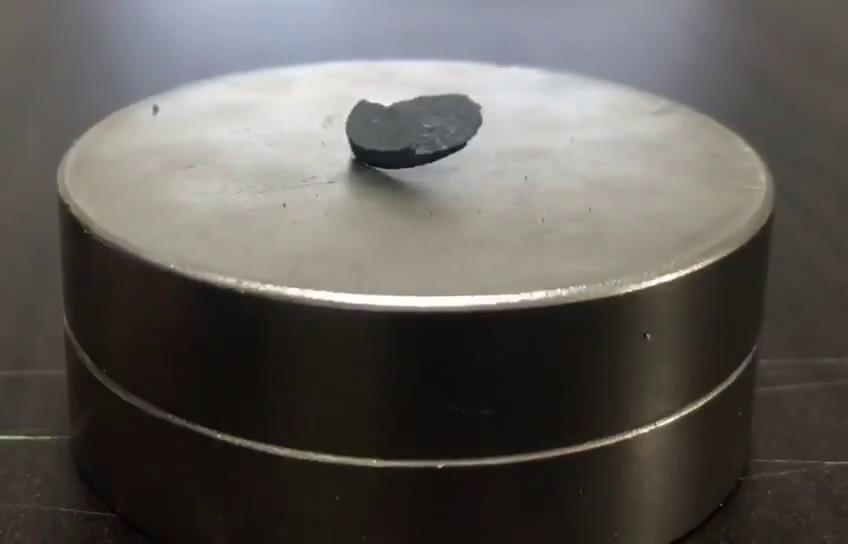
Lee and Kim went on to industry, Lee founding a company called Qcenter, and Kim working for a battery materials company before joining Lee at Qcenter. in 2017, Choi left, expressing his hope that students would find that the high-temperature superconductors his theory predicted might exist, He passed away. Copper-doped lead apatite is what they now call LK-99. They published two papers, one by three authors and one by six, claiming that it is a superconductor and exhibits the famous quantum levitation phenomenon. And as is always the case when someone announces something that, if true, will truly change the world, it was greeted with great fanfare, reflecting our hope that this technology is real and that the science is solid.
The material, copper-doped lead apatite, is relatively easy to make and the underlying theoretical approach is novel, so many teams are racing to replicate the discovery. The open-source nature of arxiv, the preprint server where the papers were uploaded, means that everything is immediately available to the public without the need to wait for peer review; the LK-99 Wikipedia page is tracking (and will continue to track) the replication experiments, and already very interesting results are emerging one after another.
From a theoretical point of view, the predicted electron bands should indeed exist. Experimentally, however, it appears that making these samples does not yield superconductivity at all, and multiple studies have failed to reproduce what Lee and Kim claimed to have seen.
Some problems with Lee and Kim’s study are also apparent:
They applied only very small currents and voltages to their samples,
They applied only very small currents and voltages to their samples, they have little data to examine the transition to the zero-resistance state they claim,
And that the “magnetic levitation” they observed is much more consistent with boring old antimagnetic repulsion (like the levitating non-superconducting frog shown in the video below), rather than the traditional flux pinning levitation associated with superconductors and the Meissner effect.
The saying goes that extraordinary claims require extraordinary evidence, and it seems that the work done by Lee and Kim, while solid from a theoretical standpoint, was sloppy from the only truly important standpoint: the experimental one. From what we have seen so far, this does not seem to be a case of fraud like Ranga Diaz, but rather a case of wishful thinking and inadequate data working in our favor. There is absolutely no evidence that this material is superconducting, much less at room temperature. It is more like cold fusion research. If you make assumptions that are not true, the phenomenon should occur, but the “interesting” predictions you are making do not actually correspond to what you expect nature to prove.
Ask Ethan: Is LK-99 the Holy Grail of Superconductivity?
Further replication experiments are currently underway and will soon reveal whether LK-99 exhibits superconductivity or not:
No superconductivity at all,
Superconductivity at room temperature
Whether the observed “levitation” is due to antimagnetism, the Meissner effect, or other magnetic phenomena, or whether it is an experimental error,
And whether the (controversial) superconductivity theory used to predict this phenomenon is valid or simply an incorrect prediction that contradicts experiment.
In science, you can do all the theories and calculations you want, but in the end, it is the experiment that determines what is true and what is not. But until that confirmation is obtained, this is an extraordinary claim that captures our imagination and does not yet meet the criteria for “extraordinary evidence” that a responsible scientist should accept.
Source: Ask Ethan: Is LK-99 the Holy Grail of Superconductivity?
Will non-thermal nuclear fusion be the Holy Grail of clean energy?
Ask Ethan: Is LK-99 the Holy Grail of Superconductivity?