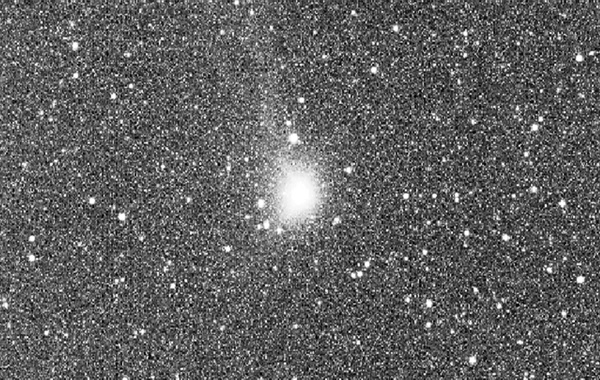
Ancient Voyager: As A3 IATLAS Makes a Close Approach to Jupiter, Astronomers Find It May Be Far More Ancient Than We Thought
Deep in the frozen silence of the Oort Cloud, a messenger from the birth of our solar system has been waiting for eons. Now, as Comet A3 IATLAS makes a dramatic close approach to the gas giant Jupiter, the data streaming back to Earth has left the scientific community in awe: this isn’t just a visitor; it’s a 4.5-billion-year-old relic.
A Pristine Time Capsule from the Deep Freeze
Initially classified as just another long-period comet, A3 IATLAS is proving to be a scientific goldmine. Unlike most comets that have been “baked” and altered by the Sun’s heat over multiple orbits, this icy traveler appears to be primordial. Its chemical signature is a perfect, frozen snapshot of the chaotic nebula that birthed our Sun and planets.
By analyzing the gas and dust released during its brush with Jupiter’s massive gravity, astronomers are essentially looking at the “original ingredients” of our cosmic home.
The Jupiter Encounter: A Window into the Past
Jupiter, the king of planets, acted as a gravitational lens, allowing scientists to study the comet’s composition in unprecedented detail. What they found was staggering—volatile molecules and organic compounds that haven’t changed since the dawn of time.
Why Is This “Surprising”?
Most comets we observe today are “polluted” or evolved versions of their former selves. A3 IATLAS, however, is a survivor. It carries the very water and organic building blocks that may have kickstarted life on Earth.
As it swings past Jupiter and continues its journey, it leaves us with a profound realization: the outskirts of our solar system are teeming with ancient witnesses. This close approach wasn’t just a flyby—it was a rare, high-definition look into the laboratory of the universe’s creation.
Source: iflscience
Ryugu asteroid samples contain all DNA and RNA building blocks, bolstering origin-of-life theories
Ancient Voyager: As A3 IATLAS Makes a Close Approach to Jupiter, Astronomers Find It May Be Far More Ancient Than We Thought