422-million-year-old ancient animal cell helps scientists create a mouse
Researchers have achieved an astonishing feat: creating functional mouse stem cells capable of developing into a living mouse using genetic material from choanoflagellates, single-celled organisms that predate animals.
This discovery redefines our understanding of stem cell origins and underscores the deep evolutionary connections between animals and their unicellular relatives.
“By successfully creating a mouse using molecular tools derived from our single-celled relatives, we’re witnessing an extraordinary continuity of function across nearly a billion years of evolution,” said Dr Alex de Mendoza of Queen Mary University.
“The study implies that key genes involved in stem cell formation might have originated far earlier than the stem cells themselves, perhaps helping pave the way for the multicellular life we see today.”
Employing ancient genes
Led by Dr. de Mendoza, in collaboration with The University of Hong Kong, the team uncovered that choanoflagellates possess versions of the Sox and POU genes—key drivers of pluripotency, the ability of stem cells to differentiate into any cell type.
These genes were thought to have evolved exclusively within animals. However, this research reveals they existed long before multicellular life arose, playing roles in unicellular processes that were later repurposed for complex organisms.
The 2012 Nobel Prize-winning work by Shinya Yamanaka demonstrated that reprogramming differentiated cells into stem cells required four factors, including Sox2 and Oct4 (a POU gene).
Building on this, the researchers replaced the Sox2 gene in mouse cells with its choanoflagellate counterpart. This substitution succeeded in reprogramming the cells into a pluripotent state, confirming the functionality of these ancient genes.
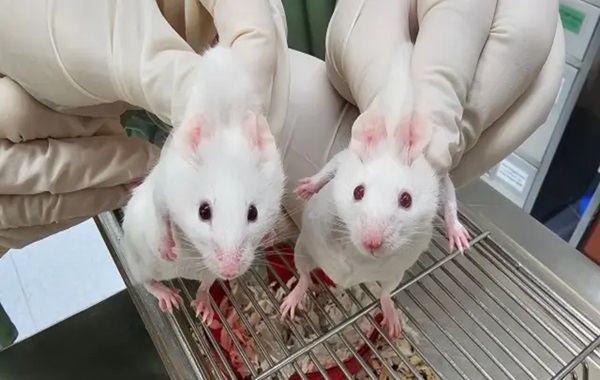
To test their efficacy, the team injected the reprogrammed cells into developing mouse embryos. The resulting chimeric mice exhibited physical traits from both the donor embryos and the introduced stem cells, such as black fur patches and dark eyes. This proved that the choanoflagellate-derived Sox gene seamlessly integrated into the development of a complex animal.
Evolutionary echoes in modern genetics
Choanoflagellates, often described as the closest living relatives of animals, lack stem cells entirely. Instead, their versions of Sox and POU genes likely regulated basic cellular functions. These ancient roles were later co-opted by multicellular organisms to drive stem cell formation and tissue specialization, offering a fascinating glimpse into the genetic “recycling” that shaped life’s complexity.
The research highlights how evolution repurposes existing genetic tools, turning them into versatile drivers of innovation. This adaptability underscores how foundational processes in unicellular organisms laid the groundwork for the development of complex life forms.
Beyond rewriting evolutionary biology, the findings could revolutionize regenerative medicine. Understanding how ancient genes enabled pluripotency offers new pathways to refine stem cell therapies and enhance cell reprogramming techniques.
For instance, synthetic versions of these genes might outperform native animal genes, opening possibilities for more efficient treatments for diseases or tissue damage.
“Studying the ancient roots of these genetic tools lets us innovate with a clearer view of how pluripotency mechanisms can be tweaked or optimised,” said Dr. Ralf Jauch of The University of Hong Kong. This could lead to breakthroughs in how we engineer stem cells for medical applications.
Source: Interesting Engineering
Brains Scans Reveal a Massive Surge of Connectivity When Babies Are Born
422-million-year-old ancient animal cell helps scientists create a mouse