2000-Year-Old Mystery: Researchers May Have Decoded the Lost Script of Teotihuacan
Researchers decoded Teotihuacan symbols as an early Uto-Aztecan writing system, possibly linked to Nahuatl speakers and reshaping theories about the city’s people.
More than 2,000 years ago, Teotihuacan was a major city in central Mexico, home to as many as 125,000 people. Known for its massive pyramids, it served as a key cultural hub in Mesoamerica.
Today, the site lies in ruins and attracts both archaeologists and tourists, yet a fundamental question remains unanswered. Who lived there?
Magnus Pharao Hansen and Christopher Helmke of the University of Copenhagen have proposed a new explanation in the journal Current Anthropology.
Discovery of a Writing System
After studying symbols found in Teotihuacan’s murals and artifacts, the researchers concluded that these markings form a true writing system. They suggest it represents an early Uto-Aztecan language, which later evolved into Cora, Huichol, and Nahuatl, the language associated with the Aztecs.
Founded around 100 BC, Teotihuacan remained a dominant cultural center until about 600 AD. Hansen and Helmke compare its importance to that of Rome in the Roman Empire, highlighting its central role in ancient Mesoamerica.
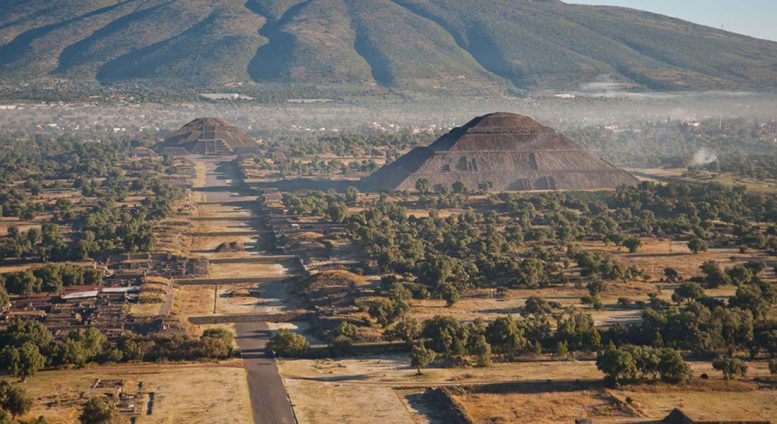
To illustrate the mystery, they note that studying Teotihuacan is like discovering Roman ruins without any knowledge of the people who built them.
Unknown People and Cultural Identity
“There are many different cultures in Mexico. Some of them can be linked to specific archaeological cultures. But others are more uncertain. Teotihuacan is one of those places. We don’t know what language they spoke or what later cultures they were linked to,” says Magnus Pharao Hansen.
Helmke explains that experts can distinguish Teotihuacan from other cultures of the same period. For instance, evidence indicates that some areas of the city were inhabited by the Maya, a civilization that is much better understood today.
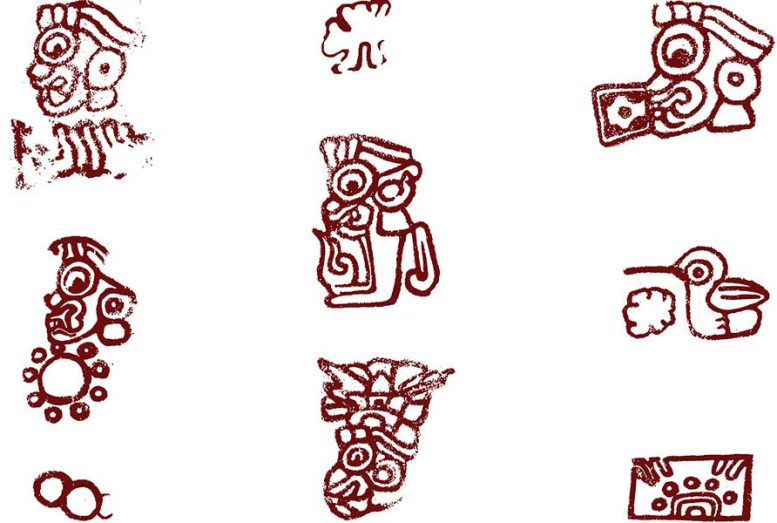
The people of Teotihuacan left behind numerous symbols, especially in murals and decorated pottery. For decades, scholars have debated whether these markings represent a formal writing system.
Linguistic Breakthrough and Nahuatl Connection
Hansen and Helmke argue that the inscriptions do record a language, one that predates and is related to Cora, Huichol, and Nahuatl.
The Aztecs are another well-known culture from Mexico. Previously, scholars believed they arrived in central Mexico after Teotihuacan declined. However, the researchers identify linguistic links that suggest Nahuatl-speaking groups may have been present much earlier and could be direct descendants of Teotihuacan’s inhabitants.
To test these connections, the team reconstructed an older form of Nahuatl to compare it with the Teotihuacan texts.
Deciphering Challenges and Methods
“Otherwise, it would be a bit like trying to decipher the runes on the famous Danish runestones, such as the Jelling Stone, using modern Danish. That would be anachronistic. You have to try to read the text using a language that is closer in time and contemporary,” says Christophe Helmke.
Deciphering the script is complex. Some symbols function as logograms, directly representing objects or ideas, such as a coyote meaning “coyote.” In other cases, the symbols work like a rebus, where sounds from depicted objects combine to form more abstract words.
This approach requires in-depth knowledge of both the writing system and the reconstructed Uto-Aztecan language. Understanding how words were pronounced at the time is essential to interpreting the texts accurately.
Ongoing Research and Future Discoveries
The researchers are pursuing multiple strategies at once. They are reconstructing the ancient language while using it to interpret the inscriptions.
“In Teotihuacan, you can still find pottery with text on it, and we know that more murals will turn up. It is clearly a limitation to our research that we do not have more texts. It would be great if we could find the same signs used in the same way in many more contexts. That would further support our hypothesis, but for now we have to work with the texts we have,” says Magnus Pharao Hansen.
Hansen and Helmke say they are encouraged by their findings.
Implications for Mesoamerican History
“No one before us has used a language that fits the time period to decipher this written language. Nor has anyone been able to prove that certain logograms had a phonetic value that could be used in contexts other than the logogram’s main meaning. In this way, we have created a method that can serve as a baseline for others to build on in order to expand their understanding of the texts,” says Magnus Pharao Hansen.
Their work has drawn interest from scholars around the world, and the team hopes to organize workshops to further develop and test their approach.
“If we are right, it is not only remarkable that we have deciphered a writing system. It could have implications for our entire understanding of Mesoamerican cultures and, of course, point to a solution to the mystery surrounding the inhabitants of Teotihuacan,” says Christophe Helmke.
Source: SciTechDaily
Medieval DNA reveals trans-Saharan connections, rapid genetic mixing and leprosy in Islamic Ibiza
2000-Year-Old Mystery: Researchers May Have Decoded the Lost Script of Teotihuacan/2000-Year-Old Mystery: Researchers May Have Decoded the Lost Script of Teotihuacan