World’s Oldest Mummies Dates Back 8,000 Years Ago Found in Portugal’s Mesolithic Remains

A new set of photographs showing the collection of Portugal’s ancient remains were rediscovered. According to a recent study, the mummified bodies dated back 8,000 years ago.
The details from the excavation might help provide supporting evidence to how people conducted mummification of their dead ones in the past.
Sado Valley’s Mummified Bodies
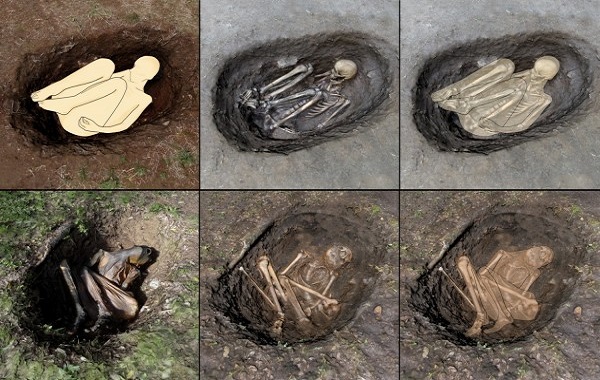
The skeletal remains from Portugal belonged to a total of 13 people. The pieces were initially excavated in Portugal’s Sado Valley back in the 1960s.
Based on the findings, each of the bodies was buried in a curled position. Their legs were bent, with knees touching their chest.
Some of these remains might have been mummified before the burial process. The authors theorize that the ritual is possibly associated with transport and curation reasons in the community, reports DailyMail.
Chile’s Chinchorro mummies were the first discovery considered as the oldest preserved bodies in history. The remains from this collection date back 7,000 years ago.
On the other hand, the popular mummies from ancient Egypt also exhibit several embalming practices with their mummies that date back approximately 5,700 years ago.
Portugal’s mummification practices exceed the age of the previous evidence over artificial body preservation. Unfortunately, the mummified remains from Sado Valley were completely skeletonized. Important features that were supposed to be preserved, such as the tissues, have already decayed.
Oldest Mummification Practice in Portugal
The research of the oldest mummy collection in Portugal was made possible through the collaborative efforts of scholars from Linnaeus University, Uppsala University, and the University of Lisbon.
The recent findings were based on the prior photos captured from the original site. The images were prepared by the late archaeologist Manuel Farinha dos Santos.
Some of the images captured during the excavation in 1960 and 1962 were missing, and this led to the incompletion of the dig’s documentary.
The authors explained that the rediscovery of the new set of photographs contributes to our understanding of the mortuary practices during the Mesolithic period. This particular research is quite challenging compared to other archaeological discoveries, as collecting the information from mummified remains with missing soft tissues is difficult.
Compared to bone structures, identifying soft tissues from excavation sites are quite rare due to numerous factors that impact the preservation process. Most of the issues that tamper with the remains are wetter atmospheric conditions, such as the climate in Europe.
The study of Sado Valley’s mummified remains in Portugal was published in the European Journal of Archaeology, titled “Mummification in the Mesolithic: New Approaches to Old Photo Documentation Reveal Previously Unknown Mortuary Practices in the Sado Valley, Portugal.”
Source: science times.com
Archeologists to scan the Great Pyramid of Giza with cosmic rays
Archeologists to scan the Great Pyramid of Giza with cosmic rays
World’s Oldest Mummies Dates Back 8,000 Years Ago Found in Portugal’s Mesolithic Remains