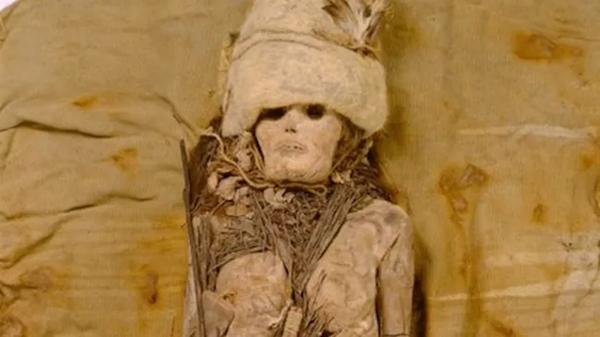
Why Were Ancient Mummies Covered in the World’s Oldest Cheese?
In a groundbreaking discovery, researchers identified the world’s oldest cheese smeared on the heads and necks of 3,600-year-old mummies found in China’s Tarim Basin. This ancient find offers new insights into early human diets and culture.
Mystery of the Ancient White Substance Solved
Initially uncovered two decades ago at the Xiaohe Cemetery, a mysterious white substance puzzled researchers. Recent DNA analysis revealed that the substance was kefir cheese, a probiotic soft cheese made from cow and goat milk. This discovery, published in Cell on September 25, showcases the incredible preservation of food items like cheese over millennia.
Probiotic Kefir: Linking the Past to the Present
The cheese contained bacterial and fungal species such as Lactobacillus kefiranofaciens and Pichia kudriavzevii, both of which are key ingredients in modern-day kefir. These species belong to “symbiotic cultures,” a mix of bacteria and yeast used to ferment milk into cheese, much like a sourdough starter.
Tracing the Ancient Origins of Kefir Culture
Researchers found that the bacterial grains were closely related to modern kefir cultures from Tibet, suggesting that kefir cheese production has been ongoing in China’s Xinjiang region since the Bronze Age. By sequencing the bacterial genes, scientists traced the evolution of probiotic bacteria over 3,600 years, gaining a clearer understanding of how ancient humans interacted with their environment.
The Mystery Behind the Cheese-Covered Mummies
Despite this incredible discovery, the reason why these ancient mummies were covered in cheese remains a mystery. Whether for preservation, ritual, or nutritional purposes, the world’s oldest cheese offers a rare glimpse into the dietary practices of Bronze Age civilizations.
Source: Why Were Ancient Mummies Covered in the World’s Oldest Cheese?
Archaeologists Find A 1,700-Year-Old Roman Ringstone With An Image Of Athena In Türkiye
Archaeologists Find A 1,700-Year-Old Roman Ringstone With An Image Of Athena In Türkiye
Archaeologists in the ancient city of Assos in modern-day Türkiye have uncovered a 1,700-year-old Roman ringstone with a depiction of Athena, the goddess who was believed to have protected the city. The ringstone dates back to the 2nd or 3rd century C.E. and was likely used as a seal by an important figure during the Roman Imperial Period.