What Mysteries Hide in the Depths of Earth’s Magnetic Core?
Are We on the Brink of Unprecedented Magnetic Field Transformations?
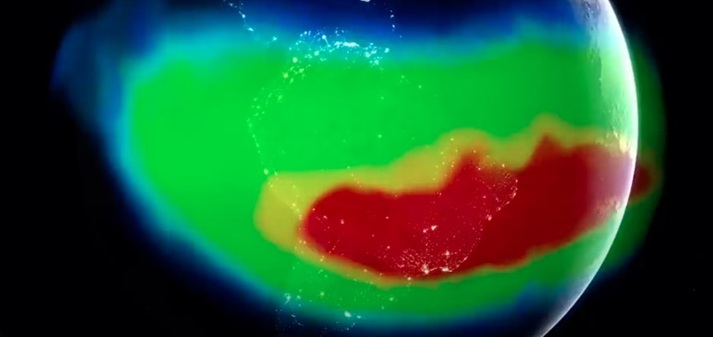
NASA continues to scrutinize a vast, evolving anomaly in Earth’s magnetic field—a region of significantly lower magnetic intensity stretching between South America and southwest Africa. This phenomenon, known as the South Atlantic Anomaly (SAA), represents both a fascinating scientific puzzle and a practical hazard to spacecraft.
Understanding Earth’s Magnetic Field: The Complex Power Behind the SAA
NASA researchers liken the SAA to a “dent” or a “pothole in space,” where the magnetic field weakens considerably. Active satellites and spacecraft—including the International Space Station—pass through this region in low-Earth orbit, where reduced magnetic shielding exposes them to energetic protons from the Sun. As a result, these high-energy particles can induce short-term glitches, cause data loss, or even damage critical onboard components. Transitioning between robust and weakened magnetic zones, satellite operators frequently shut down sensitive systems as a preventative measure.
Satellite Vulnerability and Spacecraft Hazards: Mitigating Risks in Low-Earth Orbit
In this dynamic environment, the interplay between Earth’s internal magnetic forces and the anomaly’s unusual behavior becomes paramount. Geophysicist Terry Sabaka from NASA’s Goddard Space Flight Centre explains that the magnetic field emerges as a superposition of fields from multiple sources, primarily the swirling ocean of molten iron in Earth’s outer core. Additionally, the presence of the African Large Low Shear Velocity Province disturbs this process, contributing to the SAA’s dramatic weakening effect. How might these underlying forces evolve, and what innovative solutions will researchers develop to protect vital space missions?
The Shifting and Splitting SAA: Active Research on a Moving Target
Recent studies have revealed that the SAA is not static. For example, research led by NASA heliophysicist Ashley Greeley in 2016, and confirmed by CubeSat tracking in 2021, showed that the anomaly drifts over time. Remarkably, evidence now suggests that the SAA is in the process of splitting into two distinct cells—each serving as its own center of minimal magnetic intensity. This observation challenges scientists to ask: What could these changes mean for the future of satellite safety and space weather forecasting?
Historical and Future Implications: Deepening the Mystery of Earth’s Magnetic Evolution
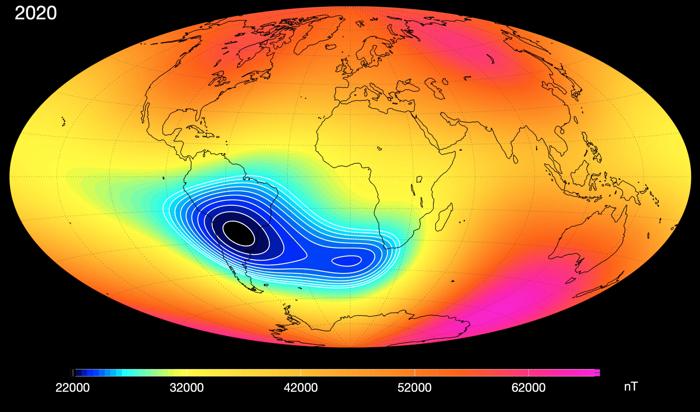
While the SAA may seem like a modern challenge, a study published in July 2020 indicates that this phenomenon might have recurred for as long as 11 million years. Importantly, this recurring event does not necessarily signal an imminent global magnetic field reversal—a process that typically occurs over hundreds of thousands of years. Furthermore, a 2024 study has even linked the SAA’s fluctuations to variations in auroral displays on Earth. These intriguing connections prompt further questions: How will ongoing changes affect both our technological infrastructure in space and natural phenomena on Earth? And what further mysteries lie beneath the surface of our planet’s dynamic magnetic field?
Concluding Thoughts: Engaging with the Ongoing Quest for Answers
NASA’s continuous observation of the South Atlantic Anomaly is critical—not only for protecting valuable space assets but also for enhancing our understanding of Earth’s complex magnetic dynamics. By integrating advanced research methods and modeling, scientists strive to predict future changes and mitigate potential risks. As we delve deeper into these magnetic mysteries, how can future missions and technological innovations further safeguard our space endeavors while enriching our grasp of the forces shaping our planet?
This evolving narrative invites us all to consider: What new insights might arise as we learn more about the shifting magnetic frontier above our heads?
Source: What Mysteries Hide in the Depths of Earth’s Magnetic Core?
Could Neptune’s Strange Magnetic Field Unlock Secrets of Our Solar System?
Could Neptune’s Strange Magnetic Field Unlock Secrets of Our Solar System?