What If Neutrinos Hold the Key to the Cosmos?
Every second, trillions of so‑called “ghost particles”—neutrinos—pass through your body without you even noticing. Their elusive nature makes them incredibly difficult to study, yet scientists are closing in on their secrets.
KATRIN Collaboration: Hunting Neutrinos at Karlsruhe
Since 2019, over a hundred researchers from six countries have united under the KATRIN collaboration at Germany’s Karlsruhe Institute of Technology. Their goal? To pin down the mass of the neutrino using the world’s largest tritium-decay spectrometer.
How it works: Tritium, a radioactive hydrogen isotope, decays into an electron and a neutrino. By precisely measuring the electron’s energy, scientists infer the neutrino’s mass.
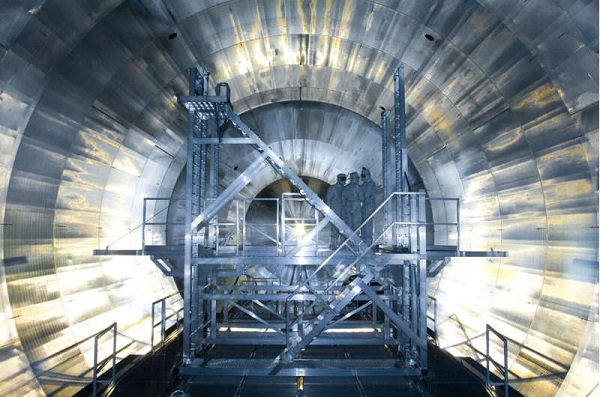
The 200‑tonne spectrometer: This 70‑meter‑long vacuum chamber spins particles around in a magnetic field, ensuring only the highest‑energy electrons reach the detector.
Breaking Records: New Neutrino Mass Limit of 0.45 eV
In a landmark paper published in Science on Thursday, KATRIN announced that a neutrino’s mass cannot exceed 0.45 electron volts (eV)—less than one‑billionth the mass of a proton.
From six million to 36 million electrons: The 2022 first results relied on six million electrons. To sharpen their limit to 0.45 eV, the team measured 36 million.
What’s next? By year’s end, KATRIN will have recorded roughly 250 million electrons. Will they finally glimpse a neutrino’s “trace,” or push the upper limit down to 0.3 eV?
Neutrino Mass and the Cosmic Puzzle of Dark Energy
Why does a neutrino’s mass matter beyond particle physics? Because these wispy particles could reshape our understanding of the universe.
Dark energy connection: Though extraordinarily light, neutrinos influence cosmic expansion. Pinning down their mass helps refine models of dark energy—the mysterious force accelerating our universe’s growth.
Only 5% ordinary matter: Dark energy and dark matter compose about 95% of the cosmos. Neutrinos, as part of the “ordinary” 5%, may hold clues to these hidden components.
TRISTAN Upgrade: Searching for Sterile Neutrinos
KATRIN isn’t stopping at normal neutrinos. The collaboration plans to deploy TRISTAN, a next‑generation detection system aimed at spotting sterile neutrinos—hypothetical particles that:
Don’t interact with matter
Possess much greater mass than standard neutrinos
Could these heavyweights be the long‑sought dark matter? TRISTAN’s hunt may finally answer that question.
Questions to Ponder
What would a nonzero neutrino mass tell us about the early universe?
If sterile neutrinos exist, how would they reshape our dark matter theories?
How close are we to reconciling neutrino physics with cosmology’s biggest mysteries?
By transforming passive observations into active discoveries, the KATRIN collaboration is bringing ghost particles into the spotlight—one electron measurement at a time.
Source: What If Neutrinos Hold the Key to the Cosmos?
Scientists Just Discovered Quantum Signals Inside Life Itself
Scientists Just Discovered Quantum Signals Inside Life Itself