Understanding paused development in embryos could unlock new cancer treatments
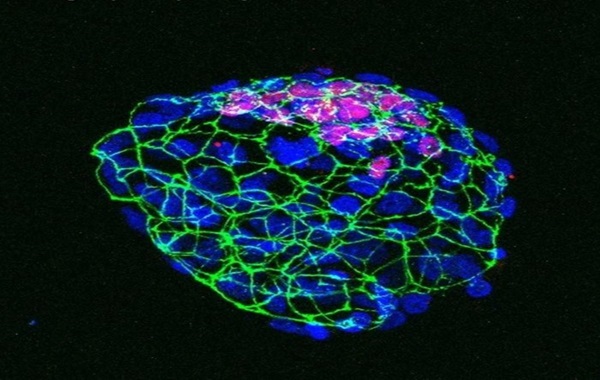
Embryonic diapause is a fascinating phenomenon that happens at an early stage of pregnancy when a fertilized egg is simply a ball of rapidly dividing cells. Mammalian embryos can sense when food is scarce and pause their development until a later time.
Life at all levels needs food or energy to grow and survive. That includes cells as well. At the blastocyst stage, however, facing an absence of nutrients, a fertilized egg can simply turn off and not die. Embryonic diapause might not be new knowledge, but how and why it happens remained unclear until now.
“Seasonal starvation is one of the universal environmental stresses in nature,” Professor Qiang Sun, research leader explains. “However, the regulatory process of diapause in early-stage embryos is not fully understood. So, we decided to examine whether nutrient deprivation induces embryonic diapause.”
Researchers studied the mechanism behind this phenomenon to improve infertility and cancer treatments as some cancer cells exhibit a similar state of dormancy.
Scientists study embryonic diapause in mice
First, they examined nourished and malnourished mice at the blastocyst stage of pregnancy, which occurs at the end of the first week of fertilization. In the hungry group, embryos did not implant themselves in the uterus. They held off. When transplanted into the healthier mother, the eggs just picked up where they left off because conditions were nutrient-rich.
After researchers observed that a lack of food did, in fact, result in embryonic diapause, they set out to understand what specifically triggers this perplexing pause.
They grew mice embryos in a dish with different nutrients to observe how they would react. Embryos stalled further development in the absence of proteins and carbohydrates. But given that proteins and carbohydrates make up two out of four building blocks of all life, that makes sense.
Now, scientists from China have just proved that. Embryos can sense the depletion of these essential nutrients, and they simply shut off and turn back on at this stage. And is there a time limit? This study opens the door for further thought and investigation.
Regardless, this discovery suggests that they can live longer in a lab. Professor Sun thinks that it “…can inspire the development of new methods for human embryo preservation.”
“Embryo cryopreservation is a widely used approach,” Professor Sun says, “but there is still no consensus on when cryopreserved embryos can be thawed and transferred into the uterus. Many clinical studies have shown that traditional frozen embryo transfer can increase the risk of problems during pregnancy. Therefore, it is necessary to develop alternative methods to preserve embryos.”
This study indeed inspires many questions about the potential application of this biotechnology. But now that these researchers have cracked open this basic though somewhat miraculous mechanism, it could impact the fertility industry.
Because, as far as we know, embryos can be frozen at different stages of their development. However, that doesn’t mean we understand the best timing or have the most effective, if not safest, approach.
Studying embryonic diapause could impact cancer treatments too
“Dormant cancer cells which persist after chemotherapy resemble the diapaused embryos,” Professor Sun continues. In other words, they shut off as a protective mechanism. That we know. So, understanding how a cell presses that pause button could help improve cancer treatments and decrease the likelihood of relapses.
Life seems to be built to protect itself regardless of whether it’s malignant or benign. It’s just a mechanism that scientists can study and hopefully replicate to assist the continuation of life and the evasion of certain diseases.
Researchers at the Center for Excellence in Brain Science and Intelligence Technology, the Chinese Academy of Sciences in Shanghai, China, just published theirs finding in the journal Development.
Source: Interesting Engineering
The Hidden Cause of Alzheimer’s May Have Been Identified a Century Ago
Understanding paused development in embryos could unlock new cancer treatments