This Plant You’ve Never Heard of Can Do What Scientists Thought Was Impossible
A study on beetleweed shows that autopolyploid plants with different chromosome sets can coexist, reshaping how scientists understand rapid speciation.
About 3.7 billion years ago, a chain of naturally occurring amino acids, similar to those found in meteorites and, more recently, in a stellar nursery near the center of the Milky Way, reacted with a natural catalyst and began the process of self-replication. One of biology’s most intriguing questions is how these simple molecules gave rise to the incredible diversity of life we see today.
Charles Darwin advanced our understanding by proposing that life evolves over time. He suggested that if two groups from the same species are isolated for long enough—thousands to millions of years—they will eventually become separate species.

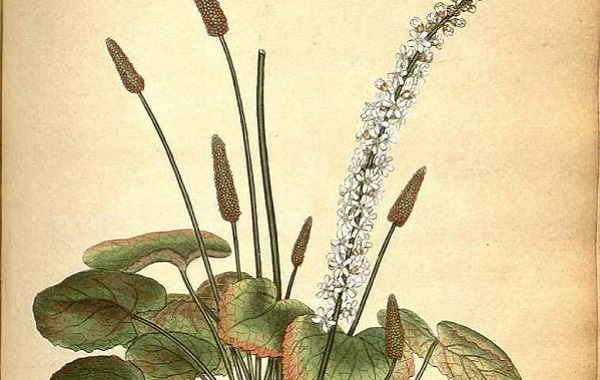
Beetleweed produces an inflorescence that towers above the rest of the plant and attracts pollinators. Credit: Shelly Gaynor.
For those looking for a quicker path to new species, there is a faster route. Hybridization, for instance, can speed things up, though it often becomes complicated due to a process called introgression, and still takes hundreds of years to occur naturally.
Instant speciation through autopolyploidy
Many plants, and a few other organisms, can accelerate diversification even more through a process called autopolyploidy, where they double their number of chromosomes. Under the right conditions, this mechanism can create new genetic diversity almost instantly.
If you’re wondering, this is what the diploid looks like. Credit: University of Florida herbarium
There are numerous ways that autopolyploidy can take place, but the general idea is straightforward. Through one mechanism or another, the reproductive cells in a plant make an extra copy of their DNA. Both of these copies then get passed down to the plant’s offspring, giving it two identical sets of chromosomes.
The new plant can still reproduce with other plants that have the normal chromosome complement, but their offspring aren’t likely to survive.
Rethinking polyploid survival
Biologists used to think this was merely an interesting aberration, that autopolyploids were rare in nature, and those that did exist had little chance of establishing a viable population. This later turned out to be false; autopolyploids are common and have a high rate of survival. Biologists also reasoned that autopolyploids would not be able to coexist with their parent species. The number of chromosomes being the only difference between them, the old and new species would be competing for the same resources, and one of them would eventually win out. If both were to exist, they’d have to do so in different places. They were wrong about that, too.
That’s the subject of a new theoretical study on a humble plant called beetleweed (Galax urceolata), which has not two but three different chromosome complements, called cytotypes, throughout parts of its range in the Appalachian Mountains.
“Through my fieldwork, I discovered that a single population could have a mishmash of cytotypes, which fascinated me,” said the study’s lead author, Shelly Gaynor, who completed the work as part of her doctoral dissertation at the University of Florida. “With this study, I set out to understand if these populations could persist over time. Would one cytotype eventually outcompete the others, or could all three cytotypes persist?”
In a recent study published in The American Naturalist, Gaynor and her team developed a sophisticated mathematical model to explore how different ploidy levels might persist together. Building on previous work, they introduced underexplored but critical factors, most notably, randomness.
Traditional models assume fixed rates of reproduction, survival, and growth, but real life is messier. Gaynor’s model allows these rates to vary with population density and random environmental changes. It also accounts for complexities like overlapping generations—common among perennial plants where polyploidy often occurs—and incomplete reproductive isolation, where diploids and polyploids can still exchange genes.
Testing the model involved running millions of simulations over thousands of years, exploring countless scenarios. Environmental instability turned out to be crucial. In more unpredictable conditions, polyploids are more likely to outcompete and replace diploids. However, under many scenarios, diploids and polyploids can persist together for long periods, with reproductive isolation helping stabilize this coexistence. A twist emerged: if competition drives diploids to extinction, they cannot re-evolve from polyploids, leading to purely polyploid populations.
The study provides a more nuanced understanding of speciation dynamics, highlighting polyploids as prevalent and ecologically significant. Once considered evolutionary anomalies, polyploids are now recognized as key contributors to ecosystem structure, exemplified by species such as big bluestem and quaking aspen.
These findings advance evolutionary theory and inform conservation strategies. Amid accelerating environmental change, Gaynor’s findings offer critical insights into the mechanisms sustaining biodiversity.
Source: https://scitechdaily.com
Scientists recreate plants’ energy-capturing ability in artificial photosynthesis